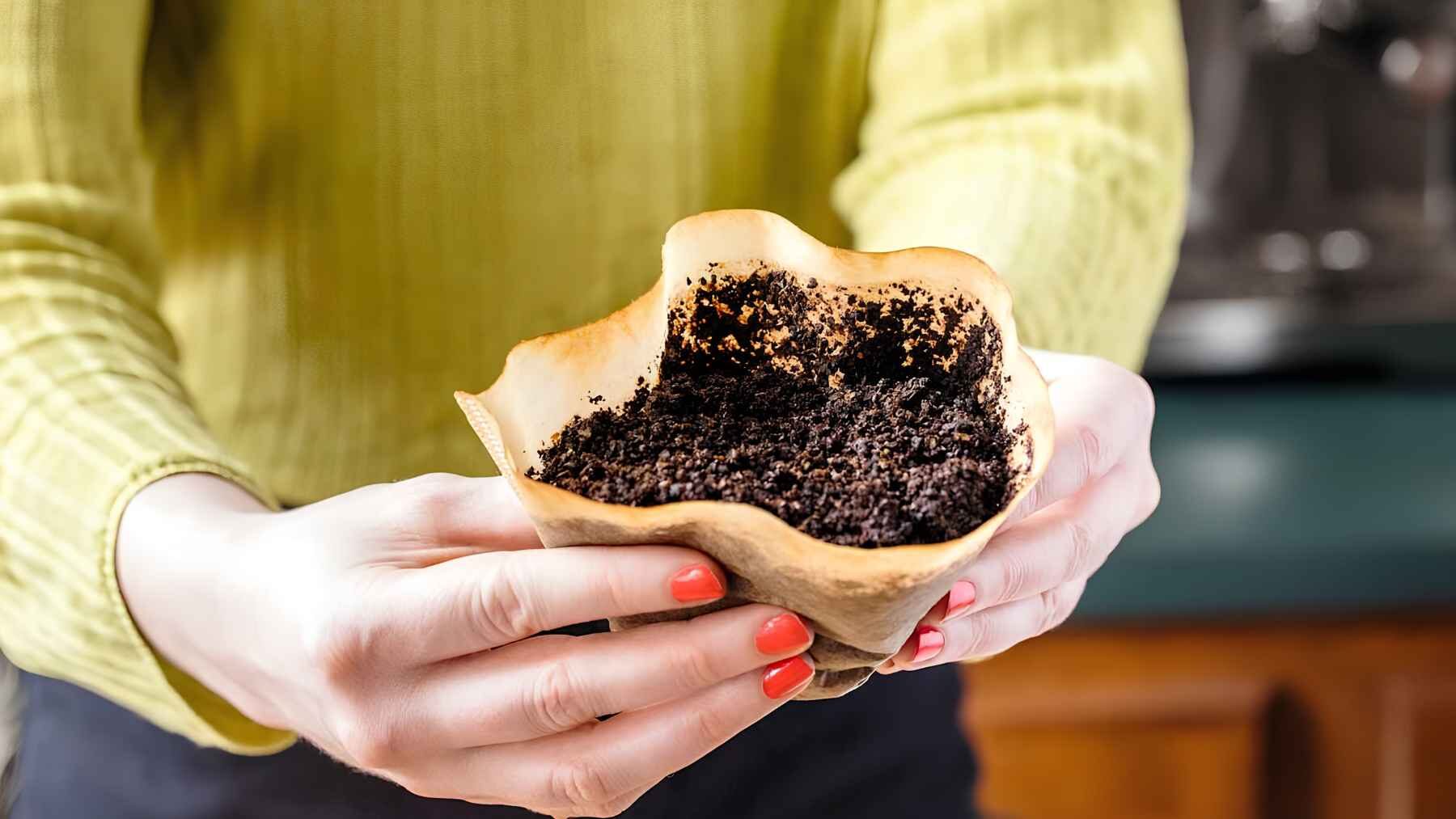
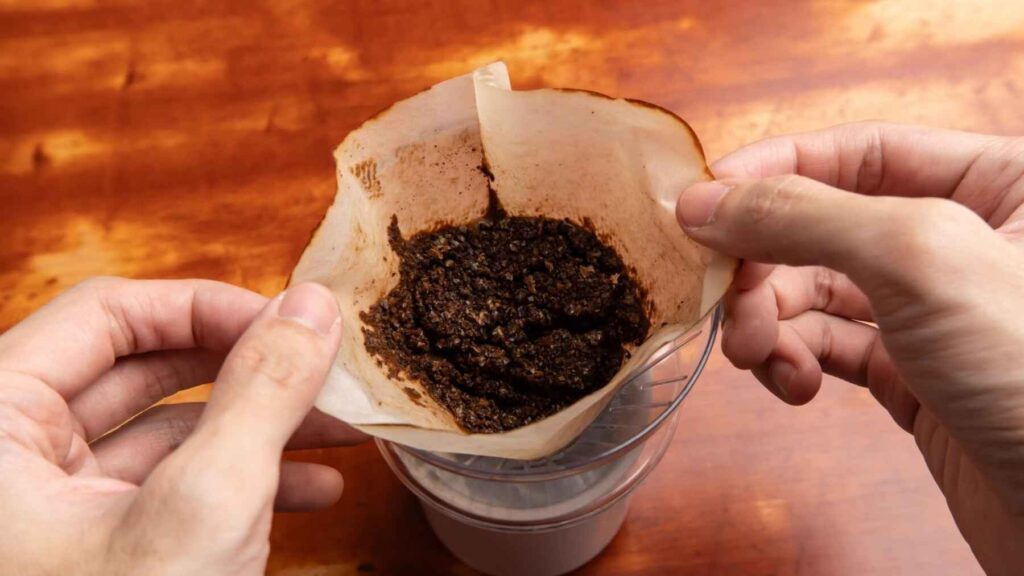
That soggy puck of coffee grounds left behind after your morning brew may not look like an energy resource. It is wet, messy, and usually treated as trash. But researchers in South Korea have now shown that this everyday waste can be turned into a coal-like biochar in just 90 seconds.
A team at the Korea Institute of Geoscience and Mineral Resources (KIGAM) developed a process called Flame Plasma Pyrolysis, which uses plasma flames at roughly 1,472 to 1,652 degrees Fahrenheit to process wet spent coffee grounds without drying them first. The result is a high-energy carbon material with performance the researchers compare to anthracite coal, one of the hardest and most energy-dense forms of coal.
Coffee waste meets plasma
The problem starts with scale. By KIGAM’s estimates, global coffee consumption produces more than 11 million U.S. tons of spent coffee grounds every year, and much of that waste is landfilled or burned.
That matters because coffee grounds are not harmless once they pile up. They contain organic material that can release greenhouse gases as it decomposes, and they are often too wet to process efficiently using conventional biomass technologies. Anyone who has emptied a coffee filter knows the issue. It is heavy, damp, and stubborn.
The South Korean team’s idea was simple in one sense, but technically bold. Instead of fighting the moisture, they used it.
How the process works
The system generates plasma flames through the combustion of liquefied petroleum gas and compressed air. These flames strike wet coffee grounds under atmospheric pressure, rapidly heating the particles and triggering carbonization without a separate pre-drying step.
Here is the surprising part. As the trapped water inside the grounds flashes into steam, pressure builds inside the particles. The researchers describe this as a “popcorn effect,” because the material breaks open, forms pores, and carbonizes more quickly.
In practical terms, that means the same moisture that normally drives up costs becomes part of the reaction. That is why this study feels different from many waste-to-energy ideas. It does not just ask for cleaner disposal. It tries to redesign the weak point of the process.
Why 90 seconds matters
Under optimized conditions, KIGAM says the wet coffee grounds were fully converted in 90 seconds. That is a major contrast with hydrothermal carbonization, which can take one to six hours, and torrefaction, which often needs at least 30 minutes.
Speed is not just a laboratory bragging point. For waste treatment, time affects equipment size, energy use, operating costs, and whether a process can be used close to where waste is produced. Think cafés, food plants, campuses, or local waste hubs.
The system also avoids electricity-intensive plasma devices, according to the press release, because its plasma is generated through combustion. That does not make it automatically carbon-free, but it could make the technology more practical than processes that need large amounts of electricity just to get started.
The fuel numbers
The resulting coffee biochar reached a heating value of 29.0 megajoules per kilogram, which converts to about 12,500 British thermal units per pound. That is roughly 33 percent higher than untreated coffee grounds, which measured 21.8 megajoules per kilogram, or about 9,400 British thermal units per pound.
The fixed carbon content also rose sharply, from 15.6 percent to 46.2 percent. That change helps explain why the researchers say the material behaves more like a dense solid fuel than ordinary biomass.
Just as important, the process removed sulfur compounds completely in the tested material. That could reduce sulfur oxide emissions during combustion, a key concern when fuels are burned near communities or industrial sites.
More than solid fuel
The biochar did not only gain energy value. Its surface area also increased dramatically, from about 458 to 35,200 square feet per ounce. A porous material like that may have uses far beyond fuel.
Porous biochars can be useful in filtration, adsorption, and activated carbon production. That opens the door to environmental applications, including capturing contaminants from air or water, although those uses would still need their own testing before anyone treats this as a finished commercial product.
And that is the key nuance. This is promising research, not a magic fix for coffee waste. Scaling it up will require more work on cost, emissions, equipment durability, and how the process handles mixed real-world waste.
A wider waste question
KIGAM says the same approach may eventually work with other wet organic wastes, including food waste, sewage sludge, and agricultural residues. That is where the idea becomes especially interesting, because moisture is one of the biggest headaches across many waste streams.
Dr. Taejun Park, the study’s lead author, framed it as a shift in how we think about disposal. “This technology presents a new paradigm in which waste is no longer viewed as a disposal problem but as a valuable energy resource,” he said.
At the end of the day, the lesson is not that coffee grounds will replace coal tomorrow. It is that waste we barely notice, the stuff scraped from filters and tossed after breakfast, may hold more value than expected if the right technology can unlock it.
The study was published on ScienceDirect.