Elon Musk finds the ‘perfect fuel’ in atmosphere ― It’s not hydrogen, but miles better

· 3 min read
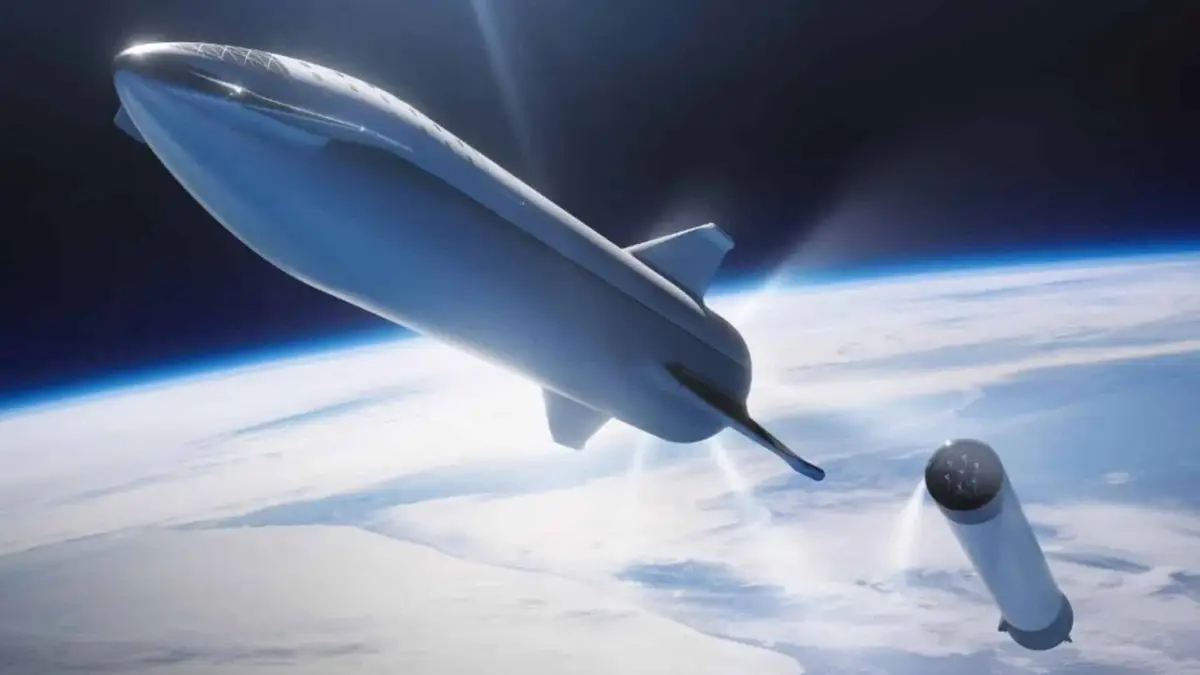
While the perfect fuel was always believed to be hydrogen, Elon Musk is sure that the perfect fuel is not hydrogen but a fuel in the atmosphere. Musk has revealed that SpaceX is developing a program to extract carbon dioxide (CO₂) from Earth’s atmosphere so that it can be transformed into rocket fuel. Musk’s latest agenda is to create hydrocarbons from atmospheric carbon. Should Musk and the SpaceX project succeed, there could be major revolutionary shifts occurring here on Earth.
Musk on a mission for the perfect fuel
It is a known fact that the atmosphere is filled with CO₂, a greenhouse gas that has resulted from the burning of fossil fuels. So, what SpaceX’s project attempts to do is remove the CO₂ from the air and in turn change it into methane-based fuel for rockets. For the transformation of CO₂ into a methane-based fuel, water-captured carbon is needed.
While this all seems too perfect to be true, demonstrations from companies such as Carbon Engineering have shown how CO₂ from the air can be combined with hydrogen (from water electrolysis) to produce synthetic fuels. NASA too has created technologically forward advancements using metal oxide so as to transform CO₂ into methane. SpaceX will be following suit by relying on a circular fuel system that extracts carbon dioxide from the atmosphere and simultaneously turns it into methane.
Musk is proving that the pollution problem can be re-evaluated and turned into something perfect. The idea is to turn pollution into propulsion.
Why looking toward CO₂ is better than looking at hydrogen?
While black hydrogen is not seen in a positive light, green hydrogen created through electrolysis is often praised. When it comes to relying on hydrogen, the drawback is that hydrogen tends to be difficult to store and needs severely low temperatures to stay liquid. Hydrogen, as such, falls short as a solution for heavy-lift rockets.
Being more energy-dense, Methane is a great contender. Methane has always been the perfect fuel for SpaceX’s Starship rockets. The latest project by SpaceX seeks to transform atmospheric CO₂ into methane.
Methane serves as the perfect fuel choice as it is carbon-negative too. The entire process will be conducted in such a way as to add no new carbon to the atmosphere whilst simultaneously reducing CO₂ concentrations within the atmosphere after some time.
Could CO₂ reductions make a considerable change?
With Earth facing a climate crisis, the rise in CO₂ levels is not at all helpful. The plan put forward by SpaceX is no easy fix to remove the CO₂ problem entirely. Global warming is expected to continue, and it has caused the need for carbon removal to become a pressing issue.
The promise of carbon capture offered by the SpaceX project offers the gain of a greener rocket fuel whilst doubling up to reduce the amount of carbon dioxide in the atmosphere. SpaceX’s mission can be seen as one favoring climate change while still being geared up to provide fuel for space missions.
On offer with this mission, is the vision to look beyond Earth and towards Mars. On Mars, the atmosphere is 95% CO₂, and a look towards Mars can prove to be beneficial, especially in terms of generating fuel necessary for future space missions.
SpaceX’s mission with challenges ahead
Musk’s announcement is rather exciting and on par with what is needed for the climate crisis; however, SpaceX would need to scale up the technology to enable carbon capture. Thus far, the mission is still in the pipeline with no further details as to when implementation will begin.
Turning bad emissions in the atmosphere into rocket fuel is the perfect thinking not only for achieving the perfect fuel but for ensuring a perfect era too. Whilst bad news had been on the cards for SpaceX and Musk for a while now, good news may finally be the order of the day.
Disclaimer: Our coverage of events affecting companies is purely informative and descriptive. Under no circumstances does it seek to promote an opinion or create a trend, nor can it be taken as investment advice or a recommendation of any kind.
Glossary for this story
- Greenhouse gases
- Gases that trap part of the heat the Earth gives off, such as carbon dioxide, methane and nitrous oxide. More of them in the air warms the planet.
- Fossil fuels
- Coal, oil and natural gas. They formed over millions of years from the remains of living things and release CO₂ when burned.
- Methane
- A greenhouse gas far more powerful than CO₂ in the short term. It comes from livestock, landfills, rice fields and natural gas leaks.
- Green hydrogen
- Hydrogen made by splitting water with electricity from renewable sources, without releasing CO₂ in the process.
- Global warming
- The rise in the Earth’s average temperature since pre-industrial times, driven mainly by greenhouse gases from human activity.
- Carbon capture
- Technology that traps CO₂ from smokestacks or straight from the air and stores it underground or reuses it.
- Climate change
- A long-lasting shift in the planet’s climate: temperatures, rainfall and extreme events. Today’s change is caused mainly by burning fossil fuels.
ECOnews Newsroom
Writer at ECOnewsA team of journalists specializing in socio-environmental news, sustainability, climate change, the environment, responsible consumption, and innovation. At EcoNews, we provide clear, reliable, and relevant coverage of the environmental and social challenges shaping our era.
More from ECOnews NewsroomComments · 0
Rules ›No comments yet. Be the first to share your view.