NASA presented more than five million photographs depicting the scarce and fascinating atmospheric gravity waves. This scientific achievement validates Einstein’s most challenging prediction and provides additional resources to explore space weather phenomena and their effects on technological equipment. The following article deepens our knowledge about this remarkable discovery.
The Atmospheric Waves Experiment (AWE)
NASA conducts research on atmospheric waves through the International Space Station’s Atmospheric Waves Experiment (AWE) to investigate atmospheric gravity waves. Scientists have been trying to monitor waves produced by weather systems and topographic features in the atmosphere for years. The AWE mission successfully captured atmospheric waves through unprecedentedly precise observations by the Advanced Mesospheric Temperature Mapper (AMTM).
The AMTM operates with four telescope units to detect high-definition gravity wave images when they enter the atmospheric region. Specific wavelengths of light act as the foundation for the instrument to construct comprehensive temperature maps of aerial elements and wave characteristics. These mapping systems rely on the assessment of wave energy and movement through ionospheric effects and satellite telecommunications.
A treasure trove of data
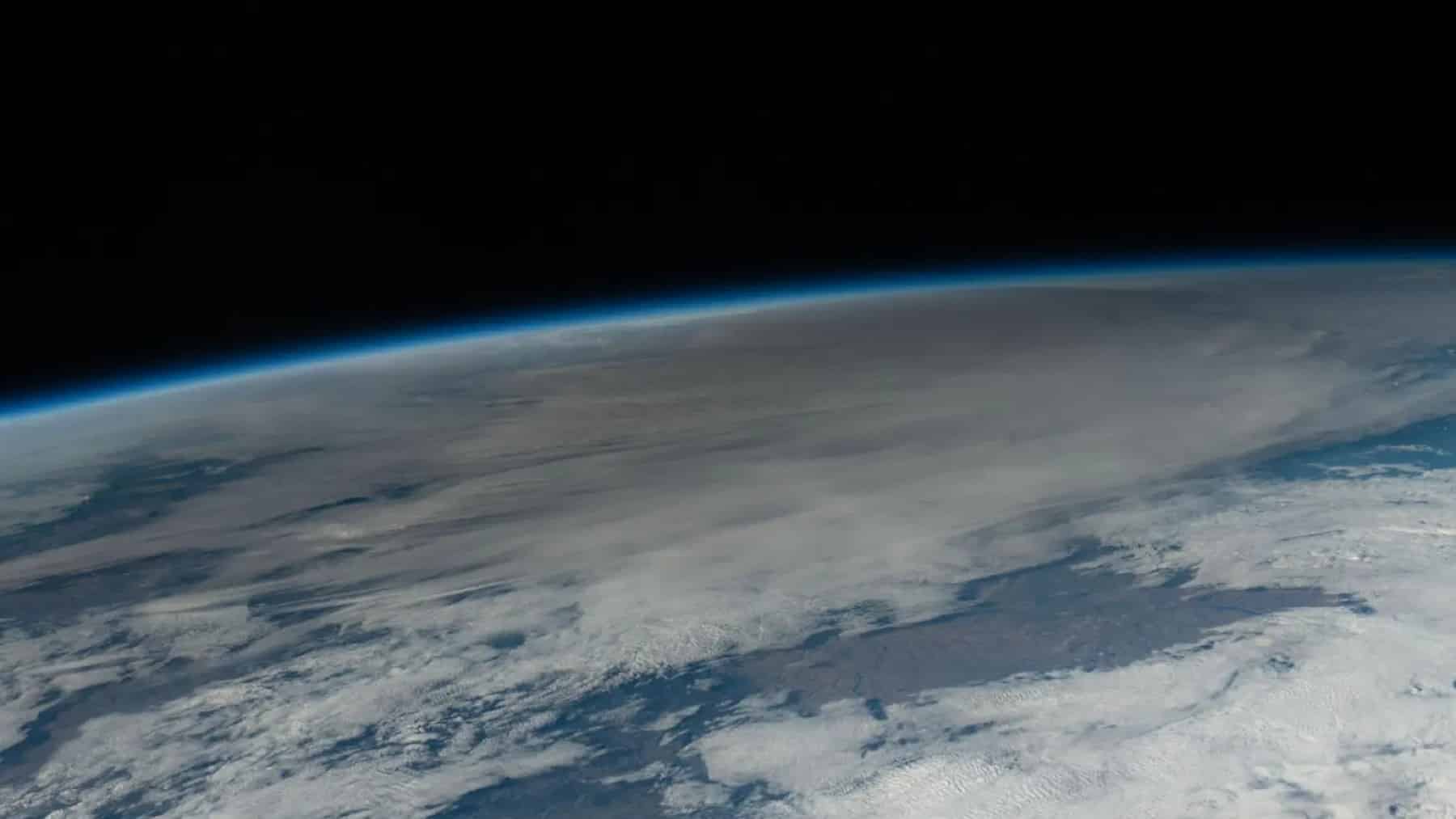
The AWE mission’s delivery of more than five million images represents a major achievement for studying the atmosphere. These publicly accessible images provide complete observable views regarding gravity waves as they behave inside the upper atmosphere. The dataset contains nighttime airglow and temperature patterns that offer both surrounding air monitoring and wave movement tracking.
A vast data collection provides priceless value for scientists and researchers. Scientific data from this approach enables global assessment of gravity waves with measurement spans between tens of kilometres and thousands of kilometres. The extensive viewpoint about these waves remains essential to understanding their influence on space weather events, related satellite operations, and communication systems.
Understanding the mechanics of atmospheric gravity waves
Stable air layers experience disturbances, which lead to atmospheric gravity waves. These waves are formed because of weather systems and geographical features, including mountains. Gravity functions as the restoring force to create atmospheric ripples, which result from disturbances in the atmosphere. The ascending waves affect different atmospheric strata, including the ionosphere, which serves as a vital launchpad for satellite communications.
Through the AWE mission, scientists obtained a distinctive opportunity to analyse these waves using orbital data collection. AWE provides exceptional viewing through images captured by its telescopic cameras, showing how gravity waves propagate through the upper atmosphere while engaging with it. The gathered information is crucial to refining space weather prediction models since these models protect satellite operations and navigation systems.
Implications for space weather
The data gathered by AWE provides a substantial advancement in modern scientific research. The observational data enables specialists to study changes in gravity wave patterns through seasonal and regional perspectives, which expands current knowledge about space weather. Because of this essential information, satellite infrastructure degradation requires strategies to protect satellites and maintain essential services.
The Advanced Mesospheric Temperature Mapper (AMTM)
The AMTM is a top-tier instrument that produces precise images of gravity waves in the atmosphere. With four telescopes attached to its exterior, the AMTM collects 7,000-mile-long surface data points from Earth while it records gravity wave movement between the lower atmosphere and outer space. The instrument determines the brightness of light at particular wavelengths to make detailed temperature maps of both air and wave systems.
Obtaining space-based photographs of gravity waves presents major technical challenges to scientists. AWE team members developed specialised software that solved issues regarding reflections from clouds and ground surfaces, solar panel stray light interference, and moonlight-city light scattering problems.
The AWE mission observations will be vital for defending space-based systems and guaranteeing essential service reliability as scientists advance their atmospheric research. The research achievements demonstrate scientific teamwork and technical advances, creating new possibilities for atmospheric science development.