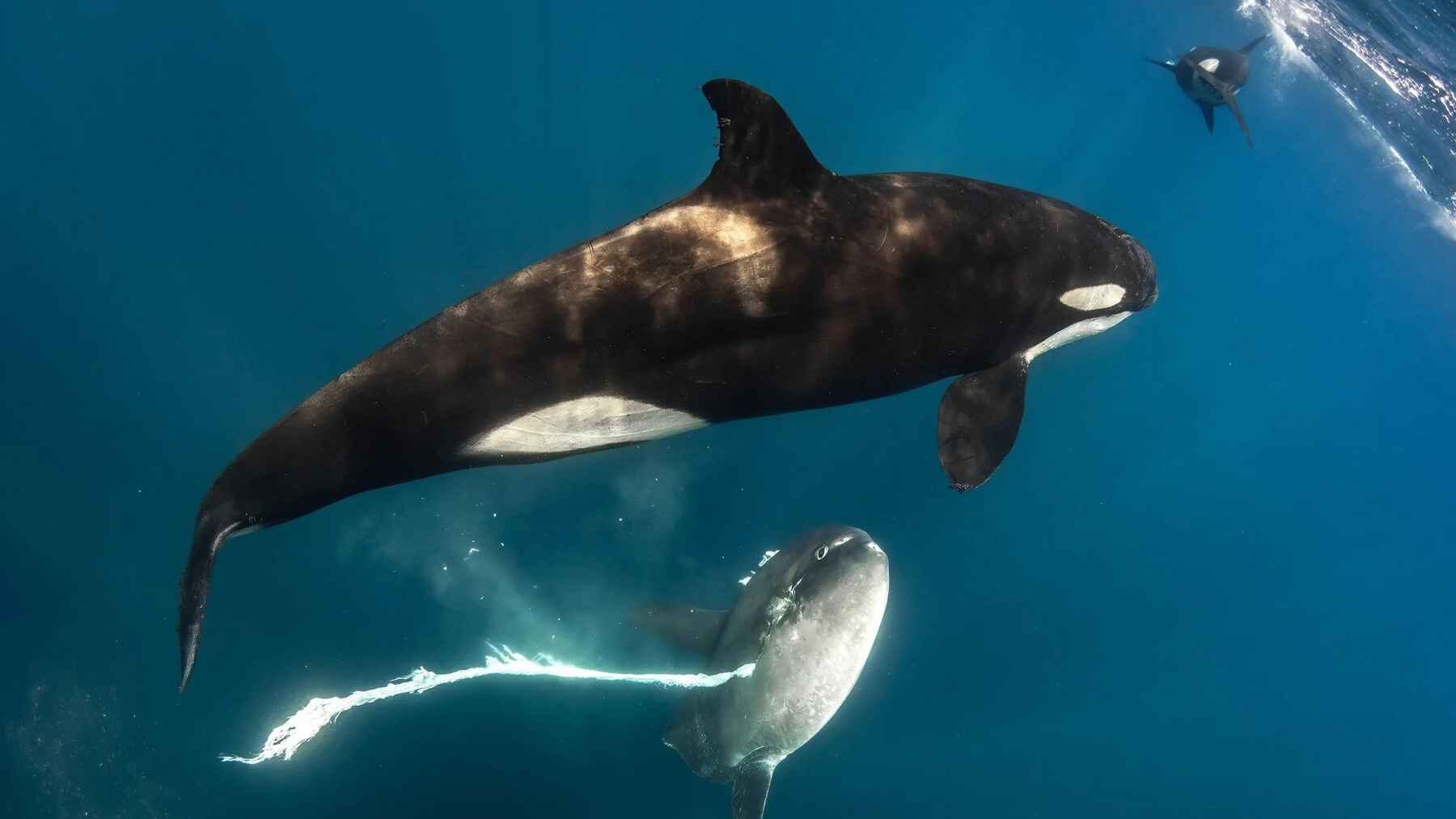
In the Gulf of California, one orca held a dead sharp-tail sunfish steady while another charged in and struck it with enough force to scatter pieces through the water. Quite a hit. Researchers documented the same basic sequence twice, turning two chance video recordings into the first detailed report of a killer whale behavior they call “ram-to-fragment.”
The maneuver looks dramatic. the most important clue came before the collision. Both sunfish were already dead and had lost their internal organs, suggesting the orcas were processing a large meal rather than delivering a killing blow. The smaller pieces may have helped young animals feed, although scientists also leave room for play, social interaction, and learning.
A collision built on precise timing
The first event unfolded near San José del Cabo on July 29, 2024. A female gripped the sunfish by its tail-like rear edge, then released it just before an adult male arrived belly up at high speed. The impact made a loud sound.
Then came the food. A juvenile moved into the cloud of fragments while the adults ate from the larger remains.
Not a blow meant to kill
A second event was recorded in the channel near Isla Cerralvo on Sept. 7, 2025. One adult stabilized another sharp-tail sunfish, a second adult rammed it, and a third joined after the body split. A calf then pulled tissue from the main carcass.
So, why smash a fish that was already dead?
In both encounters, the sunfish had already died and its internal organs appeared to have been removed. That makes the collision look more like food preparation. Almost like breaking an oversized meal into smaller portions that are easier to handle.
Lead author Kathryn A. Ayres of Beneath The Waves wrote the report with Austin J. Gallagher, Christine V. Avena, Carlos M. Duarte, and Jesús Erick Higuera Rivas. Their affiliations also included King Abdullah University of Science and Technology, Conexiones Terramar, and Protección y Conservación Pelágica.
A strange fish built differently
Sunfish belong to the molid family, home to some of the world’s largest bony fish. They move between deep water and the surface, where they may warm themselves, rest, or seek help from animals that remove parasites.
But coming to the surface has a downside. It can also put them within reach of hunting orcas.
The sharp-tail sunfish has a pronounced rear structure called a clavus, giving an orca a useful place to grip. Its body also includes a thick, jelly like collagen layer that is almost 90% water. Researchers suspect this unusual construction may help explain why a powerful strike can cause so much fragmentation. For now, though, that idea still needs testing.
A meal, a lesson, or play
Why go to so much effort after the prey is already dead? That is one of the big questions.
In the first event, the juvenile ate the suspended pieces while the adults focused on the larger carcass. That pattern fits a possible form of parental investment, with experienced animals making food more manageable for a younger group member.
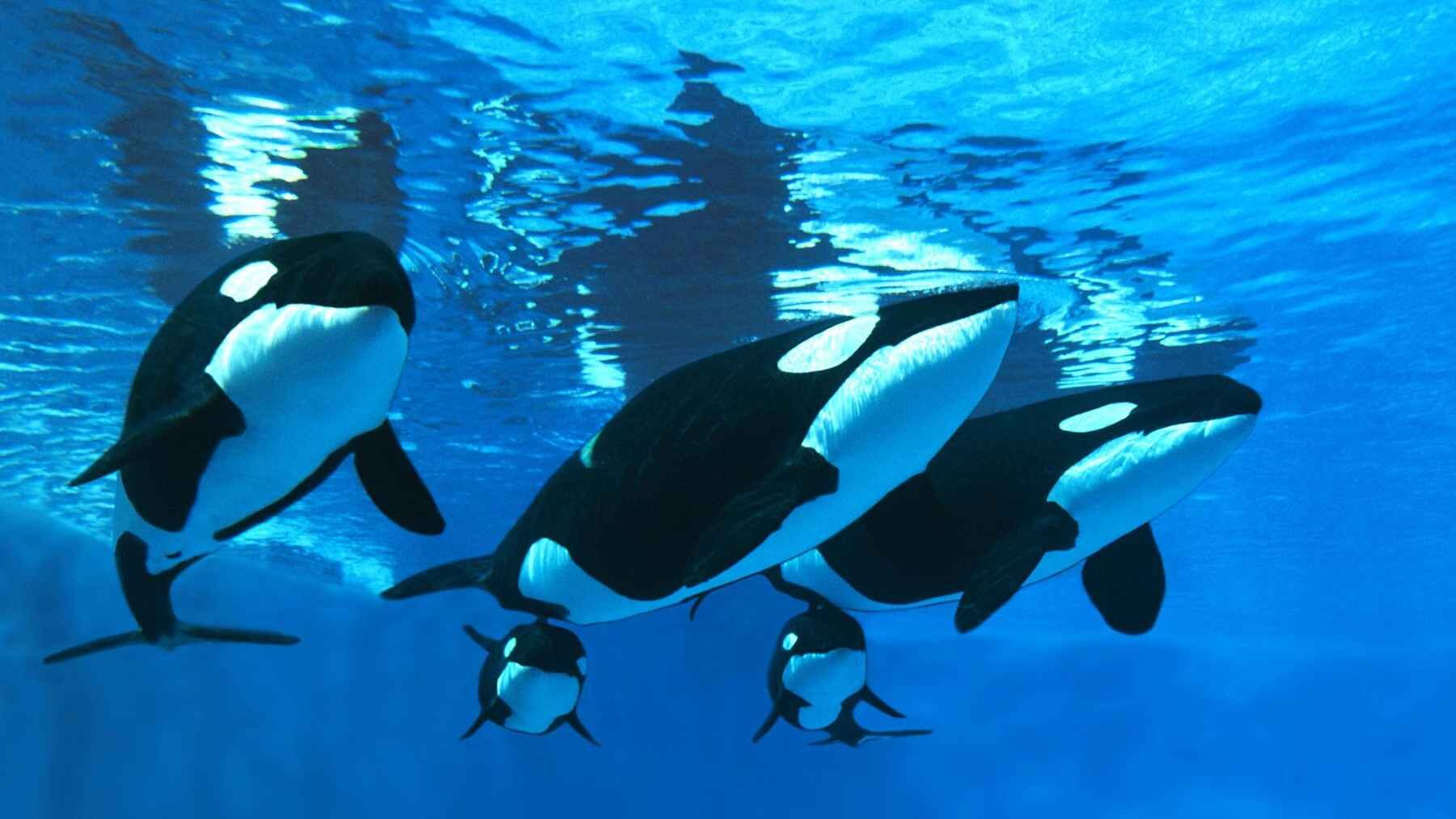
Still, two observations cannot prove that the adults were teaching or deliberately preparing food for calves. The behavior could also involve play or social interaction. What is clear is the timing. The careful handoff between the animal holding the carcass and the one striking it shows remarkably precise cooperation.
Part of a wider hunting toolkit
This behavior fits a growing picture of Gulf of California orcas as flexible predators. Separate research has documented cooperative whale shark hunts, while another study described repeated attacks on juvenile white sharks and the sharing of their energy-rich tissues.
And sunfish do not appear to be a one-time snack.
A regional analysis of orca and sunfish encounters documented 21 predation events involving 17 identified orcas and suggested that at least four groups include molids in their diets. The newly described fragmentation maneuver, however, was confirmed in only two cases.
Chance videos became scientific evidence
The study was built from opportunistic footage rather than a planned experiment. One sequence was filmed in the water by a researcher, while the other came from video supplied by a third party.
Simple footage. Useful science.
The team reviewed body position, timing, release, impact, and feeding to reconstruct what happened. This kind of public and tourism-generated footage can capture behavior scientists might otherwise never see.
There is a catch, though. More cameras on the water can make a rare event look more common, even when the animals themselves have not changed their behavior. More sightings do not always mean more events.
What scientists still need to learn
Researchers do not know whether the same individual orcas took part in both events because the available images were not good enough for reliable identification.
They also cannot yet say whether “ram-to-fragment” is unique to sharp-tail sunfish, shared by particular Gulf of California groups, or used more widely. That remains open.
Better images of dorsal fins and eye patches, along with more complete videos, could help scientists identify individual animals and work out whether this unusual behavior belongs to certain groups or is part of a much broader orca toolkit.
For now, two encounters offer an intriguing glimpse into how these predators handle their food. Hit it. Break it apart. Then share the pieces.
The full study was published in Frontiers in Ethology on July 23, 2026.