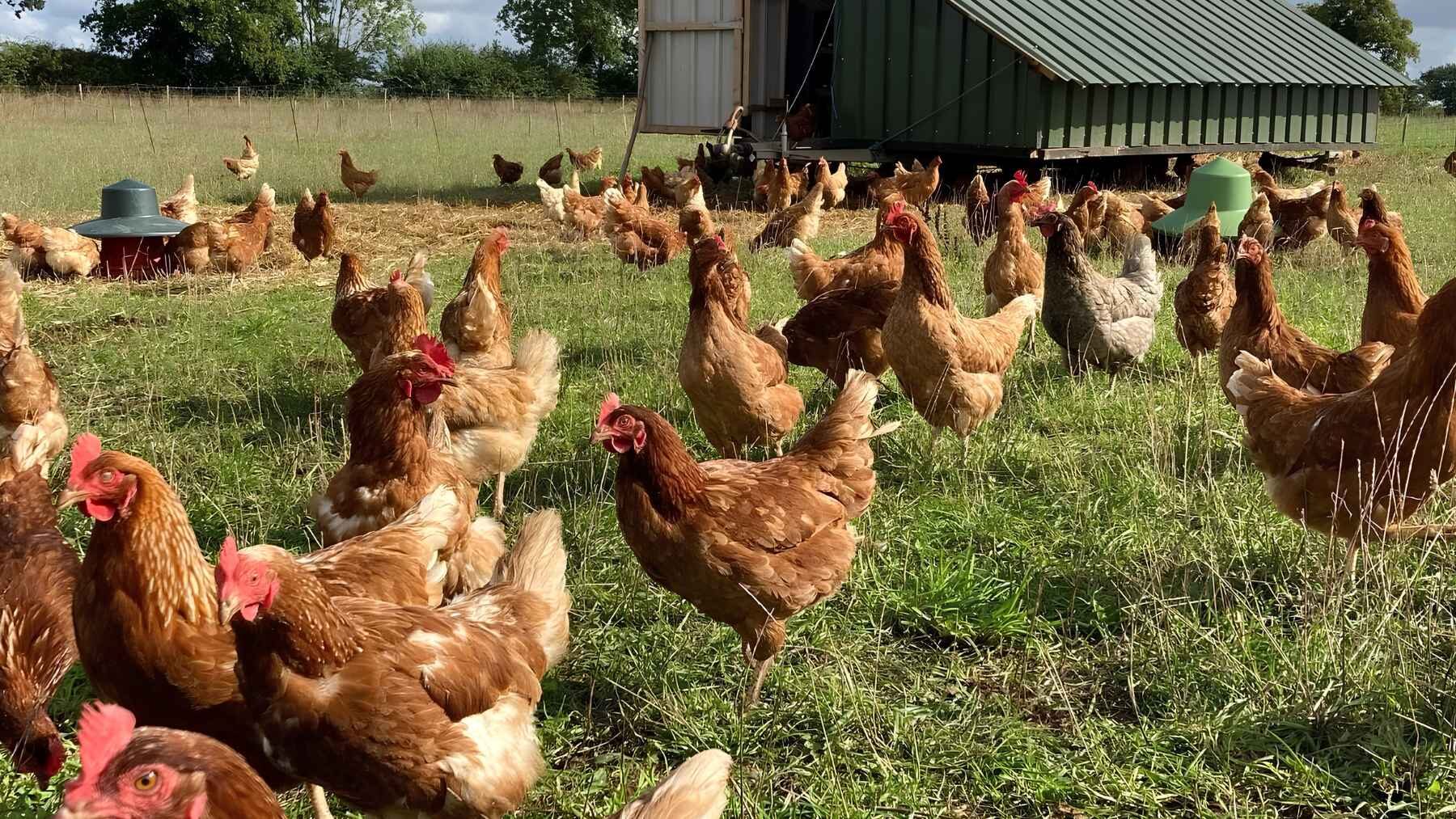
An organic label can feel like the easy environmental choice at the grocery store. Yet a new study using UK data estimates that producing the country’s entire egg supply through organic free-range farms would generate about 2.316 million metric tons of carbon dioxide equivalent, compared with 1.184 million metric tons in a fully caged scenario.
That does not make cages the green answer. Instead, the findings expose a difficult food-system trade-off, since climate impact, land use, and hen welfare do not always improve together, and the real challenge is to make cage-free farming more efficient without taking away space or natural behavior.
Why the footprint grows
Lead author Oliver Martinic and his colleagues modeled eight nationwide production scenarios while keeping total egg output unchanged. They compared global warming potential, eutrophication, acidification, land occupation, hen mortality, and the number of birds required to supply the same volume of eggs.
So what drives the gap? Mostly feed and flock size, since hens in the cage-free and organic systems represented in the dataset used more feed for each unit of egg output, meaning more birds, more feed crops, and more manure were needed to keep supermarket shelves equally stocked.
The modeled climate gap
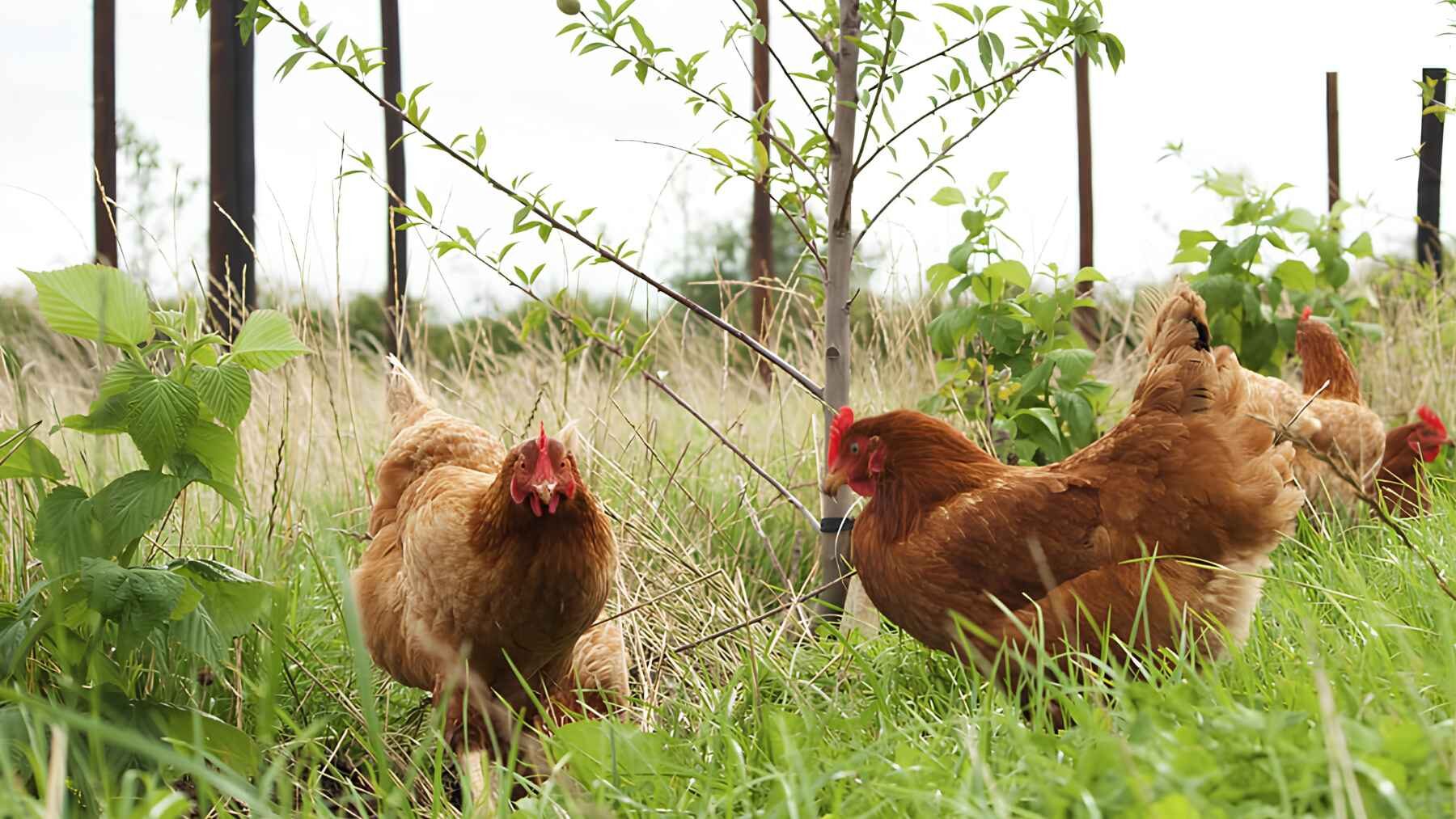
The study’s business-as-usual mix was estimated at 1.439 million metric tons of carbon dioxide equivalent. A fully organic free-range system reached 2.316 million, roughly 60% more, while the modeled land requirement almost doubled.
Compared with the fully caged scenario, the organic total was nearly twice as high. Organic free-range production also ranked worst in the model for eutrophication, acidification, and land occupation, and it had the highest hen mortality.
Welfare is more than mortality
Mortality matters, but it cannot describe a hen’s whole life. The authors acknowledge that this measure does not capture behavior or emotional state, including whether birds can forage, perch, dust-bathe or move outdoors.
That is why the researchers are not calling for a return to restrictive cages. Their conclusion is blunt but useful: “No production system currently performs best across all welfare and environmental measures.”
What organic still changes
An organic system is not simply a cage-free building with a different label. Under Soil Association standards, laying hens must have continuous and easy daytime access to a vegetated outdoor range, and each bird must be provided at least 108 sq. ft. of outside space.
Those conditions are intended to give hens more opportunities to explore and perform natural behaviors. They also help explain why a climate figure alone cannot serve as a complete score for sustainability or animal welfare.
The biggest limitation
The farm data behind the model were collected in 2009 and 2010. The authors describe that as an important limitation, although they say it remains the most comprehensive UK dataset that allows direct comparison across cage, barn, free-range, and organic systems.
The analysis also left out some issues that often matter in debates over organic farming, including pesticide toxicity and on-farm biodiversity. Organic production could perform better on those measures, so the results should be read as a warning about trade-offs rather than a final ranking of every environmental effect.
Why the timing matters
Egg production has quadrupled worldwide over the past 50 years, according to the University of Oxford, so small differences in feed use can grow into large national impacts. In Britain, the shift away from cages is already well underway.
During the second quarter of 2026, free-range eggs made up 76% of UK packing-station throughput, while enriched colony systems accounted for 14%. The government has also proposed phasing out colony cages by 2032, which makes the search for lower-impact cage-free farming more urgent.
What the carton does not tell you
UK producer codes show how an egg was produced, with 0 for organic, 1 for free range, 2 for barn, and 3 for cage. Useful, yes, but those digits do not combine carbon emissions, land demand, water pollution, biodiversity, and quality of life into one simple answer.
For shoppers, the study is less a command to buy one carton than a reason to be cautious with sweeping green claims. For farmers and policymakers, it points toward better nutrition, breeding, flock management, and updated data so cage-free systems can produce eggs with lower environmental costs.
The real sustainability test
Organic farming may still deliver benefits that this model did not measure, while cages remain a serious welfare concern. The honest conclusion is messier but more useful, since a sustainable egg system must improve climate performance and animal welfare at the same time.
The full study was published in Royal Society Open Science.