Astronomers from different international teams, including NASA, released new findings that change our current knowledge about the solar system architecture. Scientists from Taiwan, Japan, and Australia used space probe data collected over 40 years to identify compelling proof regarding a ninth planet in the outer regions of our solar system. A distant world possibly exists about 65 billion miles beyond the sun’s location.
Scientific experts believe this newly revealed discovery alters all existing space knowledge
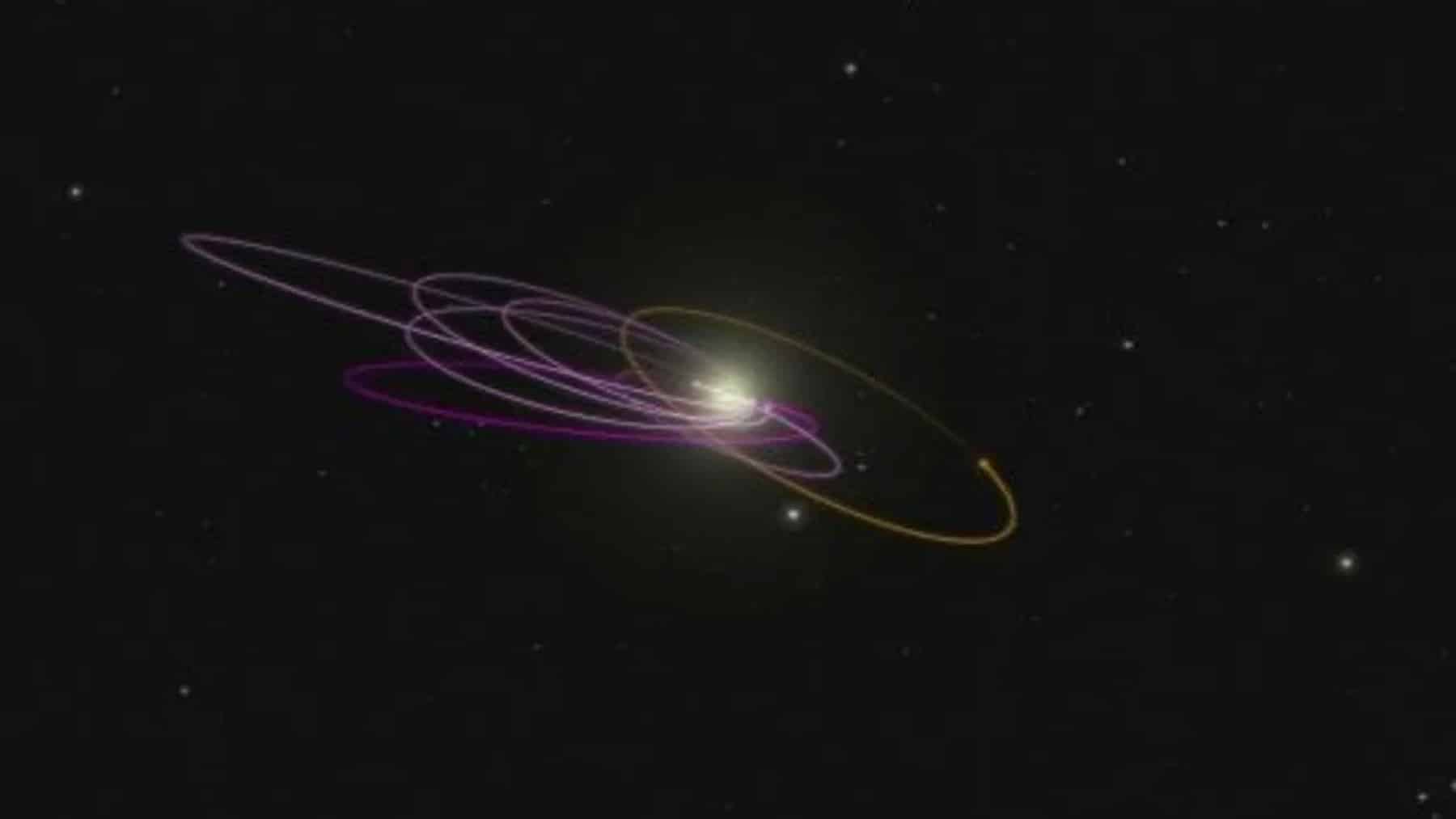
A large gravitational force beyond Neptune triggered the Planet Nine (NASA calls it Planet X) search when two Caltech astronomers presented in 2016. Numerous decades of observational data from the Infrared Astronomical Satellite (IRAS) and the AKARI space telescopes led researchers to uncover evidence of the missing component in our solar system.
This unidentified object stands out compared to all previously observed celestial bodies
The newest planet discovery resides 20 times beyond the sun’s position, compared to Pluto, which lost its planetary identity in 2006. Scientists measured its mass at 7-17 times greater than Earth through gravitational calculations, which matches the size of ice giants Uranus and Neptune. The frozen planet’s temperature ranges between -364°F and -409°F. An object the size of Eris functions as a gravitational shepherd, preserving the Kuiper Belt objects from being destroyed by outer forces.
Recent evidence supports the proof of this clandestine discovery
Professional researchers adopted a strategic method to locate the universal rare object. Two space satellites surveyed the area twenty-three years apart to identify objects that exhibited yearly motion equivalent to the width of a dime at two miles’ distance. The team laboriously analyzed 13 possible candidates through their predictive method until they reached the one object with the correct characteristics.
Future space exploration will experience what effects
Scientists believe this discovery would solve various mysteries in our solar system. The Kuiper Belt objects seem to tilt approximately 20 degrees about the planets’ orbital plane due to the unknown planet’s gravitational influence. The gravitational forces between Pluto and comets may clarify their general Kuiper Belt clustering pattern. NASA states that detecting Planet Nine would normalize our Solar System because most observed star systems feature planets of a middle size between Earth and Neptune.
New scientific findings reveal disturbing facts about how conditions would exist on the unexplained planet
Scientific research indicates extremophiles might exist, although traditional life is not expected in such harsh conditions. Extremophiles on Earth live in boiling springs, icy glaciers, and lifeless deserts. Any potential living species on Planet Nine would face severe challenges because its surface experiences absolute darkness and no light, and temperatures fall so low that they freeze all gases present.
Astronomers predict this will lead to finding an even more remarkable discovery
As the team firmly states, two detected objects do not establish a complete planet orbit or prove its existence. This investigation is the most substantial prospect since solar system planet search campaigns started. More observations through technological advancement will enable scientists to acquire better knowledge about this enigmatic object, which determines the formation of our cosmic area.
The research methodology proved distinctive by examining observations from 23 years to track slow-moving objects in the night sky. The IRAS satellite, operated in 1983, was followed by AKARI’s operations from 2006 until 2007, allowing researchers to monitor planet movements across these distinct observation periods. The discovery has impacts that exceed the search for an alternative planet.
Scientists discovered alignment with observations made across other star systems within our galaxy. During surveys targeting planets around stars and their analogous Neptune-sized relatives, NASA researchers identified super-Earths as the most frequently occurring planet type. A Planet Nine discovery would address a significant planetary-size void in our solar system because it currently houses no such bodies.