
Physics
69 stories · since 2024 · latest, November 6, 2026
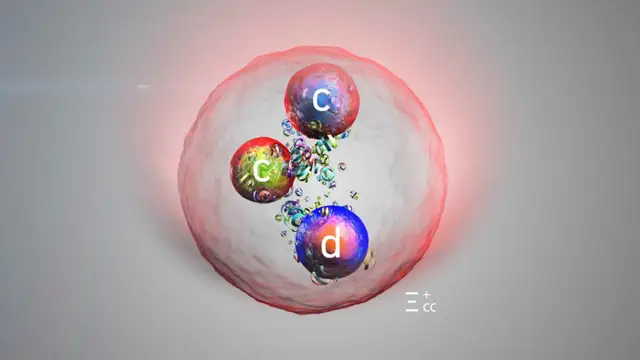
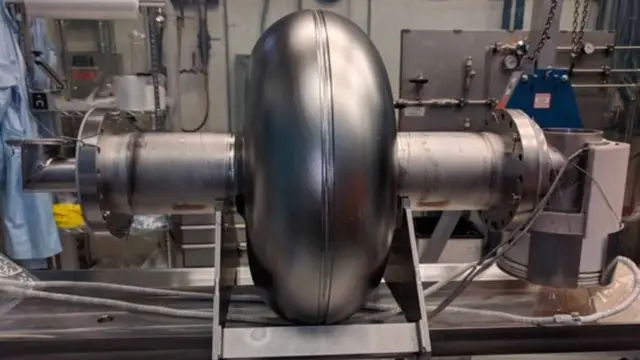
CERN has detected a particle similar to a proton, but about four times heavier, and so rare that detecting it has been much more complicated than it seems
What if you could take a proton, keep its basic three-part structure, and then swap in heavier building blocks? Physicists working with the Large Hadron…
ECOnews Newsroom · May 1, 2026
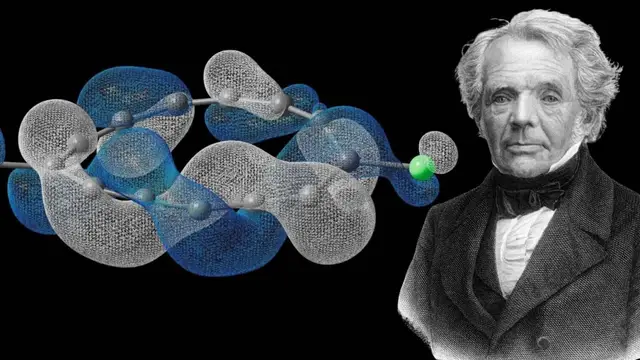
IBM and university researchers create a molecule whose electrons follow a “half-Möbius” twist
If you twist a strip of paper and tape the ends together, you get a Möbius loop, a shape that flips what “inside” and “outside” even mean. In March 2026,…
ECOnews Newsroom · May 1, 2026
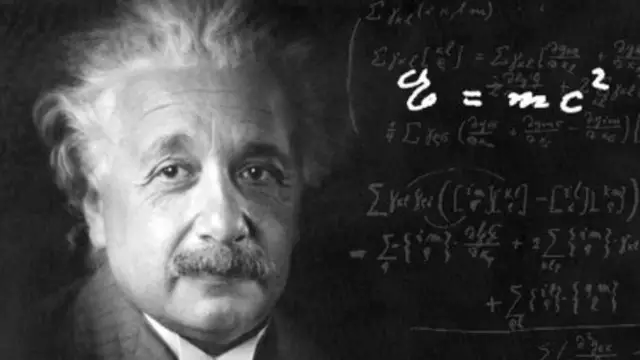
Albert Einstein, a scientist, speaking to his son in 1900: “Life is like riding a bicycle: to keep your balance, you have to keep moving”
It’s one of the most shared pieces of advice online. “Life is like riding a bicycle. To keep your balance, you must keep moving.” It turns up on posters,…
Adrian Villellas · April 25, 2026
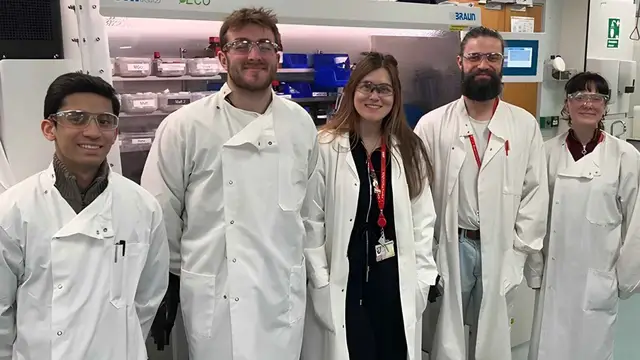
King’s College London chemists create a three-atom aluminium molecule that could replace scarce metals in catalysts
What if one of the most common metals on Earth could do a job we usually reserve for platinum, palladium, or other hard-to-source materials? Chemists at…
ECOnews Newsroom · April 24, 2026
ARPA-E funds particle accelerator projects to cut nuclear waste storage from 100,000 years to a few centuries
What if the most stubborn part of nuclear waste did not have to outlast entire civilizations? Researchers are testing whether particle accelerators can…
ECOnews Newsroom · April 24, 2026
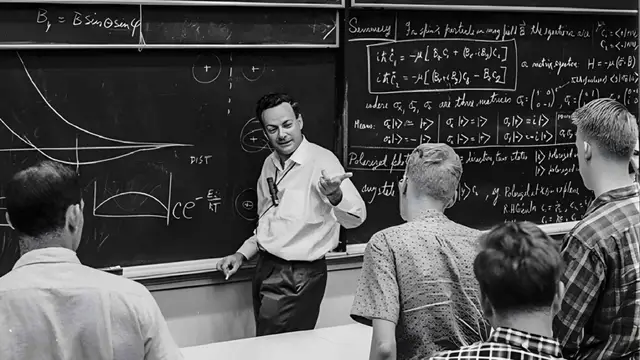
Richard Feynman, physicist and visionary, in 1959: “There is enough space on the head of a pin to fit the entire Encyclopaedia Britannica”
Could you really pack a whole encyclopedia onto the head of a pin? It sounds like a party trick, but it points to a serious question we still wrestle with…
ECOnews Newsroom · April 8, 2026
Time is not the same in all materials, and an experiment shows that an electron can take between 26 and more than 200 attoseconds, depending on where it is located
When you flick on a light switch, it feels instant. The bulb goes on, your room brightens, and your brain files the whole thing under “zero waiting time.”…
Adrian Villellas · March 30, 2026
Einstein predicted it a century ago… and now they are measuring it live: two stars approaching each other like a cosmic clock
A century ago, Albert Einstein predicted that massive objects that orbit each other would send tiny ripples through space itself and slowly spiral…
Adrian Villellas · March 29, 2026
The crazy Armageddon plan to “drop a nuclear bomb on the asteroid” turns out not to be so crazy after all, and CERN has just tested it with a real meteorite
Most people remember that movie where a crew flies out to blow up a Texas-sized asteroid and save Earth. For years, scientists treated that idea more as…
ECOnews Newsroom · March 28, 2026
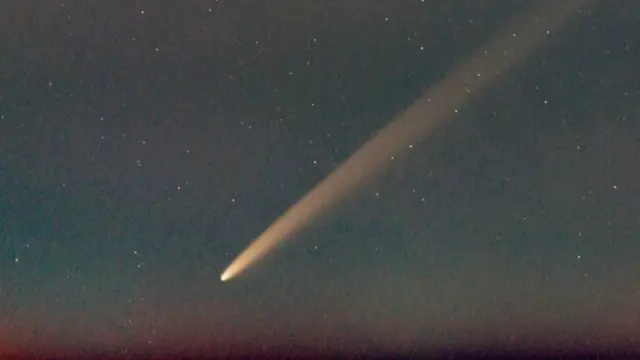
Stephen Hawking, physicist: “I don’t think humanity will survive the next thousand years”
When Stephen Hawking warned that humanity might not survive the next 1,000 years without leaving Earth, the line landed like pure science fiction. But was…
Adrian Villellas · March 25, 2026
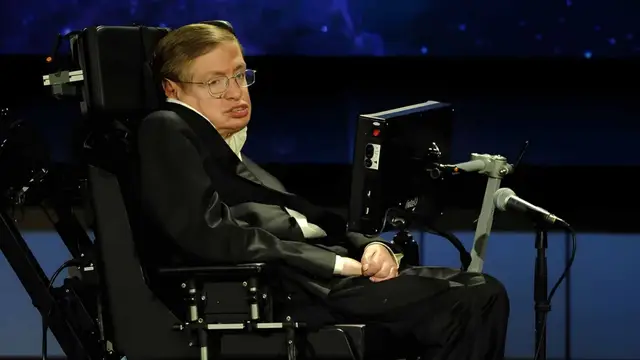
Laurent Simons earns a PhD in quantum physics at 15 in Antwerp and starts a second doctorate in medicine and AI in Munich
At 15, most teenagers are thinking about school tests, hobbies, or what to do on the weekend. Laurent Simons just defended a doctoral thesis in quantum…
Adrian Villellas · March 23, 2026
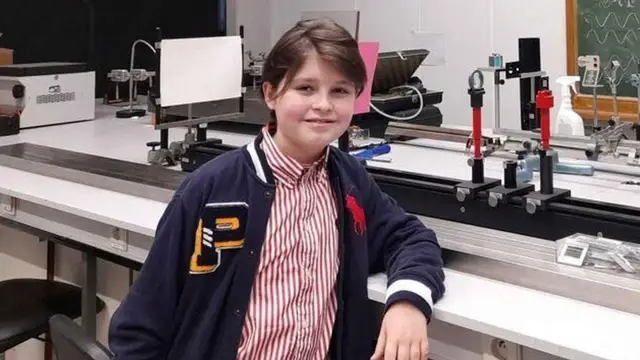
In 1989, Voyager 2 observed “something that didn’t add up” on Neptune, and it took us decades to understand it. Now, a study published in Nature suggests that dark ice could be the cause of the planet’s strange magnetism
When Voyager 2 swept past Neptune in 1989, its cameras grabbed the headlines. The real surprise, though, came from its magnetometers. Instead of a tidy…
ECOnews Newsroom · March 12, 2026
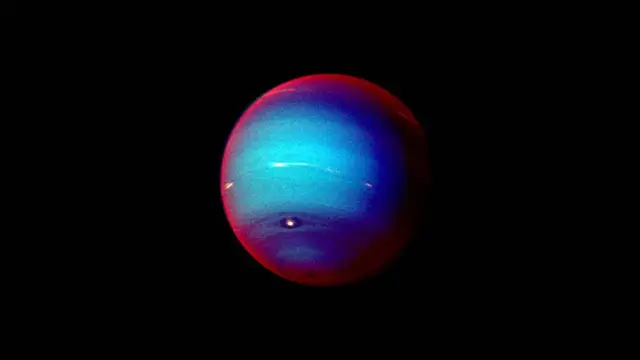
From rebuilding a small plane between the ages of 12 and 14 to earning a PhD from Harvard and graduating from MIT with the highest grade point average in her class, the physicist born in Chicago in 1993 has been leading a line of research on celestial holography since 2022 and is already being compared to Einstein, although she does not want that label
What if everything that ever happens in the cosmos could be written on the night sky like a hidden code?
Adrian Villellas · March 11, 2026
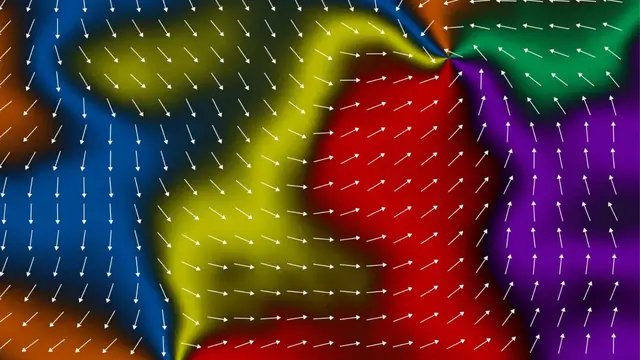
University of Nottingham scientists image and control altermagnetism for the first time, a third type of magnetism
Most of us know magnetism from everyday life, like fridge magnets or the tiny motors buzzing inside a laptop fan. For a long time, physics textbooks said…
ECOnews Newsroom · March 3, 2026
A study proposes reaching Alpha Centauri in about 40 years with a probe powered by relativistic electron beams
A new line of research says we may not need fantastical warp drives to reach another star within a single lifetime. Instead, we might lean on something we…
Adrian Villellas · February 15, 2026
