USGS projects world capacity to produce natural graphite could rise about 20% from 2025 to 2030, among 8 critical minerals each more than half imported by the United States
Capacity, not output: USGS sees natural graphite up about 20% and potash about 18% from 2025 to 2030; China leads graphite and Brazil niobium.

· 4 min read
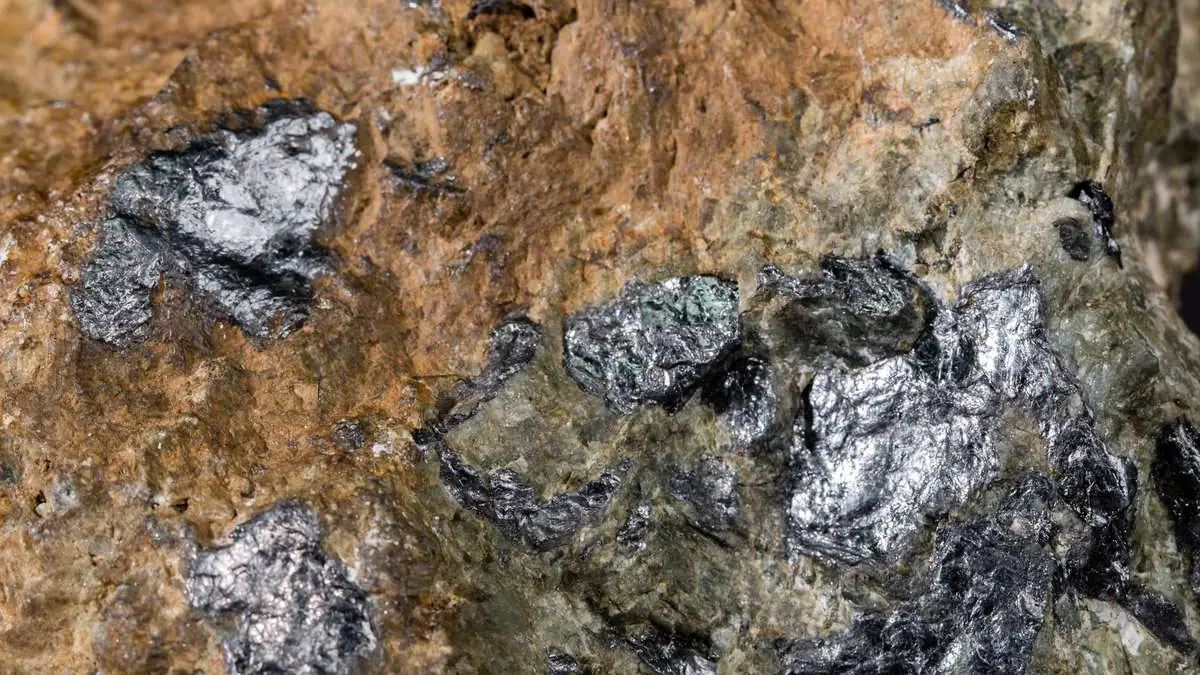
The U.S. Geological Survey projects that world capacity to produce eight critical minerals will keep growing through 2030. Natural graphite is expected to rise about twenty percent and potash about eighteen percent from 2025. These figures measure how much mines and plants could produce, not what they actually make. The United States depends on imports for more than half of its consumption of each of the eight, which also include antimony, copper, niobium, silicon, silver and tungsten. Supply of graphite, niobium, silicon metal and tungsten is concentrated in one country holding more than seventy percent of world capacity. For graphite, silicon and tungsten, that country is China. The United States has not mined natural graphite in more than thirty years, so it imports all it uses. Antimony mining restarted in Montana in 2025, after none from 2001 through 2024, and U.S. capacity is expected to grow for antimony, graphite and tungsten.
Key points
- In 2025, Brazil held 92% of world niobium capacity and China supplied over 70% of mined graphite.
- Net import reliance for potash in the United States was an estimated 92% in 2025, compared with 75% in 1995.
- Antimony mining restarted in Montana in 2025 after no domestic mining from 2001 through 2024.
World capacity to produce eight critical minerals is projected to keep growing through 2030, according to a new outlook from the U.S. Geological Survey. The largest projected gains are for natural graphite, at about 20%, and potash, at about 18%, from 2025 through 2030.
The figures measure production capacity, meaning how much mines and plants could produce, not actual output. The report notes that utilization, the ratio of actual output to installed capacity, can vary significantly among minerals and years. The USGS released the second edition of its World Minerals Outlook on November 12.
The eight minerals are antimony, copper, graphite, niobium, potash, silicon, silver and tungsten. All of them are on the 2025 List of Critical Minerals, and the United States depends on imports for more than 50% of its annual consumption of each one, the agency says.
Modest growth for most
For six of the eight, the report expects modest capacity increases of 4% to 10% between 2025 and 2030. Tungsten is projected to grow by 10% or more, copper by about 9% and niobium by 8%.
Antimony capacity is projected to rise by 6%, silicon metal by 5% and silver by 4%. The authors analyzed world production data from 2019 through 2025 and estimated capacity data from 2023 through 2025.
“The World Minerals Outlook gives us a clearer picture of where global critical mineral production is headed over the next five years,” said Andrew Stewart, lead author of the report. “By identifying anticipated changes in production capacity, we can help policymakers and industry better understand potential supply risks and make informed decisions about future investments.”
Supply in few hands
Supply of natural graphite, niobium, silicon metal and tungsten remains concentrated in a single country, which holds more than 70% of world capacity. For all of them except niobium, that country is China, the report says.
In 2025, Brazil accounted for 92% of total niobium capacity, followed by Canada with 6%. About 90% of niobium is used to strengthen steel, according to the USGS.
Graphite shows how tight that concentration can be. In 2025, China supplied over 70% of mined graphite and more than 90% of natural graphite battery anode material to the global market, the report says.
Graphite and batteries
The United States has not mined natural graphite in more than 30 years, so it imports all that it consumes. American consumption rose sharply in 2022 with rapid growth in energy storage and stayed elevated through 2025, according to the report.
China's share of American graphite imports rose from 33% for 2018–2021 to 46% for 2021–2024. Over 2024 and 2025, Chinese flake-graphite capacity expanded faster than demand. That pushed prices to multiyear lows and idled some operations, the authors write.
Potash for farm fields
Potash is primarily used in fertilizer. Net import reliance for potash in the United States was an estimated 92% in 2025, compared with 75% in 1995, the report says.
From 2021 to 2024, the main import sources were Canada, with 79%, and Russia, with 12%. Canada, Russia, Belarus and China held over 75% of world potash production capacity in 2025.
Antimony and tungsten at home
Antimony was not mined in the United States from 2001 through 2024. In 2025, one company restarted mining operations in Montana, according to the report.
World capacity to mine antimony was 192,000 metric tons in 2025, according to the report. Global supply came mainly from China, with 36% of world production that year, Russia with 29% and Tajikistan with 20%.
China banned antimony exports to the United States beginning in December 2024. The average annual American price for antimony metal rose from approximately $10 per pound in 2024 to $24 per pound in 2025, the report says. China paused the ban in November 2025, and it was scheduled to restart at the end of November 2026.
Tungsten has not been mined commercially in the United States since 2015, the USGS notes. Defense Production Act awards support new projects in Nevada and Canada. American production capacity is expected to increase for antimony, natural graphite and tungsten.
Copper at home and abroad
Copper is a different case. The United States is mostly self-reliant in mine supply, but its import reliance for refined copper was an estimated 57% in 2025, according to the report. The USGS expects electronics and infrastructure such as data centers to take a larger share of copper demand.
Worldwide, mined copper capacity was nearly 30 million metric tons in 2025. Chile was the leading producer, with 23% of world production, while China accounted for 48% of global refined copper output that year, the report says.
U.S. Geological Survey
Glossary for this story
- Critical minerals
- Raw materials such as lithium, cobalt and rare earths that are vital to the economy and the energy transition and whose supply is at risk.
- Battery storage
- Storing extra electricity, mostly in large batteries, to use it later when it is needed.
ECOnews Newsroom
Writer at ECOnewsA team of journalists specializing in socio-environmental news, sustainability, climate change, the environment, responsible consumption, and innovation. At EcoNews, we provide clear, reliable, and relevant coverage of the environmental and social challenges shaping our era.
More from ECOnews NewsroomComments · 0
Rules ›No comments yet. Be the first to share your view.