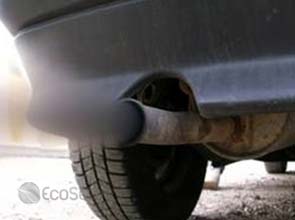
Nitrogen oxide is emitted from vehicles that burn fossil fuels. It causes ozone layer depletion, and is considered a serious air pollutant that gives rise to acid rain and smog.
The air-purifying concrete contains titanium dioxide, a photocatalytic material that removes nitrogen oxide from the air and converts them, with the aid of sunlight, into harmless nitrate which is then easily rinsed by rain. The concrete used in the tests are made by Dutch manufacturer Struyk Verwo Infra.
The tests were carried out on the Castorweg, a busy road at the Dutch town of Hengelo. Around 1,000 square meters of the road were paved with air-purifying concrete stones, while another area of the same size was left with normal paving stones.
The researchers then carried out two air-purity measurements on the Castorweg. Over the area paved with the air-purifying concrete, nitrous oxide content was found to be 25 percent to 45 percent lower than that over the area paved with normal concrete.
“The air-purifying properties of the new paving stones had already been shown in the laboratory, but these results now show that they also work outdoors,” said building materials Professor Jos Brouwers at the architecture, building and planning department.
While the air-purifying cement is about 50 percent more expensive than normal concrete, it offers several other advantages over conventional building materials.
The concrete stones break down algae and dirt so they are easier to keep clean. Prof. Brouwers also sees a number of potential applications for the new product. He said it can also be mixed with asphalt for asphalt surface roads or used in self-cleaning and air-purifying building walls.