The government will spend a total of 4 trillion yuan, or $612 billion in water conservation projects over the next 10 years. This investment will focus on enhancing the water supply capacity for urban and rural areas, flood prevention systems, and the construction of farming infrastructure.
In addition, to combat the country’s water shortage, its government has established a strict water resource management measure which was launched last January in a white paper known as the No. 1 document.
As mandated in the No. 1 document, 10 percent of land-transfer fees which amount to some 60 to 80 billion yuan each year will be used to boost agricultural conservancy construction. China’s water consumption should also be controlled within 670 billion cubic meters by 2020.
Water consumption was also touched by the 12th five- year plan, cutting per unit of value-added industrial output by 30 percent.
“China faces an imbalance between the supply and demand of water to support its rapid social and economic development, while protecting the natural environment and ecosystems,” said Chen Lei, minister of water resources in a roundtable meeting on climate change in China.
Mr. Chen pointed out that water is one of the sectors most affected by climate change.
“Global climate change could further exacerbate existing problems over water security, water supply and farming irrigation.”
Further, Kahlid Mohtadullah, a senior adviser of Global Water Partnership, a worldwide organization that focuses on integrated management of water resources for sustainability, said that the water pollution, brought about by rapid development, is another challenge for the country.
“China is vulnerable to the impacts of uncontrollable climate change as its water infrastructure is weak or unprepared for such changes,” he said.
Mr. Mohtadullah stressed the need for policymakers to have better information when it comes to regional impact of climate change on water supplies, and on ways of adapting to it. He said that failure to do so will result in reduction in economic growth.
Water problem
Maintaining sustainable development and delivering safe, clean water to China’s 1.3 billion-people population is a challenge as China depends on only seven percent of the global freshwater resources, and eight out of ten of its water basins could face water shortages by 2030.
The agricultural sector accounts for 65 percent of the country’s total water use; however, only 45 percent of the water is consumed by the crops due to extensive waste in irrigation systems.
The industrial sector takes up to 24 percent of the total water consumption in the country. But, compared to developed countries that recycle 75 to 85 percent of their water, China’s recycling rate is only 40 percent.
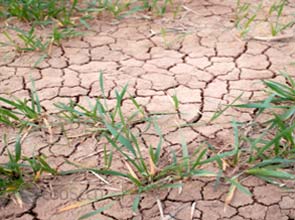
Along with water pollution and increasing demand in water, some provinces in China experienced severe drought just this January, affecting more than 2.2 million people and 2.7 million livestock country-wide, and affecting more than 4 million hectares of crops in the provinces of Shandong, Henan, Hebei, Anhui, Shanxi, and Jiangsu – provinces which have received little rainfall since October, data from the Office of State Flood Control and Drought Relief headquarters showed.
Yang Zhendong, director of Shandong provincial flood and drought control office said that the drought that hit them is the worst in the last six decades.
China has long since been trying to address its water problem, outlining its water resources development strategies in its 11th five-year plan (2006-2010).
International think tanks have also been taking a notice on China’s water shortage woes. In 2009, the World Bank urged China to reform and strengthen its water resource management framework in its report titled “Addressing China’s Water Scarcity.”