While the entire world seems to be dealing with climate change, fossil fuel depletion, and rising energy demands, China is looking to go beyond Earth – approximately 36,000 km above earth, to be exact. China has been keen about its mission to create a massive space-based solar power plant that could harvest 100 billion kwh of energy yearly which would be more than enough to reduce the global reliance on oil and coal significantly.
Space-based solar power: Exceeding boundaries
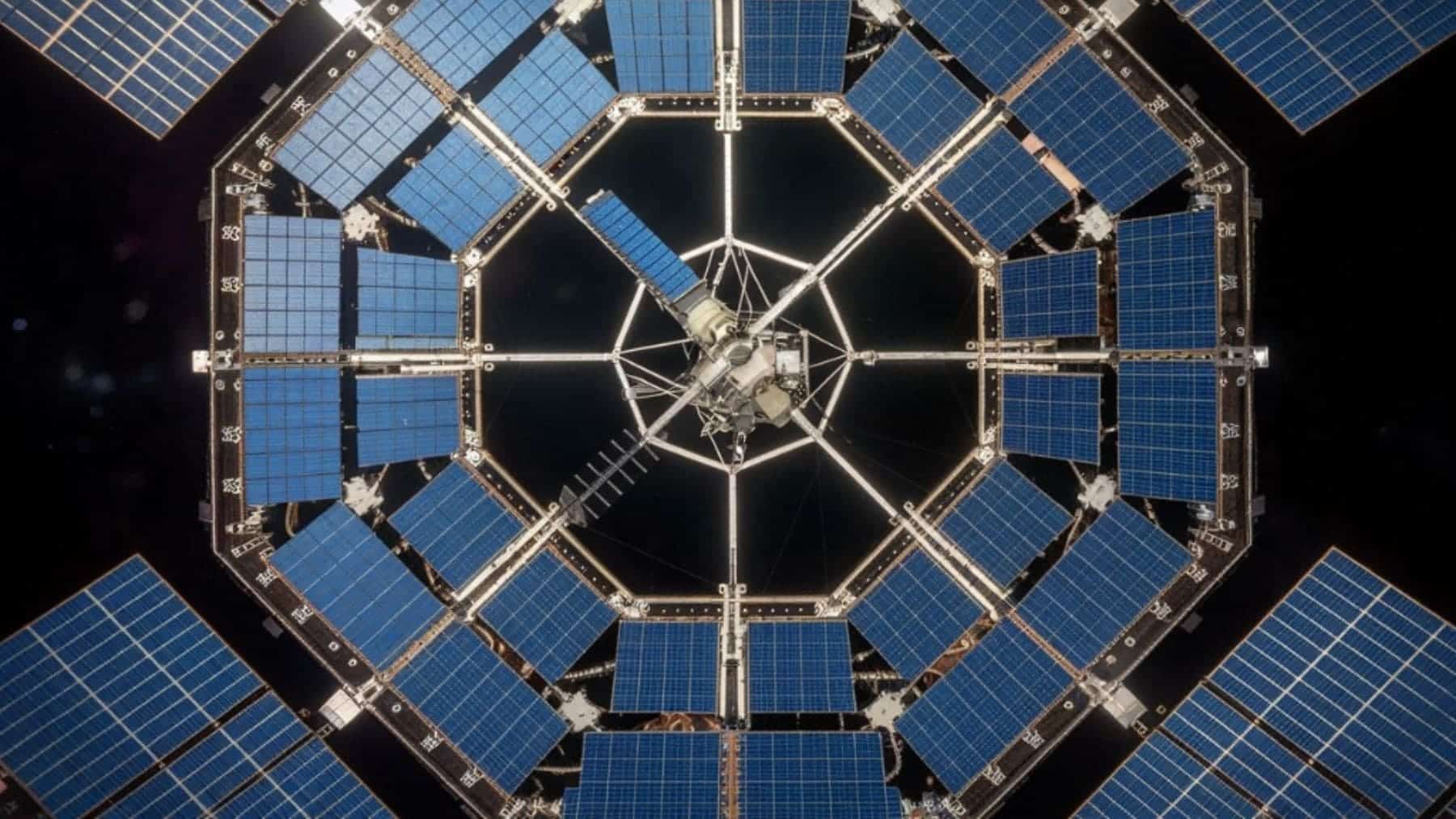
At the very core of China’s plan is this 1-kilometer-wide solar power station that is said to be deployed in geostationary orbit, a stable position that is approximately 36,000 km above the equator in a position where satellites match Earth’s rotation. Contrary to the ground-based solar panels that tend to be affected by weather changes and are influenced by the day-night cycle, a space-based solar system would be able to receive sunlight 24 hours a day. China was surely right that this solar system would be about 10 times more efficient than our Earth-based solar panels.
The collected energy from the solar panels could be converted into microwaves that are then sent down to receiving stations on Earth. The premise of this technique bypasses the many large limitations of traditional solar energy including that of cloud cover, nighttime hours, and panel degradation as a result of dust or temperature swings. The results of this space-based solar project is the ability to harness solar power that is completely weather-independent generating a continual stream of clean electricity meeting the global need for power supply.
The process of building a power plant in orbit
While the expectations of this space-based solar is enthusiastic, the assembling of a 1-kilometer structure in space seems slightly more ambitious. To bring their vision to reality, China started the construction of the Chongqing Space Solar Power Plant in 2019. This will rely on the Long March-9 rocket, a reusable heavy-lift launch system able to carry 150 metric tons into orbit. It does, however, mean that dozens of missions will be required to transport and assemble the components of the power station.
The knowledge that once operational, the plant will generate enough energy within a year to match the remaining extractable oil reserves on Earth, as per China’s estimates, is what is driving the motivation behind this project. The project’s geostationary location will allow for uninterrupted power collection, allowing for the photovoltaic arrays to be optimized for the harsh environment of space. The main challenge lies in the ability to transmit the harvested energy back to Earth. When analyzed, current microwave transmission systems seem to lose a portion of the energy during conversion. Nevertheless, more recent tests like that of Caltech’s 2023 trials suggest drastic improvements concerning this core challenge.
According to Chinese aerospace engineer, Long Lehao, this may be “another Three Gorges Dam project above the Earth,” with the hope that this project could redefine how humanity generates and transmits energy.
A leap above the Earth
China seems to be making quite a geopolitical statement with its mission to power the entire planet in this way. China continues to position itself as a leader in renewable innovation with this space-based solar power project that offers the potential to put to bed the carbon-fueled era.
While other nations, such as the United States, Japan, and members of the European Union, are exploring similar technologies, China’s progress is backed by strategic planning and long-term investment, making China the leader in the revolutionary energy game. Comparisons to the Three Gorges Dam, the world’s largest hydroelectric project, underline the scale and symbolic importance of this new endeavor. America surely is following in China’s footsteps, as America too has its own Three Gorges Dam. Could America be exploring solar above the Earth, too?