It seems that we can finally say goodbye to oil as an energy source, and what’s more, we are on the verge of eliminating carbon emissions from our environment. Why? Well, small modular nuclear reactors are emerging as a somewhat realistic promise to replace fossil fuels. One of them, in fact, recently went through a very important stage in America.
The nuclear energy reactor that will end petroleum
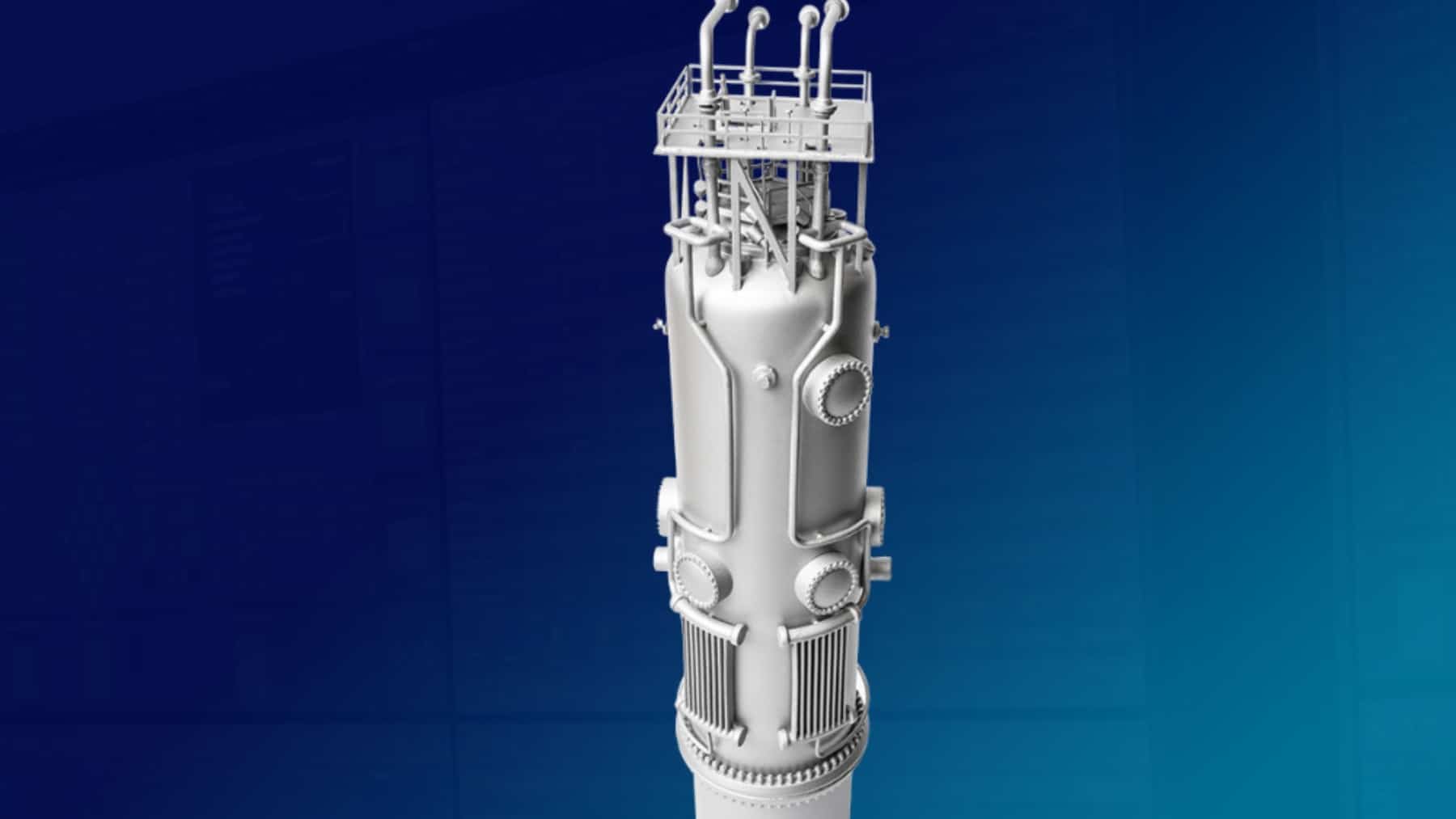
Let’s look at the context: the American company NuScale Power recently obtained regulatory approval for an innovative project. We’re talking about the US460 reactor, which is a more powerful version of its predecessor, because it has the potential to produce 77 megawatts per module and up to 462 megawatts per plant, and, of course, the main point: it promises to deliver clean, safe, and scalable energy. However, one point that deserves much attention: the reactor has not yet been turned on. What happened is that this new approval allows it to be built and operated if a client company moves forward with its implementation.
Why did this project achieve this feat? Well, this victory was due to its format. They can be produced in factories with replicable parts, which will facilitate transportation and assembly at the destination. This reason alone is completely different from conventional reactors, which require years of construction on site. In other words, NuScale’s proposal is very clear: they want to reduce production costs on a large scale, increase safety, and accelerate the energy transition.
“NuScale’s enhanced design features the same fundamental safety and passive safety features previously approved by the NRC, with increased power and select design changes to support growing capacity needs”, the company said.
If the nuclear reactor is so efficient, why hasn’t it been turned on yet?
The main reason is that it has not been built yet. And that is because this approval is only a technical and regulatory validation of the project itself, and from there, interested companies can request authorization to build it and then operate it (as Canada did when it turned on the millennium fusion reactor).
NuScale itself knows that it can never be too careful now. After all, they already had a project canceled in 2023, the Carbon Free Power Project, which was done in partnership with a consortium of Utah municipalities. And look, they had a promise of US$ 1.35 billion in federal subsidies, but the project ended up being abandoned due to increased costs and partners withdrawing.
Nowadays, the company is betting once again on a partnership, but this time it is with Entra1, a company that holds the global commercial rights to the technology. Negotiations are already underway, including with five large technology companies, to implement the first reactor in the US or abroad by the end of the decade.
Will this $9 billion bet to build a nuclear reactor pay off?
All this energy innovation is not cheap at all. According to the Institute for Energy Economics and Financial Analysis (IEEFA), they expect the US460 reactor to cost US$9 billion to implement. It is worth noting that this amount includes everything from the construction of the modules to regulatory, infrastructure, and operational costs. Even so, the amount raises some doubts about the economic viability of the technology, even when compared to other renewable sources, such as solar and wind.
Some critics even argue that the reactors produce radioactive waste, and that the US does not even have a definitive storage location. Perhaps this is why Japan, thinking about combating these consequences, created the first super solar panel, which alone is equivalent to about 20 nuclear reactors operating at the same time.