If energy rains from outer space, why are we still struggling by trying to find energy from alternative sources? According to what had been predicted 100 years ago, it is true that there are energetic particles from space currently trapped much higher than our planet. Thus far, it seems like this energy potential cannot be harnessed as it is impossible to mine this energy.
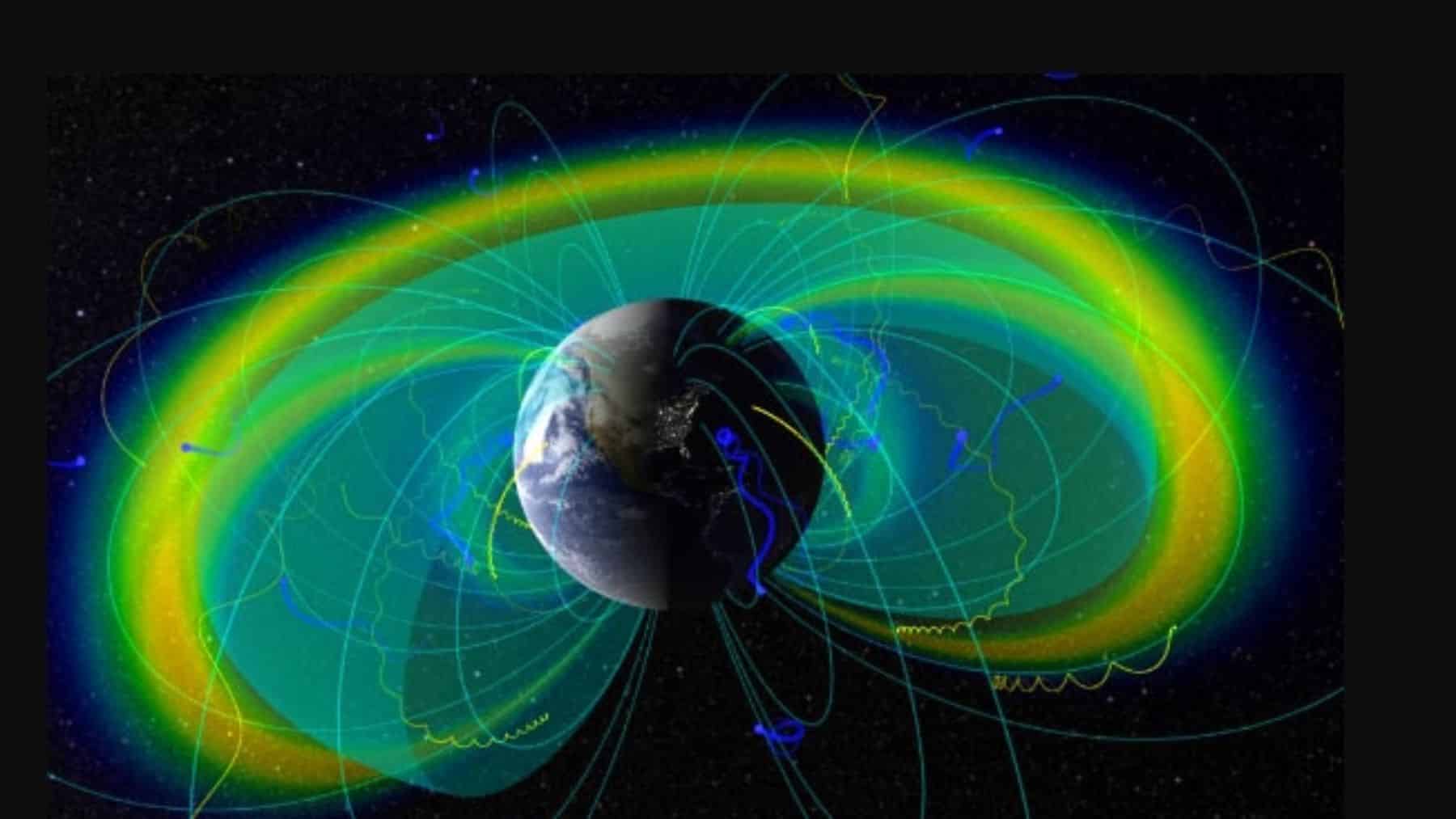
Van Allen radiation belts surrounding Earth
In 1958, James Van Allen discovered that there are energetic particles surrounding Earth. According to what was seen by Van Allen using a Geiger counter was an initial layer surrounding Earth and filled with protons. The outermost belt had been filled with electrons. Due to this discovery made all those years ago, it is clear that Earth happens to be surrounded by these “Van Allen radiation belts,” which are ultimately areas filled with highly energized particles.
What the discovery and further research also uncovered was the fact that these energetic particles move simultaneously around magnetic field lines, between hemispheres at mirror points, and drift longitudinally. However, the invisible ring around Earth could cause more harm than good. In fact, these moving energetic particles can weaken the magnetic field of the Earth during geomagnetic storms.
Why should this energy potential not be considered?
When observing the outer halo and inner halo surrounding Earth that had been identified by Van Allen, it seems as if the unpredictability of these belts cannot be denied. The core composition of the belts alters at the time of magnetic storms or as a result of solar activity. The outermost belt behaves in a rather rash manner, making it rather risky to rely on energy, especially from this outer belt around Earth.
Higher above Earth, more particles can be harnessed, which stay trapped for several years. However, despite knowing the potential that lies almost 8,000 kilometers above Earth, humans seem to be unable to tap into this existing potential.
The entire resistance to tapping into the energy surrounding the Earth springs from the fact that the Earth’s magnetic field is not symmetrical in any way. The unsymmetrical magnetic field can lead to changes in particle penetration. While scientists would love to discover more regarding the energy that lies around Earth, at this point, scientific research points to the fact that energy from outer space is more of a phenomenon to be looked into and not at all a fuel source to be harnessed by humans.
Providing reasons why the energy cannot be mined
Although there is energy floating invisibly around Earth, and China has already gone into space in its search for this energy, we cannot mine this energy and use it on Earth because of the numbers. Within the belt’s most active particles, the energy potential is only about 160 milliwatts per square meter. Looking at the figure, it seems that even the sun itself can provide more energy.
Besides the numbers, these MeV-range charged particles are quite nightmarish to capture and convert. The engineering difficulties that will be encountered when attempting to mine this energy must be kept in mind.
The last reason put forward as to why this potential energy cannot be mined is due to the risk that this energy poses to both humans and electronics. When spacecraft orbit in this region for a lengthy period of time, the solar cells get damaged, sensors face degradation, and astronauts find the radiation dangerous. Putting lives at risk does not make this energy source one that is worthy of being tapped into.
Energy does rain from outer space, but not energy to be utilized
While Van Allen’s ancient discovery stills hold true and we know that space contains energy, we realize tapping into this energy source could lead to more harm than good. Humans alongside their technological gadgets are not at a point to capture this outer space energy safely and efficiently as yet. Ultimately, some sources of energy, especially that from outer space, should remain away from human reach. There are nevertheless still many proposals being put forward to capture the energy raining from outer space.