Imagine a future where city buildings generate their energy, all silently, without taking up entire rooftops with solar panels, and with an efficient AI wind turbine that seems like something out of science fiction. The best part is that this future may be closer than we think… However, before we understand what’s happening, we need to understand why this shift is so important. Spoiler: it’s not just about technological innovation; in fact, it’s also about breaking paradigms and, who knows, finally ending the dominance of solar panels in urban centers. All thanks to the first AI wind turbine triple power.
Solar panels can’t save every city — but what if wind could?
Here’s a promise you’ve probably heard, more than once: solar panels will save the planet. But there’s a catch to this narrative. That’s because, in many cities, especially in the US, rooftops simply don’t get enough sun, in the right direction, for the right amount of time. And when they do, there’s still the problem of space: after all, you can’t cover every building with large, heavy, and inconspicuous panels.
And it doesn’t stop there. The wind, as unpredictable as it may seem, is always there, but, to date, traditional engineering simply hasn’t been able to create efficient turbines for urban use. This is largely due to the very idea behind them. Their initial purpose was simply farms in the middle of nowhere, with strong, constant winds. The question remains: what if urban wind could finally be tamed?
Forget everything you know about turbines — AI just did it better
It was from there that a bold idea emerged: what if we let artificial intelligence do the heavy lifting? British startup EvoPhase decided to abandon everything engineers believed to be true about wind turbines. Instead of following the old manuals, they put an AI to work creating and testing over 2,000 different turbine versions, simulating real-world winds in cities like Birmingham, where the average wind speed doesn’t exceed 12 ft/s (about 13 km/h).
Of course, AI didn’t just randomly “kick off” ideas. It used a method called evolutionary design, which is the same principle as natural selection. In other words, with each new generation, the best turbines “survived” and spawned even better ones. Without prejudice or human biases, the result was something completely out of the ordinary (just like this first artificial sun built by America).
This is Birmingham Blade: AI’s silent answer to solar domination
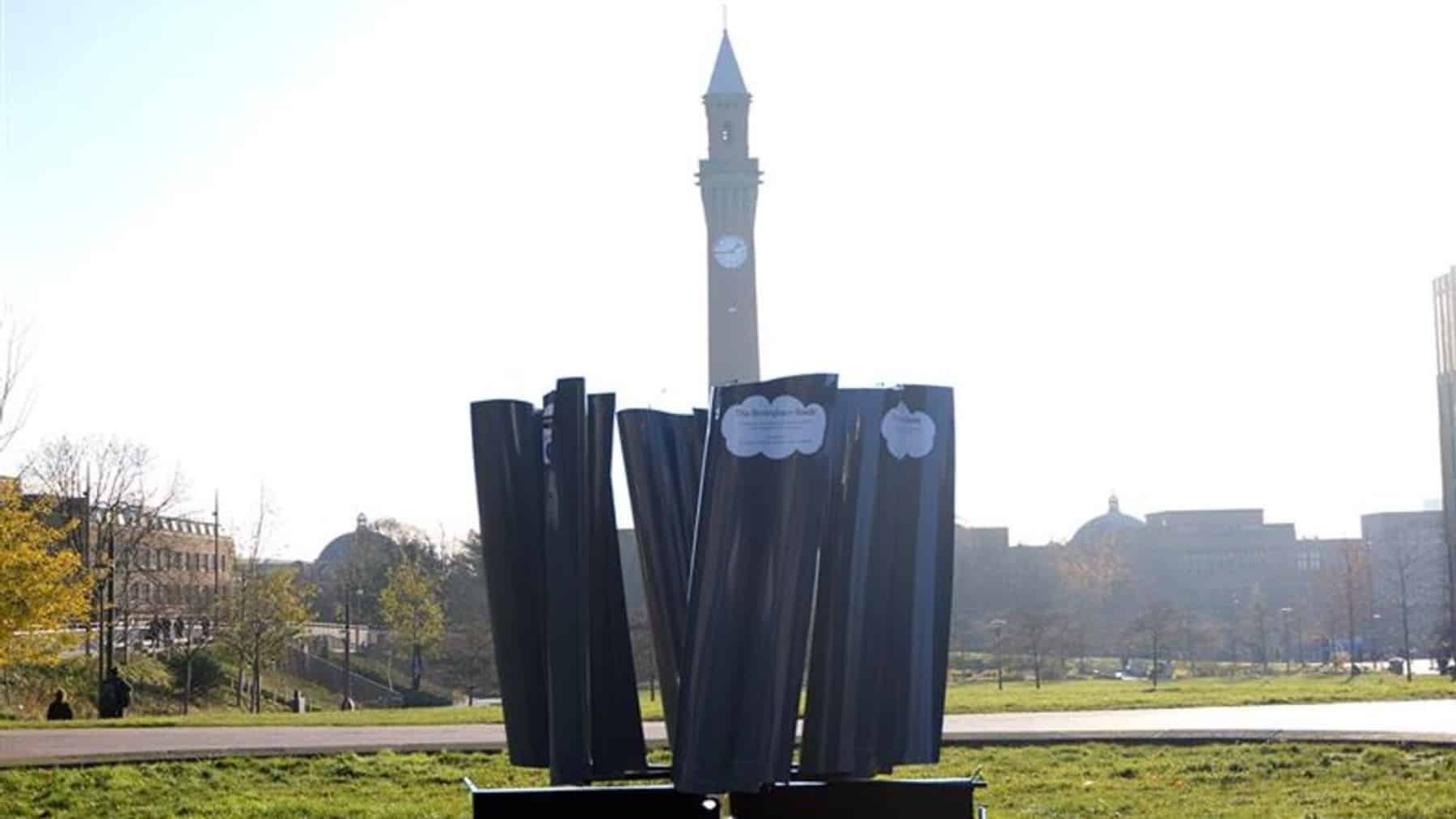
Finally, we can present the Birmingham Blade, the first wind turbine created 100% using artificial intelligence, with an efficiency up to seven times greater than that of conventional turbines in urban environments. It’s worth noting that it’s unlike anything we’ve seen before. This is because it features six horizontal arms with curved and vertical blades, adapting to the chaotic winds blowing between tall buildings. Furthermore, it’s lightweight, compact, and tailored for rooftops. All of this is designed to work where conventional turbines fail, and where solar panels don’t always deliver.
The results of the initial tests were so good that EvoPhase decided to transform the prototype into a final product. An aluminum version is about to be installed in downtown Birmingham to validate the data in a real environment. If all goes well, the commercial launch will be by the end of this year (2025). And here’s the critical point: if this model is replicable in US cities, residential and corporate dependence on solar energy could drastically slow. We’re talking about smaller, cheaper turbines that are invisible from the ground and that work even when the sun isn’t shining. This could be the quiet revolution that recently arrived in America, with 6.5 kW, to end solar power’s dominance, which many talk about.
Disclaimer: Our coverage of events affecting companies is purely informative and descriptive. Under no circumstances does it seek to promote an opinion or create a trend, nor can it be taken as investment advice or a recommendation of any kind.