The European Union is leading research into a new fuel that is going to leave electricity behind. However, in America we have started to develop it as well, and now we are going to give a blow on the table with a US renewable corridor. Learn how we will end up exporting to decarbonize all five continents in the medium term, even if it sounds overly ambitious.
The new fuel that will revolutionize the world: better than electricity and zero emissions
Hydrogen is an absolute game-changer in the race for decarbonization because it boasts unrivalled amounts of energy, per unit mass. The European Union was an early make of a corridor and we may be the very first to make one.
Thanks to its function as an energy fuel, vector, and feedstock, hydrogen is a promising way to cut emissions in the recalcitrant sectors of the world economy. Do you realize how significant this seemingly minor discovery is?
The most noteworthy hydrogen production technology here is green hydrogen which is powered through electrolysis which utilizes renewable energy. The green hydrogen therefore emerges as a clean alternative to conventional methods of hydrogen production that was based on natural gas.
Hydrogen in this context therefore stands to benefit the environment on the whole as it could assist in achieving total net-zero emissions.
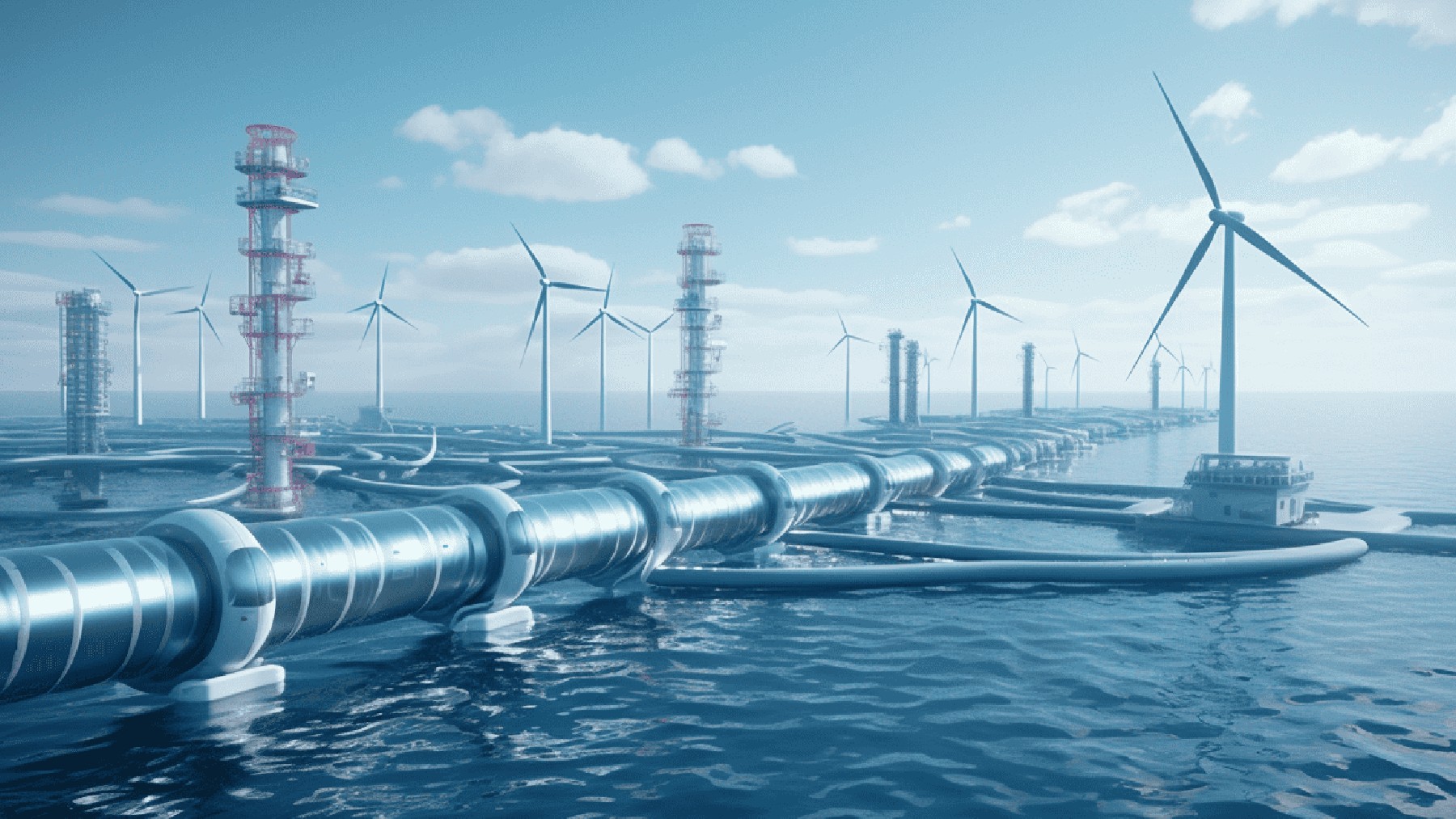
World’s largest corridor to carry hydrogen from America
With investments in green hydrogen production spiking globally, the United States is ready to initiate the prolific deployment of clean energy. The deposits of our country consists of hydrogen which has been discovered to be so rich.
The Department of Energy has provided a lot of funding the Regional Clean Hydrogen Hubs due to which the United States hopes to manufacture 3 million tons of hydrogen per year by 2030. This would be a real revolution.
These strategic centres located in critical regions all over the nation will be key in achieving the transition to low-cost clean hydrogen thus setting the country in the global focus for clean energy innovation.
Hydrogen Stream, the energy megaproject the whole of America is looking at
Mission Possible Partnership in collaboration with industry frontrunners is taking the lead in the Transatlantic Clean Hydrogen Trade Coalition which intends to arrange clean hydrogen-based fuel transatlantics delivering by 2026.
Among the most powerful undertakings is the creation of a strong trade infrastructure, linking US producers to European consumers, laying much of a foundation for large-scale decreases in greenhouse gases.
ITM Power now entering the US market prepares the ground for considerable development in cleantech production and supply, ushers in a new era of sustainability, even beyond the well-known electricity that will power the futuristic cars although not without some issues.
The question is where we can extend it beyond the technical factors. For instance, it is fairly to run it through pipelines across the Atlantic Ocean, as is the case with gas pipelines, but what about the commercial aspect?
It is also worth to mention that on the other side of the ocean there are already large-scale projects. In fact, a week ago we informed you about white hydrogen found in France, and just the other day the same thing has happened in Bulgaria. How do we sell this fuel to a country which already produces this?
What is clear to us is that the US renewable corridor will be a turning point. The idea is that it will have a definitive influence on the decarbonization of other countries and continents. As you can see, America could become a priority energy partner for the European Union, and even for commercial rivals. Can you imagine exporting it to China? We will soon see if this is the case.