The invention of the wind turbine was a turning point for renewable electricity generation, but it has the problem that we can’t put it wherever. Yet, it has the disadvantage that we cannot place it in all the spaces where we would like to. The solution? To take it where no one had thought of it before and cover 70% of the planet’s surface.
Sinking wind turbines underwater, the desperate idea that could work
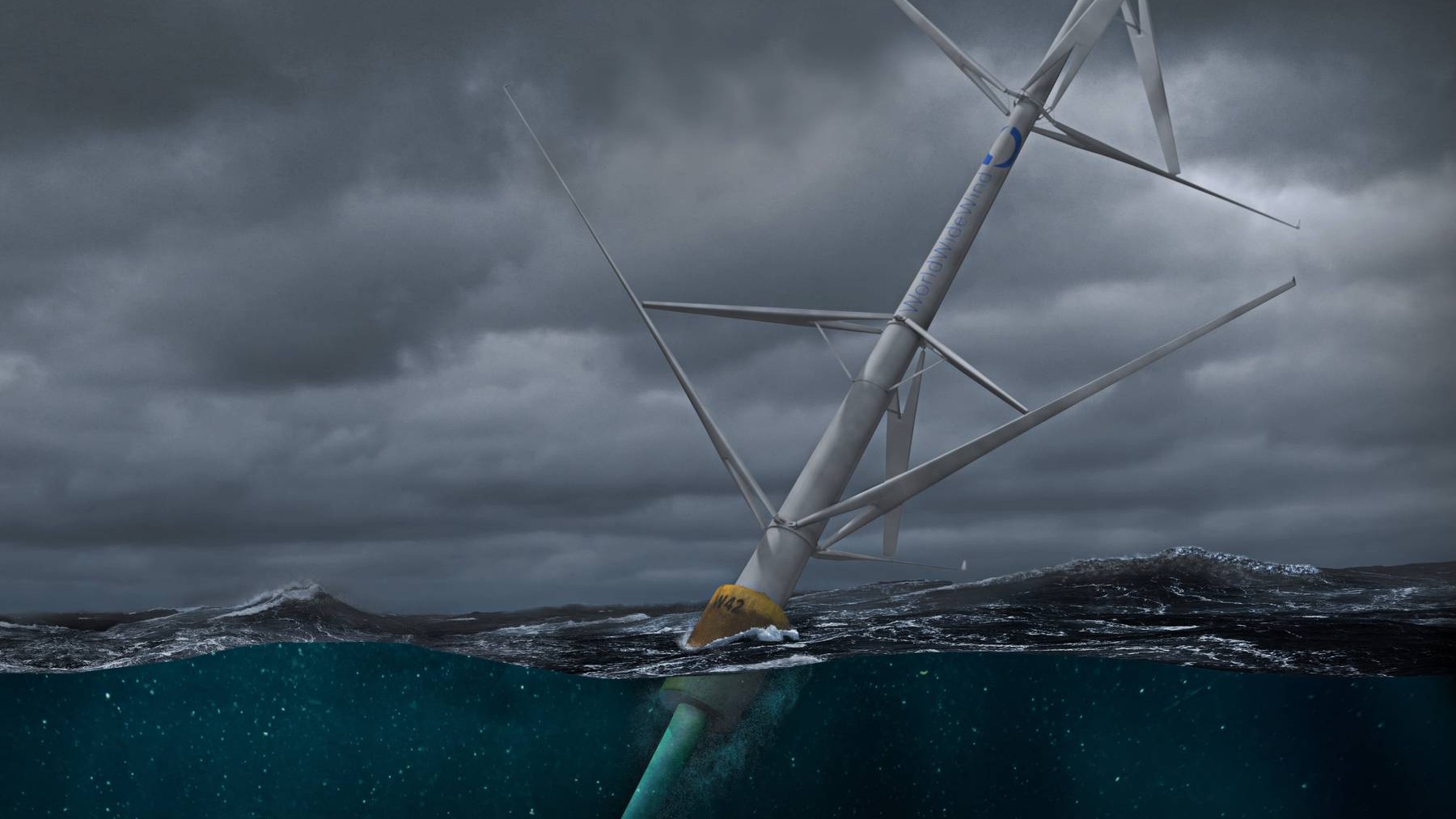
The conventional fixed offshore blades have mainly become located on shelf bottoms or lakeshores because of their anchored basis structure. Nevertheless, the vertical axis turbine of World Wide Wind is released from this constraint, trying to utilize wind energy in the deep sea.
Employing a floating platform with a vertical driveshaft and dual underwater turbines, the company strives to harness the winds in places untapped by conventional turbines.
The trials on the prototype that will be conducted along the Norway’s Vats coastline will put it through hard North Sea conditions which mimic the arduous offshore work.
Achievement in such trials can see large wind farm turbines that will lower the floating wind power’s costs add to the market. The crucial thing is the last resort that makes deep water wind energy financially successful on a pan-scale.
One more step towards harnessing the full potential of our oceans
The offshore wind energy potential is vast, with over two-thirds of the planet covered by seas. However, the main issue with classic fixed turbines is that they are unable to reach the greatest portion of these resources due to water depths over their operational capabilities.
World Wide Wind approaches the industry in a novel way that attempts to change the story note by showing that the solution they offer is lighter and cheaper. The new vertical-axis turbine design has features that would be beneficial in coastal regions, including Europe, East Asia, and North America, which are highly populated.
Through utilization of the unutilized wind resources, floating wind turbines are poised to take a central role in shifting towards renewable energy, and in that way, countering climate change.
Towards the future of wind energy: how we are going to take advantage of this innovative project
The success of the World Wide Wind prototype floating turbine is dependent on the successful demonstration of both stability and energy generation capabilities in harsh marine conditions.
The design solution is to move the heavy components underwater, which creates a more stable platform and decreases construction and operation costs. This innovation has the potential to open a new epoch of offshore wind power, releasing huge hidden reserves and cutting fossil dependence.
In a nutshell, the progress of the floating wind turbines is a big step ahead in the creation of clean and sustainable power supply. The economic effects of the floating wind turbine deployment could be as significant as well.
The continued trials together with rapid technological advancement have seen the current turbines remain to be the way to go to revolutionizing the offshore wind power we are all looking towards hence the future generation.
Through better exploiting the previously undiscovered wind power sources, countries with extensive coastline have the potential to enhance their energy autonomy and create new demands for employment and investment in clean energy infrastructure.
As you have seen, the wind turbine is going to be one of the key components of our energy transition. In America, we have large areas to cover with wind turbines, but now we are going to take even more advantage of our territory. Perhaps in places like Hawaii, Guam, or Puerto Rico? The future and the federal government will tell.