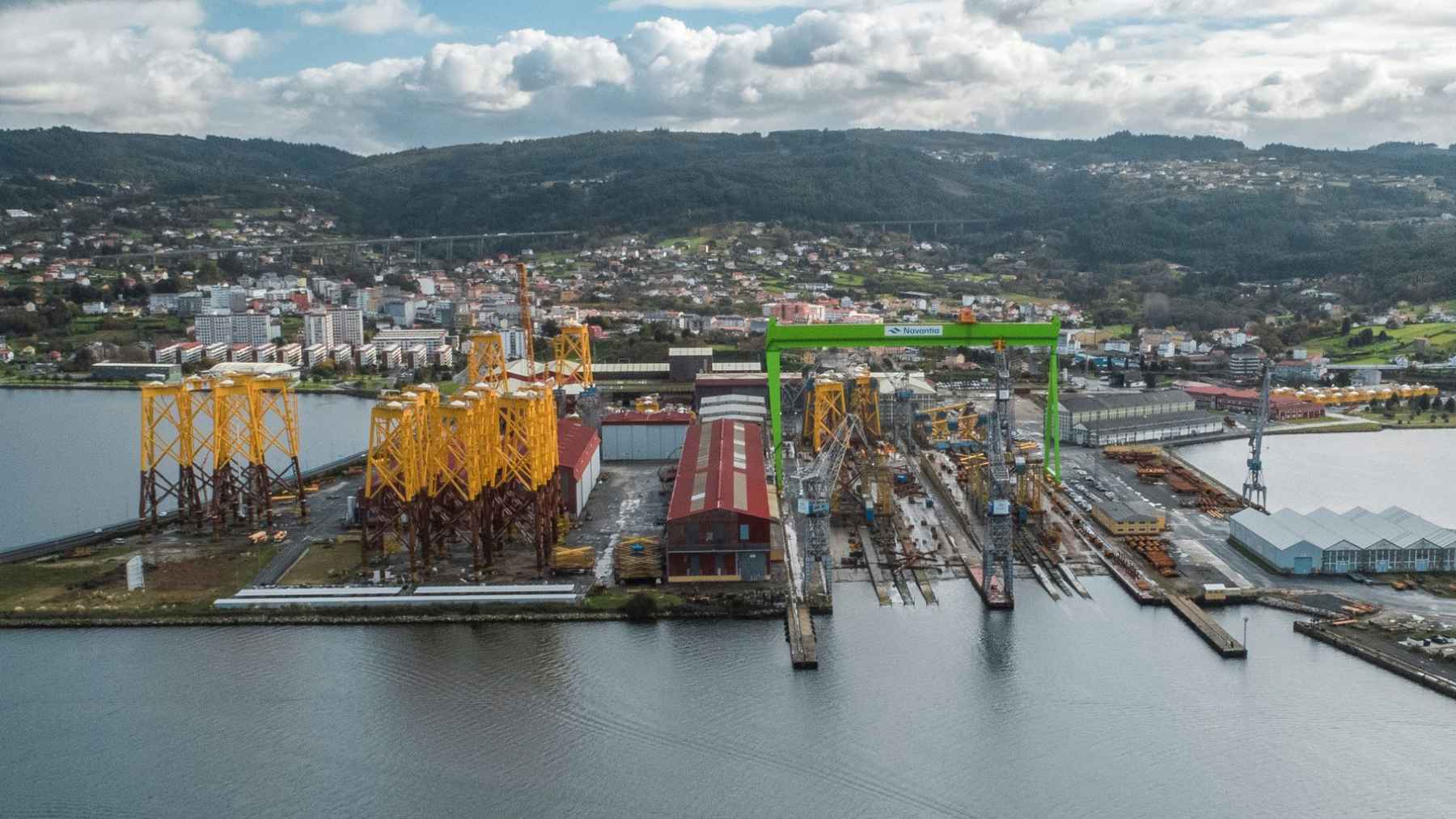
For months now, the Rota Naval Base has been a landscape of cranes, trucks, and torn-up pavement. All that disruption has one clear goal in mind: getting ready for the Spanish Navy’s new F-110 frigates.
This is not just a fresh coat of paint. It is a deep rebuild that follows, step by step, the construction calendar at the shipyards so the first F-110 can tie up at a pier that is fully ready, not waiting on cables, networks, or workshops that are still unfinished.
Rota prepares for a new kind of frigate
The F-110 class comes with advanced combat systems, stronger antisubmarine warfare tools, and a digital twin that mirrors the ship in virtual form so engineers can plan maintenance and fix problems faster.
All of that means the base needs more than a simple repair hall with wrenches and paint. It needs secure data networks, specialized equipment, and crews trained to handle a constant flow of information.
Project sources explain that the remodeling will “align the base with the support requirements of the new series of frigates”.
In practical terms, that means modernizing piers, updating maintenance zones, and creating new spaces where technicians can monitor systems and plan work on the ships almost in real time. Rota, for the most part, is being turned into a long-term hub for the surface fleet rather than just a place to park ships between missions.
Construction milestones drive the work on shore
The overhaul at the base is tied directly to the pace of the F-110 industrial program awarded to Navantia in 2019 and later expanded from three to five ships with a total value of 4.325 billion euros.
Oversight runs through the Directorate General for Armament and Material within the Spanish Ministry of Defense, which tracks how shipbuilding milestones match the readiness of support facilities. At the end of the day, what everyone is trying to do is avoid a brand new frigate waiting around for a pier that is still stuck in the past.
In April 2025, the shipbuilder reached a key moment when it started building the third unit, F-113 Menéndez de Avilés, while F-112 Roger de Lauria continued to advance on the slipway. The series introduces a major technological jump with the SPY-7 radar, the shipwide digital twin, and new electronic warfare systems.
The base has to be ready for that combination. A modern combat radar and a virtual copy of the ship do not mean much if the port cannot supply the power, connectivity, and specialist support they require.
Where each F-110 stands in the shipyard
The first ship in the series, F-111 Bonifaz, began construction in 2022 and had reached about 85 percent completion of its block assembly by mid 2025.
Its launch came in September 2025 during a ceremony attended by Prime Minister Pedro Sánchez and Queen Sofía, a clear sign of how much political and symbolic weight this class carries for. It marked a turning point from design and steel cutting to seeing the first F-110 afloat.
F-112 Roger de Lauria continues its build on Slipway 3 in Ferrol with an initial launch date planned for 2026. F-113 Menéndez de Avilés is scheduled to be launched in 2028, and the series will finish with F-114 Luis de Córdoba and F-115 Barceló, whose launches are projected between 2029 and 2030.
This staggered timeline gives the Navy a gradual path to introduce the new ships so that deployments can be adjusted without sudden gaps.
A new generation replaces the Santa María class
The arrival of the F-110 class will slowly push out the older Santa María frigates, which have been in service since the late 1980s and are now nearing the end of their working lives. The new ships do not just tweak what came before.
They draw on lessons from the F-100 design while changing almost everything that matters for modern naval combat, from sensors and detection to how they respond to threats above and below the surface.
One of the key systems that marks this shift is the SPY-7 radar, which demands far greater processing power and a fully-connected digital environment.
On top of that sits the virtual twin of each ship, designed to make maintenance and diagnostics faster and more precise. With these tools, the F-110 can work with flexible mission modules and uncrewed systems. A base built in another era simply cannot support that without serious upgrades.
Why the Rota overhaul is essential for the fleet
For the Navy, the work at Rota is not an optional extra attached to a shipbuilding contract. A frigate with this level of complexity needs advanced maintenance, strong diagnostic capacity, constant software updates, and a logistics chain tuned to a much heavier stream of technical data than older classes ever produced.
Without that, the impressive features on paper would stay mostly theoretical.
The aim is for the base to be able to receive and operate the first F-110 as soon as it is delivered, with no dip in readiness while older Santa María units retire.
The stakes are clear. If the base lags behind, the fleet could face a period where it has powerful ships on the books but less ability to keep them at sea. If the schedule holds, Rota will become the place where Spain’s next generation of surface combatants quietly gets the support it needs to do its job.
The main official information about the F-110 program and the work at Rota has been published by the Spanish Ministry of Defense.