A New York visitor went to Arkansas with a very specific plan. She wanted to find the diamond for her own engagement ring, not buy one from a store, and she gave herself three focused weeks at Crater of Diamonds State Park to make it happen.
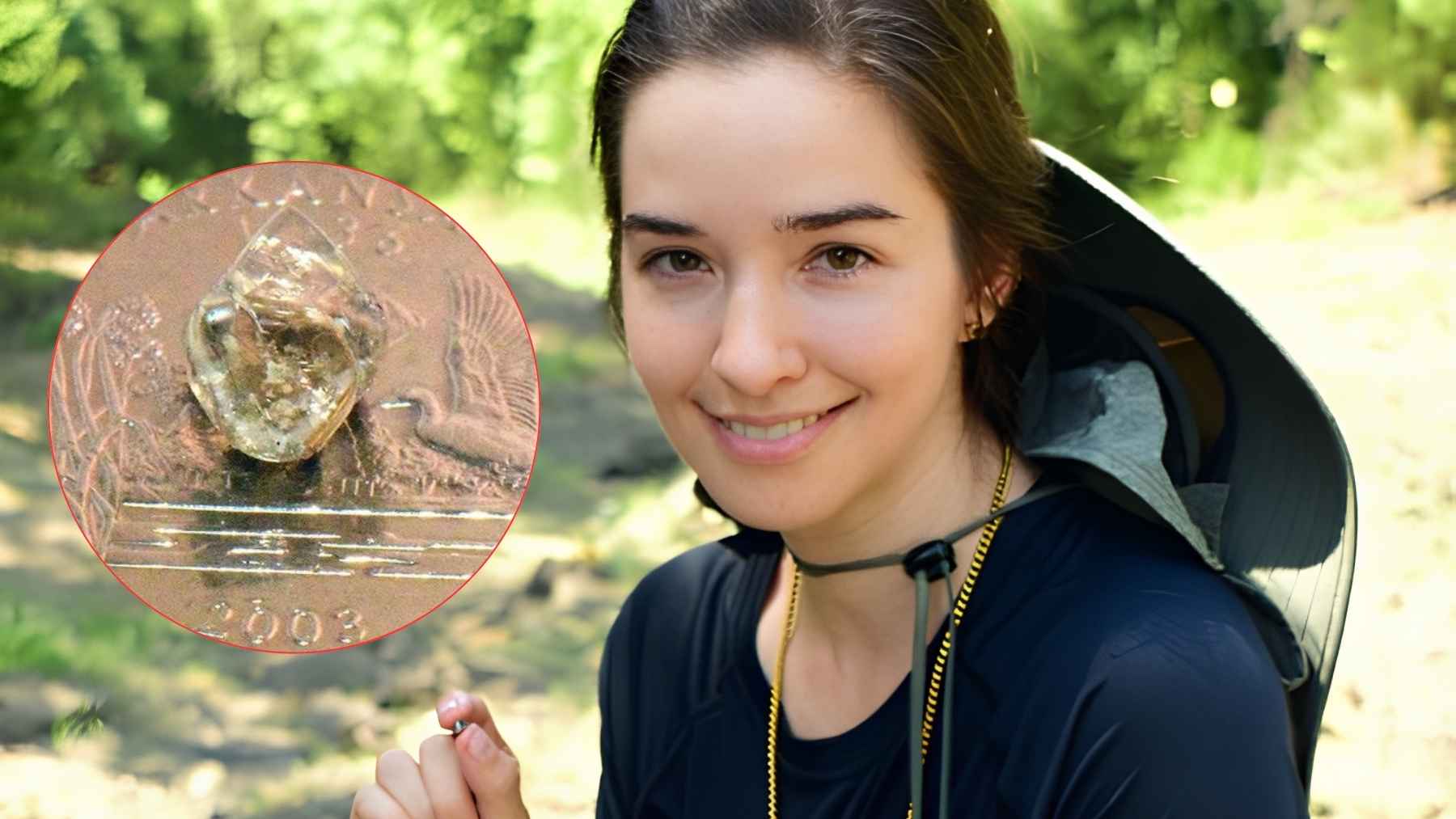
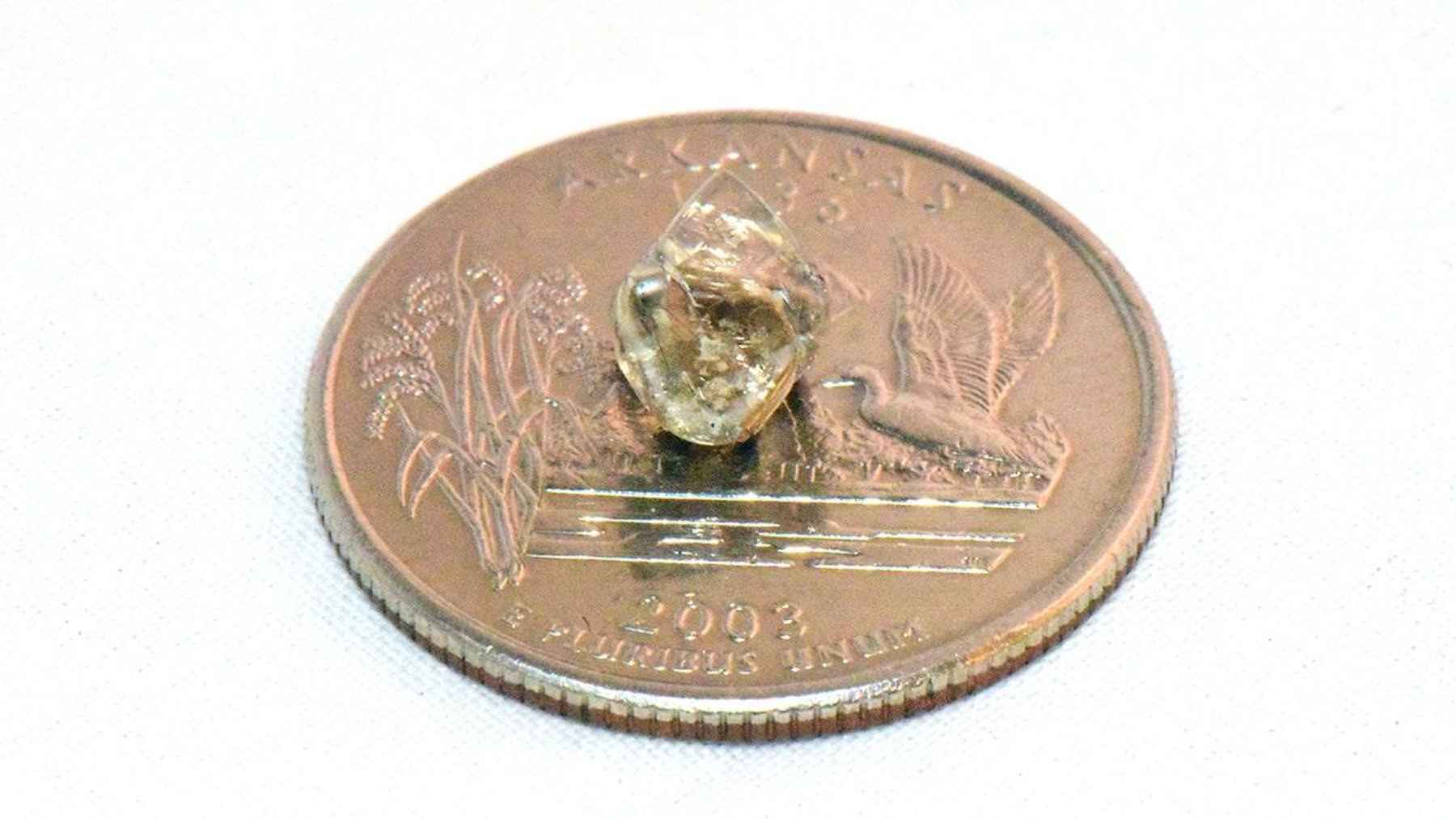
On July 29, 2025, during her final morning in the park’s 37.5-acre search field, Micherre Fox of Manhattan spotted a shine on the ground that did not fade. Park staff later confirmed it was a 2.30-carat white diamond, about the size of a human canine tooth, and the third-largest diamond registered at the park so far that year.
A rare public diamond hunt
Crater of Diamonds State Park is not a normal tourist stop. It is billed by the park as the only place in the world where the public can search for natural diamonds in their original volcanic source, then keep what they find.
That is the simple hook. Buy a ticket, search the field, and anything you find is yours. In practical terms, it turns geology into something almost anyone can try, whether they arrive with rented tools, a bucket, or just a lot of patience.
Fox’s final morning
Fox had been searching nearly every day during her visit. Around 11 a.m. on her last day, she was walking along an area known as the West Drain when a bright glint caught her attention.
At first, she thought it might be a dew-covered spiderweb. Then she nudged it with her boot, and the shine stayed. “Having never seen an actual diamond in my hands, I didn’t know for sure, but it was the most ‘diamond-y diamond’ I had seen,” she said.
The stone weighed 2.30 carats, which is about 0.016 ounce. That sounds tiny, but in jewelry terms it is a serious find. The Gemological Institute of America explains that carat measures weight, not size, and that one metric carat equals 200 milligrams.
Why Arkansas has diamonds
So how does a diamond end up sitting in a field in southwest Arkansas? The short answer is volcanoes, time, and erosion.
Diamonds form deep inside Earth’s mantle, the hot, high-pressure layer beneath the crust. Some are later carried upward by fast-moving volcanic rock. At Crater of Diamonds, that rock is lamproite, a potassium-rich volcanic material that can bring diamonds closer to the surface.
Research by Dennis P. Dunn of the University of Texas at Austin describes the Prairie Creek lamproite as the largest of seven ultramafic vents in the local volcanic province. His work in Ore Geology Reviews also notes that diamonds were first discovered on the property in 1906.
The field keeps changing
Visitors are not searching a polished jewelry counter. They are walking across the eroded top of an old volcanic formation, where rain, mud, and loose soil can expose new stones over time.
The Arkansas Geological Survey describes the Prairie Creek pipe as an 83-acre body that is now Crater of Diamonds State Park. Its brochure also explains that visitors can search for diamonds there and keep what they discover, while other nearby intrusions are privately owned.
That matters because the surface does some of the work. Summer storms can wash away softer clay and leave heavier minerals behind. For a searcher, a small flash in the dirt can be easy to miss, especially under heat, glare, and the ordinary fatigue of looking down for hours.
A stone with a name
Fox named her find the Fox-Ballou Diamond, using her last name and her partner’s. She plans to have it set into her engagement ring, giving the gem a personal meaning beyond its weight.
“There’s something symbolic about being able to solve problems with money, but sometimes money runs out in a marriage,” Fox said in the park’s release. “You need to be willing and able to solve those problems with hard work.”
Waymon Cox, assistant superintendent at the park, offered a more practical lesson. “Ms. Fox’s story highlights the fact that, even when putting forth your best effort, being in the right place at the right time plays a part in finding diamonds,” he said.
From rough stone to ring
A rough diamond is not the same thing as the finished stone people see in a ring. Cutting and polishing can remove a significant amount of material, depending on shape, flaws inside the crystal, and how much sparkle the cutter wants to bring out.
That means Fox’s final ring stone will likely weigh less than 2.30 carats after cutting. Still, the story behind it will not shrink. Sometimes the value of a stone is not only in what it weighs, but in the long, muddy search that brought it into someone’s hand.
The park’s history backs that up. The largest diamond ever found in the United States, the Uncle Sam diamond, came from this same Arkansas site in 1924 and weighed 40.23 carats before it was later cut to 12.42 carats. It is now part of the Smithsonian’s mineral and gem collection at the National Museum of Natural History.
Why the story connects
Stories like Fox’s travel fast because they feel unusually fair. The field is open to the public, the rules are clear, and luck does not care whether someone is a first-time visitor or a regular with practiced hands.
But the science gives the story its deeper pull. A small white stone found in Arkansas carries a record of pressure, heat, volcanic movement, and erosion across immense stretches of time. Fox found a diamond for a ring. She also picked up a tiny piece of Earth’s hidden history. Simple as that.
The official press release has been published by Arkansas State Parks.