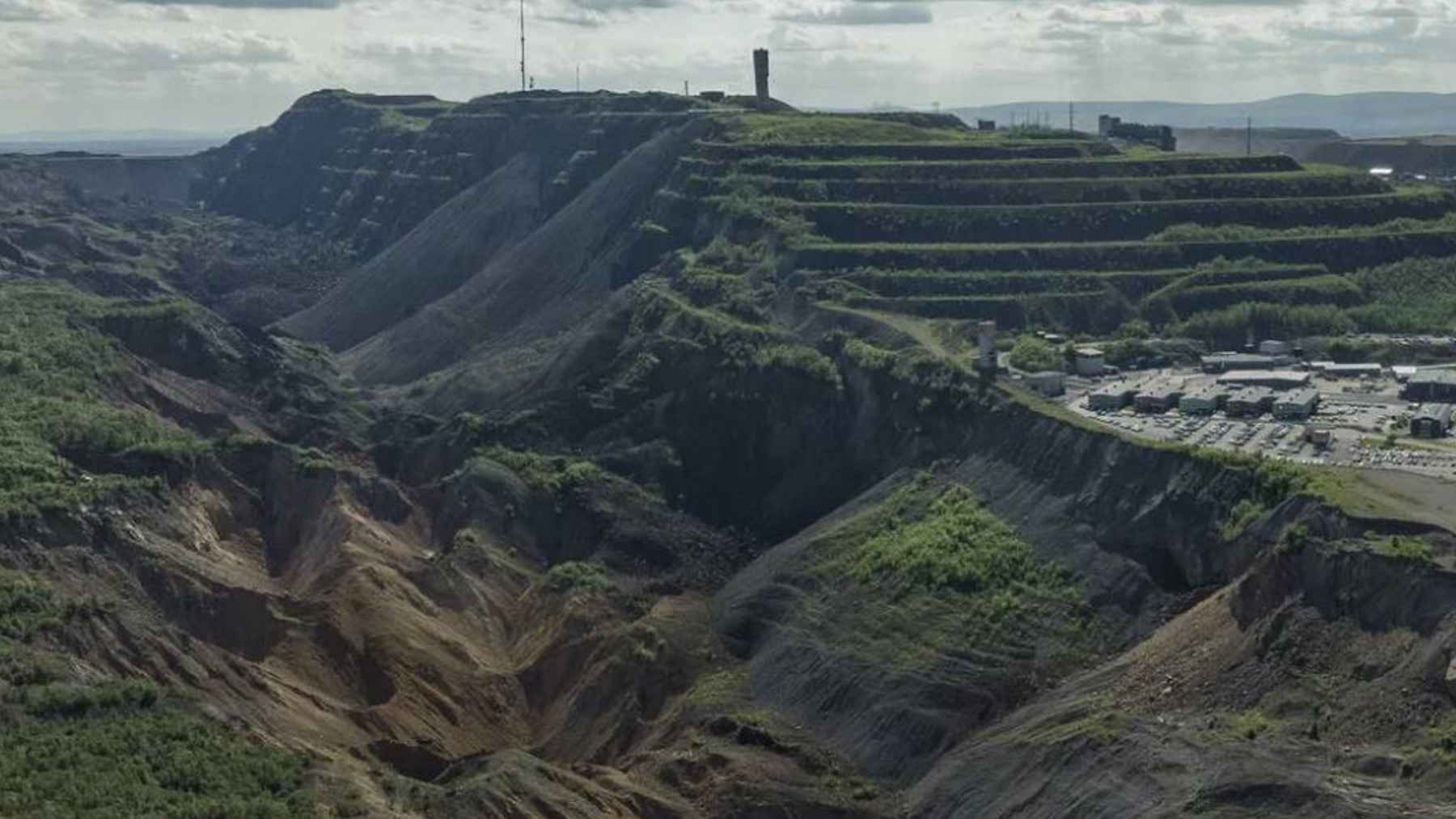
High above the Arctic Circle, a long-running iron mine in northern Sweden has quietly revealed a second life. New resource estimates from LKAB show that the Per Geijer deposit near Kiruna holds about 2.2 million metric tons of rare earth oxides along with huge quantities of iron ore and phosphorus, placing it among the largest known deposits of its kind in Europe.
Why does that matter for someone charging an electric car or checking a smartphone at home? Rare earth elements sit at the heart of powerful magnets in electric motors, wind turbines, and many digital devices, yet Europe is still almost entirely dependent on imports that are mostly processed in China, which handles close to 90% of global rare earth refining.
If Per Geijer reaches full production in the coming decades, LKAB says it could eventually cover around 18% of Europe’s rare earth demand, giving the European Union a badly needed domestic source of these critical materials.
A rare earth jackpot hidden in an iron mine
Per Geijer sits just north of the famous Kiruna iron ore mine, the largest underground iron mine in the world and a backbone of European steelmaking for more than a century.
For most of that time, the main focus was high-grade magnetite, but new drilling has confirmed that the ore also contains significant amounts of rare earth bearing minerals and phosphorus that can be recovered alongside the iron.
Rare earths are a group of 17 metallic elements that are not actually rare in the crust but are hard to concentrate and separate. At Per Geijer, they are largely locked inside apatite, a phosphate-rich mineral that can be upgraded into a concentrate, then processed into rare earth oxides and phosphoric acid for fertilizer.
According to LKAB, the deposit holds around 1.2 billion metric tons of iron ore and phosphorus and has much higher grades of rare earth oxides and phosphorus than the ore bodies that Kiruna currently mines.
The updated figures come from a 2025 resource report prepared under the international PERC mining standard by independent geologists. In mining language, that means Per Geijer is recognized as a large mineral resource with realistic prospects of becoming an operating mine, even if it is not yet a fully-approved reserve with a final business plan.
China’s dominance and Europe’s search for options
For years, China has produced most of the world’s rare earth raw materials and processed nearly 90% of them into refined products and magnets. That dominance echoes through everything from fighter jets to wind farms, and when Beijing tightens export rules, European manufacturers can feel the squeeze in their order books and, eventually, on showroom prices.
European leaders have responded with the Critical Raw Materials Act, which sets targets so that at least part of strategic minerals like rare earths must be mined and processed inside the bloc by 2030. The European Commission wants to keep dependence on any single non-EU country under 65% for these raw materials, a goal that clearly points toward China.
In practical terms, that means projects such as Per Geijer are treated as tools to reduce vulnerability in supply chains that keep electric cars and wind turbines rolling off assembly lines.
LKAB’s projects at Per Geijer, in the mining town of Malmberget and at the coastal city of Luleå have all been granted strategic project status under this law. The designation opens doors to faster permit handling and potential EU-backed finance while leaving environmental rules formally unchanged.
An industrial ecosystem from mine to magnet
Per Geijer is not designed as a stand-alone rare earth mine dug from scratch in the wilderness. Instead, LKAB plans an industrial ecosystem in northern Sweden that starts with iron ore extraction at Kiruna, where ore containing apatite is mined and hauled underground.
That ore can be processed using magnetic separation to produce both iron products and a phosphate-rich stream that becomes feedstock for critical minerals.
At Malmberget, LKAB aims to refine that material into an apatite concentrate that already carries rare earths and phosphorus in higher concentrations.
From there, the concentrate would move to a new industrial park in Luleå, where a demonstration plant now under construction will use hydrometallurgy, or water-based chemical processing, to separate rare earth oxides, phosphoric acid for fertilizer, and gypsum as a by-product.
To handle the final separation of individual rare earth elements, LKAB has taken a major stake in Norwegian company REEtec, which has developed a cleaner separation technology intended to compete with Chinese refiners.
If the full chain works at scale, waste streams from iron ore mining could become feedstock for electric motors and farm fertilizers, turning old tailings into part of Europe’s energy and food security strategy.
Strategic status with local tensions in the Arctic
The strategic label is meant to speed up paperwork, but it does not erase the fact that mining leaves a heavy footprint on land and communities. The city of Kiruna is already in the process of being moved, building by building, because the ground above the existing iron mine is slowly sinking as extraction continues.
For people who live there, the green transition is not an abstract slogan, it is construction dust, new apartment blocks, and longer commutes in winter darkness.
There is also a growing conflict over how the Critical Raw Materials Act is applied on traditional lands used by the Indigenous Sámi people for reindeer herding.
The Saami Council has warned that EU-backed projects at Per Geijer, Malmberget, and Luleå threaten grazing routes, fresh water, and a way of life that has survived in the Arctic for centuries. Sami leaders argue that accelerating mining permits without stronger protections for their rights risks turning the green transition into yet another form of pressure on Indigenous communities.
Supporters of the project point to the jobs, tax revenues, and climate benefits that could come from securing more rare earths inside Europe. Critics respond that new roads, noise, and pollution in fragile northern ecosystems might undercut those gains if they are not carefully managed.
At the end of the day, Per Geijer has become a test case for whether Europe can expand mining and still honor its commitments to both climate action and human rights.
How much can Per Geijer really change
For all the excitement, Per Geijer remains a mineral resource rather than a producing mine. LKAB is still driving exploration tunnels and running technical studies, and even optimistic scenarios suggest that full rare earth production will not start until well into the next decade.
Independent analysts and company officials often talk about a timeline of 10 to 15 years before magnets made from Per Geijer material reach European factories in large volumes.
Even if the deposit eventually supplies 18% of Europe’s rare earth needs, China will remain a central player in mining and processing for the foreseeable future.
Europe is only starting to rebuild its own magnet industry, with new production in Estonia and plans for more plants that could gradually reduce dependence on Chinese finished magnets. For the most part, Per Geijer will work alongside recycling programs and other mines around the world rather than replacing existing supply chains overnight.
Still, having a large rare earth deposit inside the European Union changes the conversation. Instead of relying purely on imports, policymakers can plan around at least one significant domestic source as they design climate and industrial policies for the coming decades.
The main press release has been published by LKAB on its official website.