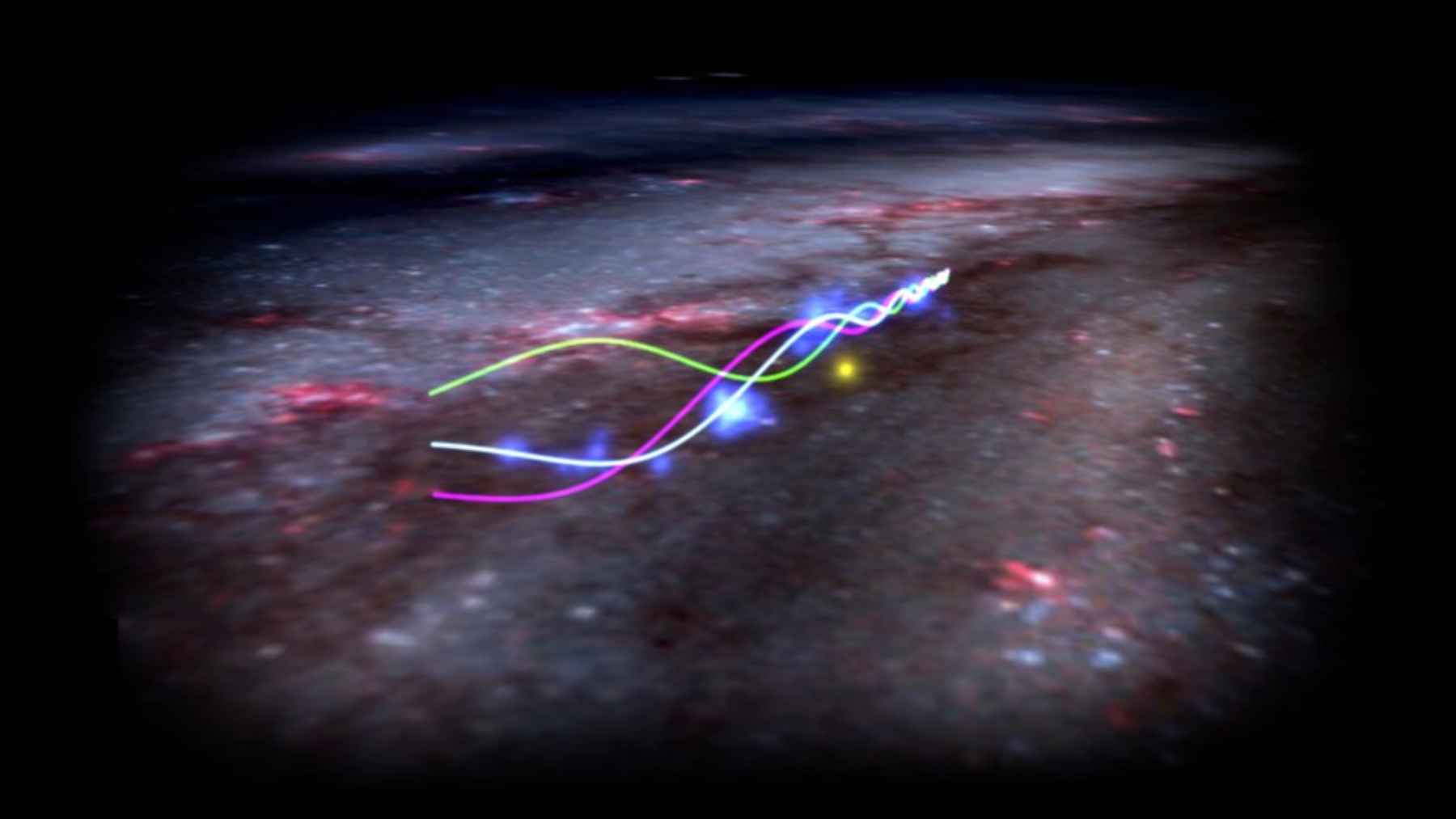
About 14 million years ago, our solar system sailed through a vast ribbon of gas and baby stars in the Milky Way known as the Radcliffe Wave. A new study traces that journey in detail and asks whether the encounter changed conditions here on Earth. The answer is cautious, yet it opens an intriguing window onto our planet’s deep past.
Using precise data from the Gaia space telescope operated by the European Space Agency, astronomer Efrem Maconi at the University of Vienna and colleagues reconstructed the Sun’s path through our galaxy over the past 30 million years.
They find that the solar system crossed the dense Orion star-forming region, part of the Radcliffe Wave, between about 18 and 11 million years ago, with the closest approach near 14 million years ago. That interval overlaps a major climate shift called the Middle Miocene climate transition, when global temperatures fell and Antarctic ice spread across the continent.
A risky journey through our galactic neighborhood
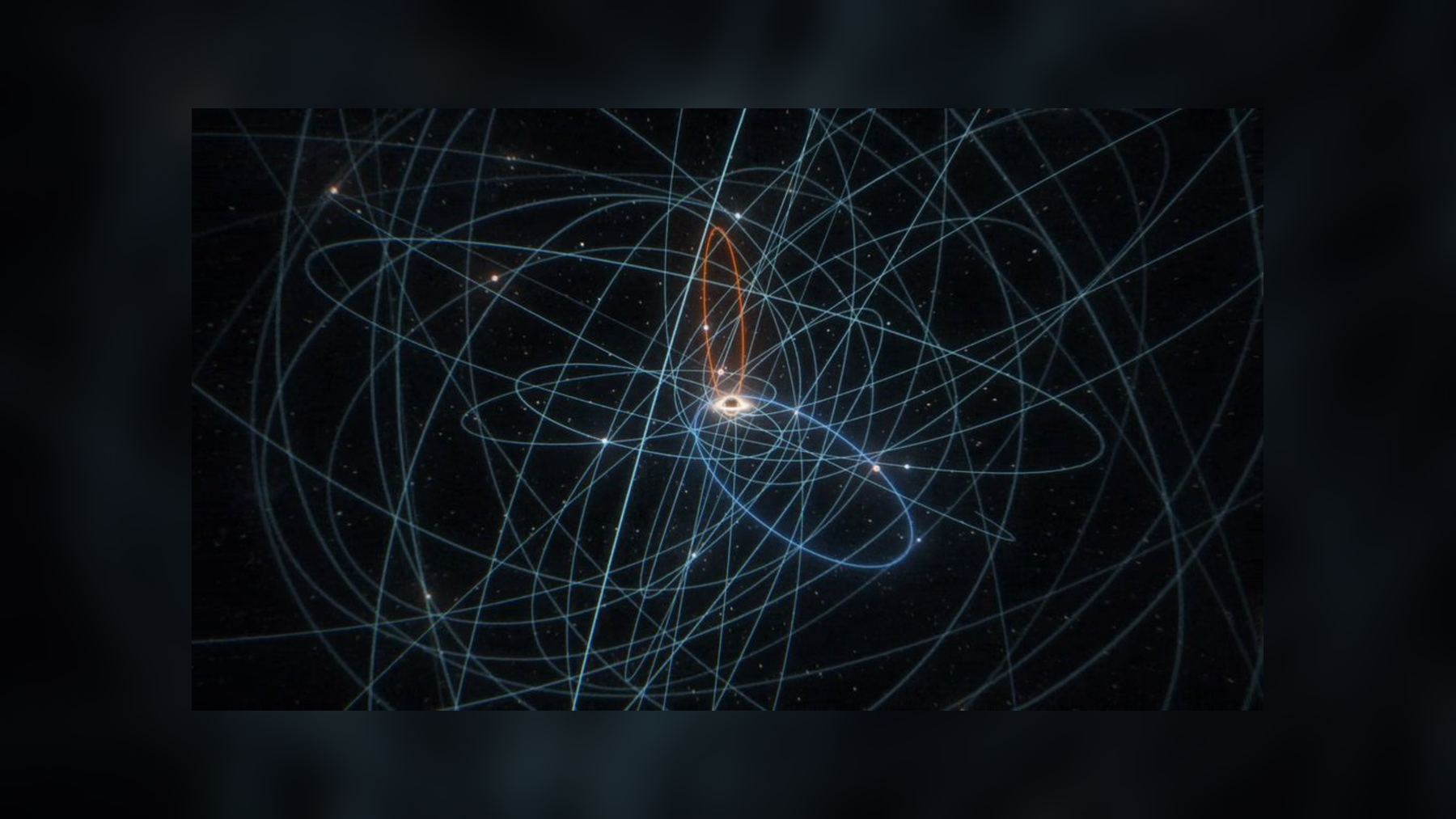
As the Sun orbits the center of our galaxy, it does not follow a simple, flat track. It drifts inward and outward, up and down through different clouds of gas and dust, more like a ship crossing changing seas than a train on fixed rails. Over billions of years, that motion has carried the solar system thousands of light years from its birthplace and away from its original sibling stars.
The new work focuses on just the last 30 million years of that voyage. By combining Gaia measurements of young star clusters with models of how both the clusters and the Sun move, the team effectively ran the clock backward. In their reconstruction, the solar system clearly brushes through the Radcliffe Wave in the direction of Orion, then continues on into calmer space.
What exactly is the Radcliffe Wave
The Radcliffe Wave itself is a giant, gently-curving filament of cold gas that stretches roughly 9,000 light years across our galactic neighborhood. It contains many of the best known “stellar nurseries,” places where new stars form from collapsing clouds of dust and gas.
This structure was first mapped in 2020 by an international team that used Gaia data to build a three-dimensional map of nearby clouds. That group, which included astronomer Alyssa A. Goodman at Harvard University and astrophysicist Joao Alves, showed that famous regions such as the Orion Nebula sit along a single, wave-like band rather than in a neat ring around the Sun.
Dust, a squeezed heliosphere, and a cooling world
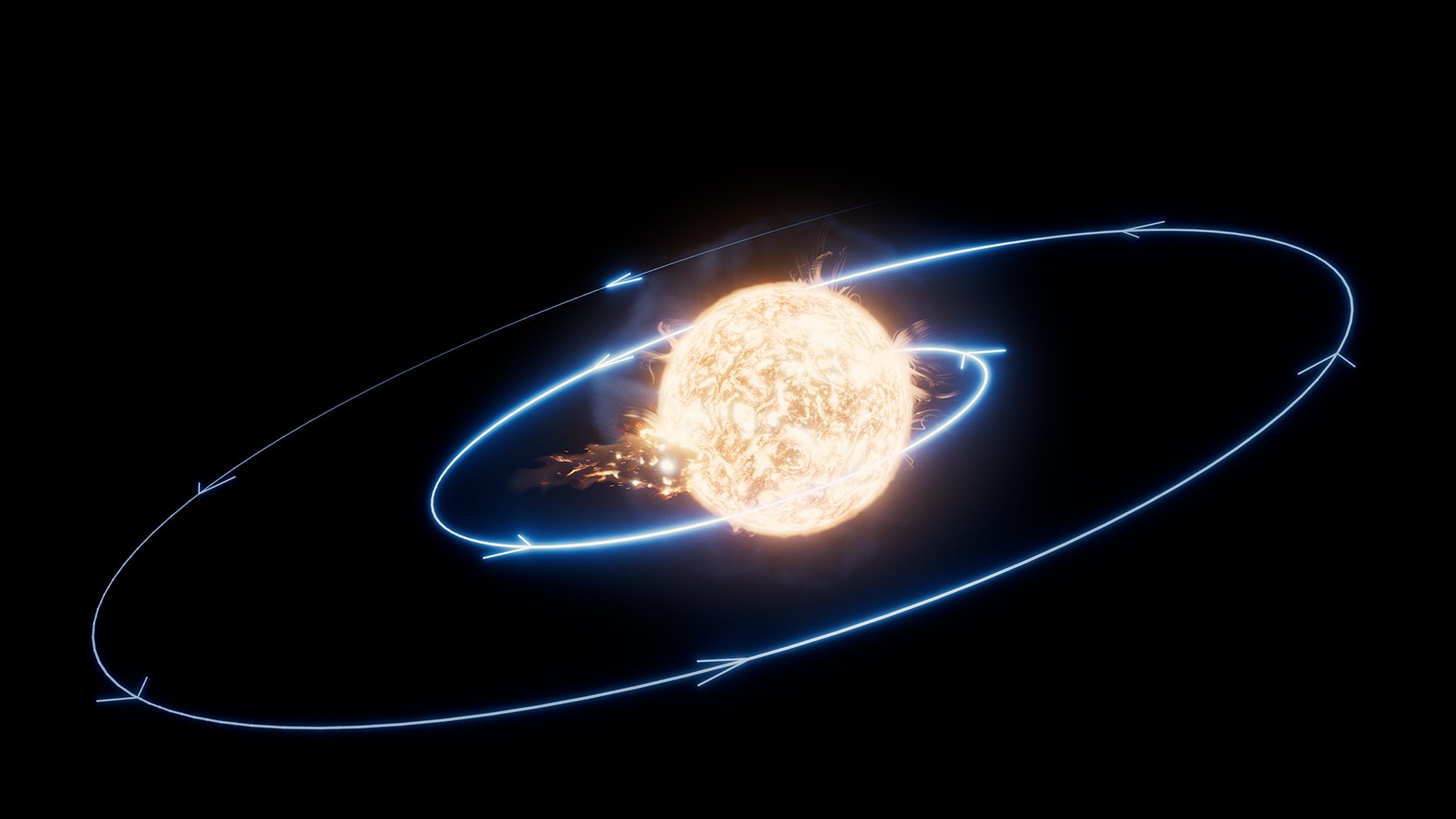
Passing through a dense stretch of the Radcliffe Wave likely changed the “space weather” around the solar system. According to the new study, gas in the Orion region would have pressed inward on the heliosphere, the magnetic bubble created by the solar wind that usually shields planets from much of the interstellar environment.
A tighter bubble means more interstellar dust and high energy particles can slip in.
Maconi compares the situation to a ship running into rougher water, where waves slap harder against the hull. In this case the “waves” are clouds of gas and dust. Extra dust drifting into Earth’s atmosphere could have scattered sunlight and encouraged cooling at the surface, adding one more push toward the colder conditions that marked the Middle Miocene climate transition.
The team also points out that the Radcliffe Wave likely hosted recent supernova explosions during that time. Those blasts would have seeded nearby space with radioactive forms of elements such as iron, including a variety called iron sixty that is made in dying massive stars.
Some of that material may have fallen on Earth as microscopic grains, though current techniques cannot yet spot traces that old in rocks and sediments.
How strong is the link to climate?
So did a galactic wave really help tip Earth into a cooler phase? The timing lines up remarkably well, yet the researchers are careful not to claim a simple cause and effect. Their own estimates suggest the inflow of dust would have needed to be much higher than likely values to fully explain the size of the climate shift.
Instead, they see the Radcliffe Wave crossing as a possible contributing factor that worked alongside tectonic changes, greenhouse gas trends, and ocean circulation to reshape the climate. It is one more reminder that our planet sits inside a wider cosmic environment, not in isolation.
At the end of the day, that perspective helps scientists separate slow, natural background influences from the much faster warming that human activity is driving today.
By tying together precision maps of our galaxy with records of ice and fossils on Earth, this research gives the solar system’s journey a starring role in the story of our own world.
It also hints that other bends and twists in our orbit around the galaxy could have intersected past climate events still hidden in the geological record. Space, in other words, has a longer memory than any weather station.
The main study has been published in the journal Astronomy and Astrophysics.