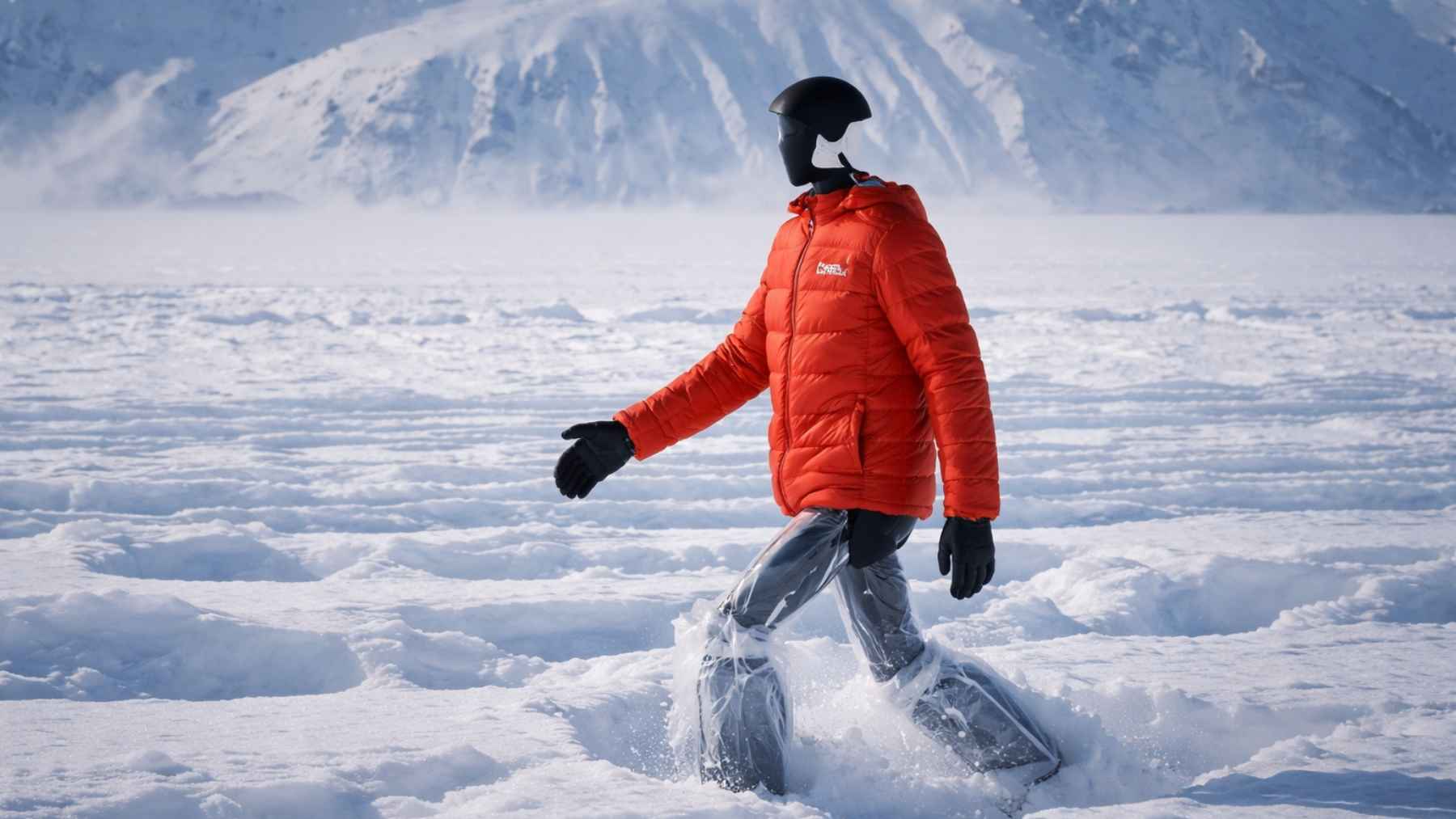
In northern China, a humanoid robot just did something that would stop most phones and electric cars cold. The Unitree G1 walked more than 130,000 steps on a frozen snowfield in the Altay region of Xinjiang while temperatures dropped to minus 47.4 degrees Celsius, tracing a Winter Olympics emblem on the ice.
That long walk makes the G1 the first humanoid robot reported to complete autonomous walking in such extreme cold. After all, what good is a humanoid helper if it shuts down whenever the weather turns brutal?
The long walk in deep cold
During the trial, the G1 followed a pre-planned path across the snow, drawing a Winter Olympics emblem about 186 meters long and 100 meters wide. All the while, it took more than 130,000 steps without direct human control, adjusting its balance on ice and uneven snow.
Altay is often promoted as a birthplace of skiing, and winter temperatures there regularly sink far below what most commercial machines are built to handle. In practical terms, that means testing robots in cold that can make phone screens sluggish and car batteries weak.
Tech behind a robot winter test
To survive the cold, engineers from Unitree Robotics tweaked the robot’s hardware in simple but important ways. They wrapped its torso in a bright orange winter jacket and put plastic sleeves around its legs and feet, extra layers meant to shield motors, joints, and battery packs from ice and wind.
Inside, the robot relied on China’s BeiDou Navigation Satellite System for centimeter level positioning, while its adaptive path planning software helped it pick each step across the frozen terrain. Sensors including 3D lidar and depth cameras fed constant data about the surroundings to keep the robot upright.
What this says about the robot race
The G1 is not one of the giant, human sized humanoids that grab headlines. It stands about 127 centimeters tall, weighs around 35 kilograms, and uses between 23 and 43 joint motors depending on configuration.
That compact frame is powered by a quick-release battery that lasts close to two hours and drives joints with up to 120 newton meters of torque. In China, the robot starts at roughly 99,000 yuan, about $14,240, which puts it within reach of labs and companies testing humanoid tasks.
Beyond the snowfield, the test also shows where Unitree sits in a growing market for humanoid robots. Reports from Omdia and Counterpoint Research, cited by the South China Morning Post, say Unitree shipped about 4,200 humanoids in 2025.
For now, these machines work in pilots and test sites rather than regular warehouses or factories. Extreme trials like the Altay walk are part show and part stress test, and they point toward robots inspecting icy power lines or helping first responders in winter storms.