For years, textbooks have described Mercury as a burnt out rock that finished its geological story long ago. A new study is now suggesting that this tiny world is still quietly changing, with bright streaks on its crater walls pointing to fresh activity inside.
The research team, led by planetary scientist Valentin Bickel at the Center for Space and Habitability of the University of Bern, used machine learning to comb through about one hundred thousand high-resolution images from NASA’s MESSENGER orbiter.
Out of that huge archive they identified just over four hundred narrow bright streaks, known as slope lineae, scattered across the planet.
MESSENGER images spotlight Mercury “lineae” and hollows
These lineae are not randomly placed. The new global inventory shows that they cluster on steep, sun-facing walls of relatively young impact craters, in areas where earlier collisions fractured the crust and exposed deeper rock.
Many of the streaks start at small, gleaming depressions called hollows, which already hinted that volatile materials were escaping from the subsurface.
On Mercury those hollows are some of the youngest landforms we know.
Outgassing and volatile loss may be shaping Mercury’s surface
So what is actually happening on those scorching slopes. The study points to slow but ongoing outgassing. Impacts appear to open networks of cracks that let volatile-rich material move upward.
Under intense sunlight, that material heats up, gases escape, and the remaining bright residue slumps downslope, drawing out slim streaks that can stretch for kilometers while staying only a few meters wide.
Spectral data show that the lineae share a blue-tinted signature with the hollows, consistent with materials such as sulfur-rich compounds being lost to space.
On other worlds, similar features tend to erode quickly, so their sharp appearance on Mercury hints that they are still forming or evolving today.
The team estimates that nearly 90% of the streaks can be traced back to hollows or hollow-like sources.
That pattern supports the idea that we are watching the planet slowly spend what the authors call its volatile budget, the stock of easily vaporized material in its outer layers.
Why this matters for Mercury, rocky planets, and planetary evolution
In practical terms, this reshapes how scientists picture the innermost planet. Instead of a completely frozen interior, Mercury looks more like a slow cooker, with pockets of volatile-rich rock still reacting to heat from the Sun and from the planet itself.
As Bickel notes in the university release, the findings paint a far more dynamic view of a world once dismissed as dry and dull.
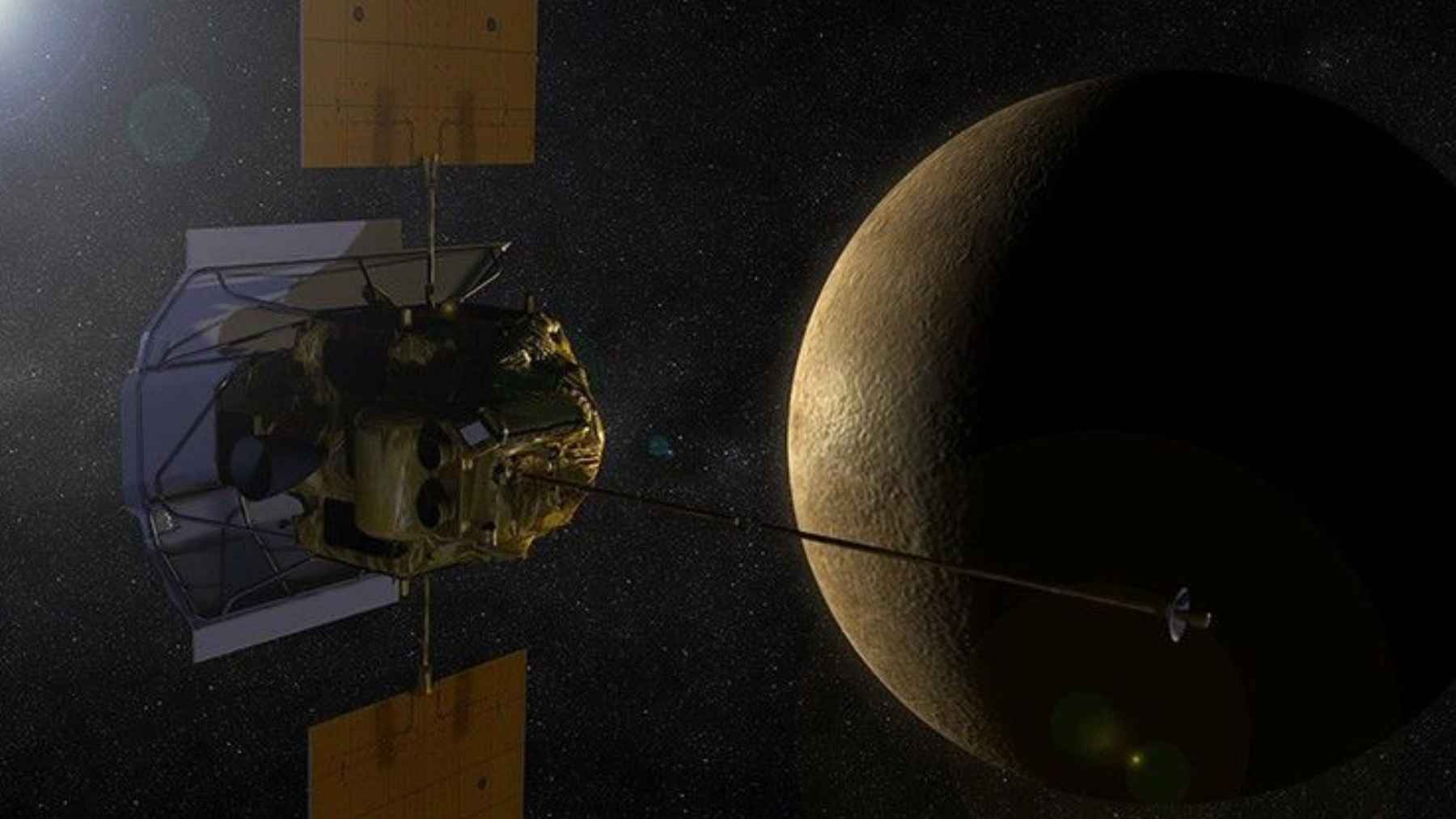
There is a methodological twist too. All of this comes from reanalyzing older MESSENGER data with newer tools. The spacecraft orbited Mercury from 2011 to 2015 and returned close to 100,000 images, mapping the surface before its planned impact on the planet.
Only now are scientists seizing this extra layer of insight about subtle features that were hiding in plain sight.
BepiColombo could confirm whether Mercury is still changing today
The discovery arrives at a good moment. The joint BepiColombo mission of the European Space Agency and the JAXA is already en route to Mercury and is expected to enter orbit in late 2026.
Its instruments will be able to check whether the same streaks look different a decade after MESSENGER, measure surface temperatures more precisely, and sample the thin exosphere for traces of the escaping gases that seem to shape the lineae.
What Mercury can teach us about exoplanets and atmospheres
All of this may feel very far from everyday concerns like the electric bill or a walk across sun-baked pavement. Yet the physics is related.
Understanding how a small rocky planet close to its star loses volatiles and reshapes its surface helps researchers interpret extreme exoplanets and the long-term evolution of atmospheres, including the fragile one that makes Earth habitable.
The study was published in Nature Communications Earth & Environment.