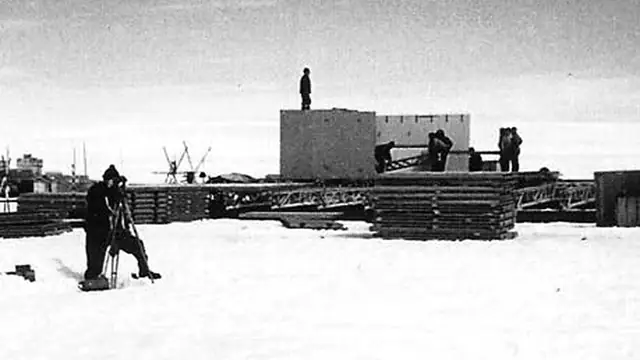
California approved $3 million to turn the mooring lines of floating wind turbines into underwater “nervous systems” that could listen for whale calls, detect snagged fishing gear and monitor structural strain along more than half a mile of cable
· 4 min read
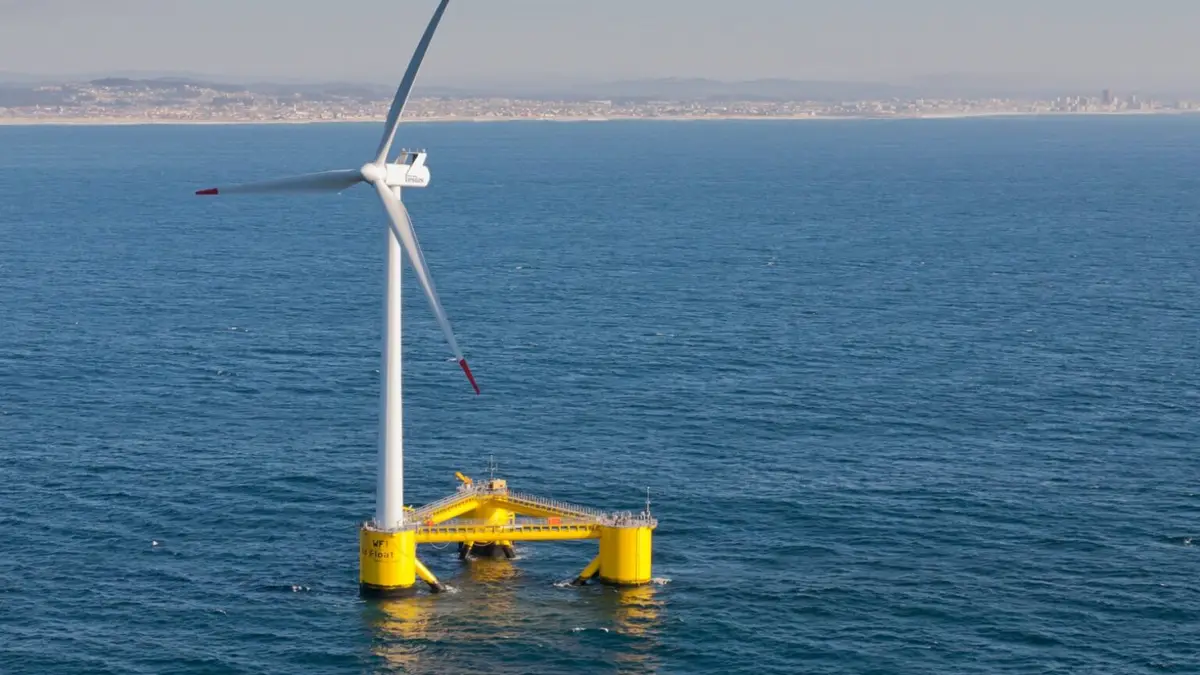
California has approved $3 million to develop wind-turbine mooring lines that could listen for whale calls while tracking structural strain and snagged fishing gear. The California Energy Commission approved the research funding for Lawrence Berkeley National Laboratory on January 21, 2026.
Researchers want to turn the lines holding floating turbines in place into a continuous monitoring network. It is a promising route toward better oversight of offshore equipment and marine activity, but the official plan describes a system to be developed and tested, not a proven way to rescue whales.
Why California needs a different kind of wind farm
Many offshore wind turbines stand on foundations attached directly to the seabed. But much of California’s promising wind resource lies above water too deep for that approach, making floating systems the practical option in those areas.
Read More: South Fork Wind’s 12 turbines off Long Island are already working as artificial reefs, and black sea bass catches were ten times higher at nearby Block Island, but scientists warn that more fish around a turbine doesn’t mean more fish in the ocean
Floating does not mean drifting freely. These platforms need mooring lines to hold them in position, while waves and storms keep the structures moving. Inspecting equipment in remote, rough water can be difficult and expensive, which makes small, unnoticed faults a costly problem.
The challenge is not just building something that can float. Engineers also need to understand how these structures respond to repeated movement, and their monitoring tools must capture changes across equipment spread over large distances.
How a mooring line can listen
The technology is called distributed fiber optic sensing. Light travels through a thin glass-cored cable, and instruments analyze the light scattered back to reveal changes in strain, vibration, or temperature along the fiber.
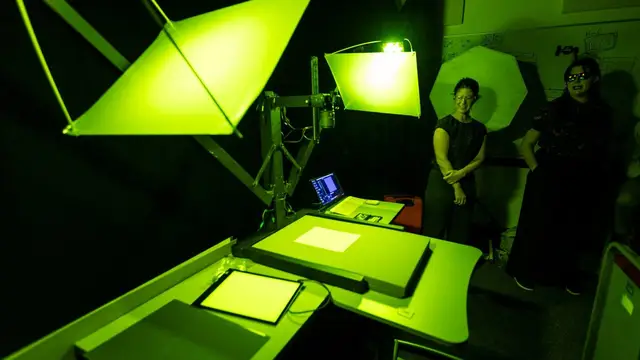
For the new system, the fiber would be embedded in synthetic mooring rope. Combining acoustic, strain, and temperature measurements would let the same line report both its condition and activity in the surrounding ocean. The design targets coverage along at least 1 kilometer (about 0.6 miles) of mooring line, rather than measurements at just a few isolated points.
In a January 2025 account of related turbine research, Berkeley Lab scientist Yuxin Wu described the long-term vision. “The ultimate goal is to have fiber optic built into the systems, offering what you could call a ‘nervous system’ for the turbines,” he said.
Whale calls and entanglements are different signals
The project, known as DREAMS, aims to record low-frequency marine mammal vocalizations between 10 and 500 hertz. Separately, it will test whether changes in strain can reveal abandoned fishing gear, such as crab pots and ghost nets, caught on mooring lines.
Read More: Two giant bubble rings were built around offshore wind foundations near Virginia Beach, but the seabed exposed what they could not stop
That distinction matters. Hearing a whale does not establish that it is trapped, and detecting snagged gear is not the same as demonstrating a successful rescue. The proposed measurements answer different questions.
There is already supporting evidence for the listening approach. In related research reported by UC Berkeley, a fiber optic cable lowered from a boat in Monterey Bay recorded humpback whale calls, with results compared against conventional underwater microphones called hydrophones. The work, published in Seismological Research Letters in 2025, supports the listening concept rather than demonstrating the complete DREAMS system.
Small faults can become big offshore repairs
The engineering side has encouraging evidence too. In a separate study published in the Journal of Civil Structural Health Monitoring, researchers tested a full-scale turbine tower on UC Berkeley’s shake table, creating movements intended to resemble offshore conditions.
Fiber optic measurements revealed the effects of loose bolts at tower connections, a fault that monitoring could help crews address before it becomes more serious. But the researchers also found that vibration noise had to be controlled to measure small strains accurately.
For operators, that could mean targeting maintenance instead of relying only on scheduled inspections. It is a practical benefit, though evidence from a tower test cannot substitute for proving that sensors embedded in mooring ropes will work reliably at sea.
The next test is out on the water
According to the state’s February 2026 project notice, testing is planned in a UC Berkeley wave tank and on a quarter-scale floating wind platform in the Gulf of Maine. The work brings laboratory and open-water testing together, allowing researchers to check how the monitoring system performs beyond controlled conditions.
The work plan sets targets of at least 90% entanglement-detection sensitivity and no more than a 5% false-positive rate. Those are goals for validation, not performance results established in the agreement for a finished system.
Read More: The wind changed before reaching a North Sea wind farm, and lasers caught the slowdown almost two miles away
A mooring line could then do two jobs, holding a turbine in place and helping operators detect changes that would otherwise remain hidden underwater.
The official project notice was published on California’s CEQAnet on February 9, 2026.
Glossary for this story
- Offshore wind
- Wind turbines built at sea, where winds are stronger and steadier than on land.
ECOnews Newsroom
Writer at ECOnewsA team of journalists specializing in socio-environmental news, sustainability, climate change, the environment, responsible consumption, and innovation. At EcoNews, we provide clear, reliable, and relevant coverage of the environmental and social challenges shaping our era.
More from ECOnews NewsroomComments · 0
Rules ›No comments yet. Be the first to share your view.