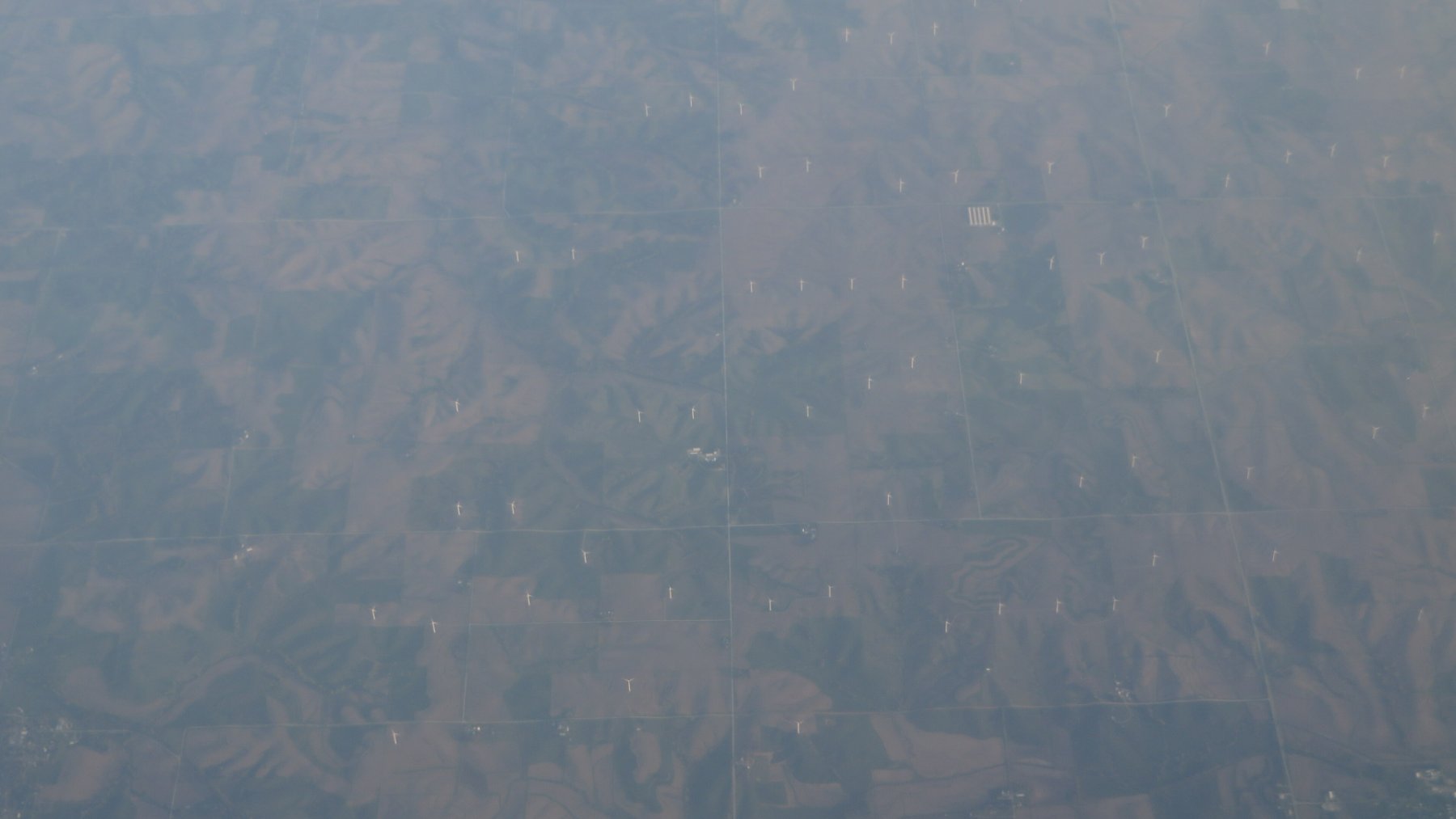
A 200-turbine wind farm in central Iowa did more than generate electricity above its cornfields. Researchers measured modest daytime cooling and nighttime warming in the air over crops, revealing a potential agricultural trade-off.
The findings came from the Crop Wind Energy Experiment (CWEX), conducted during the summers of 2010 and 2011 and reported in 2013. But the study left a crucial question unanswered, because it did not measure whether those changes produced a larger harvest.
What the thermometers actually measured
The paper reported daytime cooling of less than 0.75°C (roughly 1.4°F) at two downwind stations under particular wind conditions. At the northernmost station, several nighttime periods showed warming of 1.0°C to 1.5°C (1.8°F to 2.7°F).
These were air-temperature measurements about 30 feet above the ground, not readings inside corn kernels. Nor were the larger changes constant across the whole wind farm, since wind direction, atmospheric stability, and measurement location all mattered.
Daytime recordings also showed patterns consistent with more water vapor moving upward and more carbon dioxide moving toward the crop. That fits the idea of a better-ventilated canopy, but it describes an exchange of gases rather than a measured increase in grain.
A working farm became an outdoor laboratory
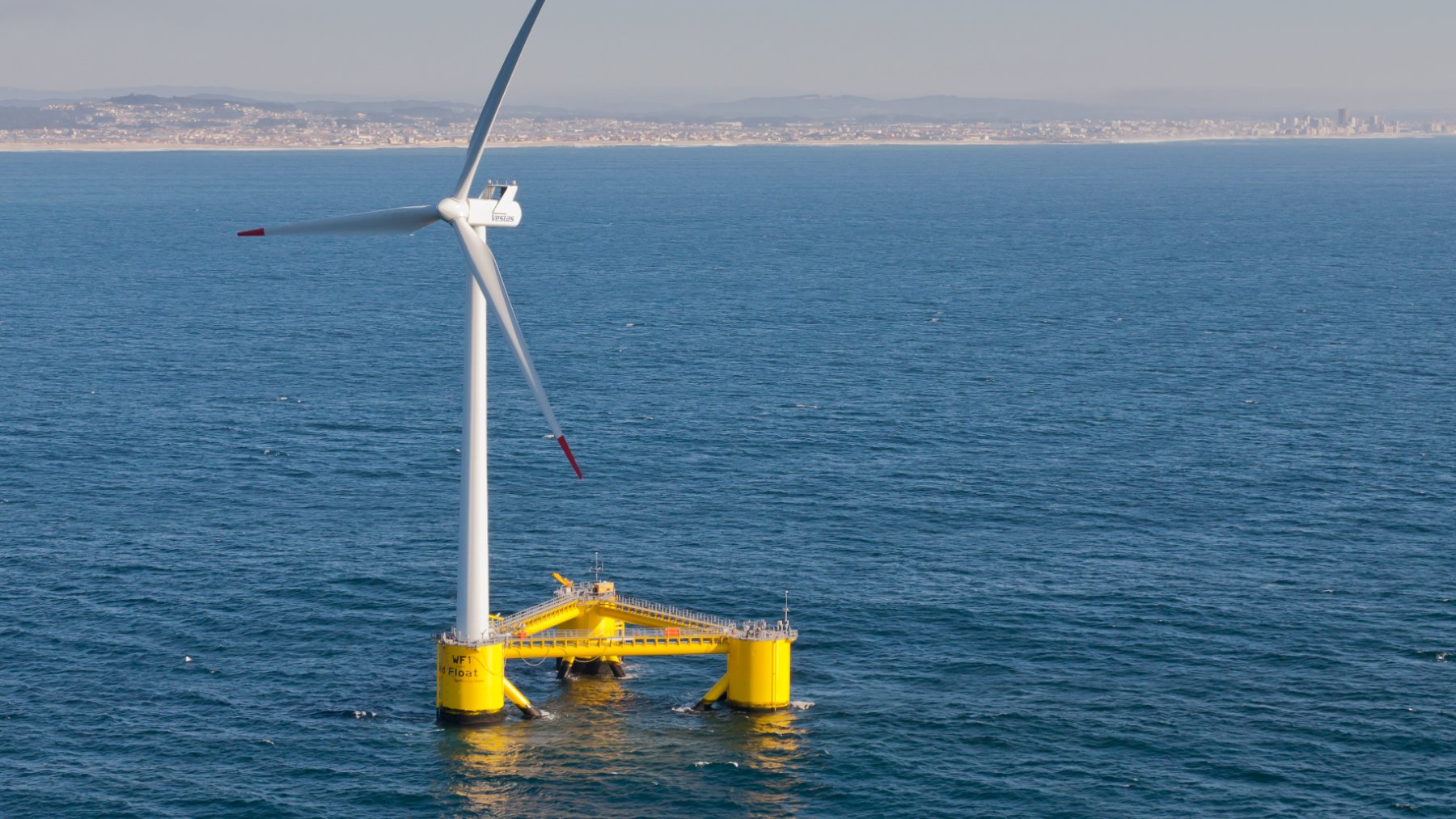
The site contained 200 turbines rated at 1.5 megawatts each, with corn and soybeans growing between them. The southernmost 100 machines had hubs about 262 feet high and rotors roughly 243 feet across, putting industrial-scale wind power directly above working farmland.
For two summers, researchers used laser-based lidar to trace winds above the fields, anemometers to track turbulence, and flux towers to follow exchanges of heat, water vapor, and carbon dioxide. Stations upwind of the turbines provided a reference for comparing air before and after it passed through the wind farm.
That comparison mattered because the field was not uniform, even when it looked flat. The researchers needed to distinguish a turbine wake from ordinary differences between sampling locations, rather than assume that every temperature contrast came from the spinning blades.
The turbines mix air rather than make it colder
What makes the temperatures move in opposite directions? The spinning blades leave turbulent wakes that change how air mixes between the crop canopy and the atmosphere above it, helping move heat and moisture away from sun-warmed vegetation rather than producing cold air like an air conditioner.
After sunset, the ground and crops cool while warmer air can remain overhead. Mixing some of that warmer air downward can raise temperatures near the surface. A 2016 follow-up study also found that proximity mattered, with nighttime cooling close to turbines and warming farther downwind.
Drier leaves could help, but warmer nights have a cost
Extra air movement could shorten the time dew remains on leaves, making conditions less inviting for some fungi. Drier crops at harvest could also reduce artificial drying needs, the kind of expense that shows up on a farm’s energy bill, although those savings were not established by these measurements.
Warmer air might help during a frost-prone spring or fall night. But the same temperature shift can be less welcome in summer, when corn is using some of the carbon it captured during daylight to sustain nighttime respiration. In everyday terms, the plant is spending some of the energy it stored during the day to keep itself functioning.
“So the night time warming of the turbines is not a totally good thing,” Iowa State researcher Eugene Takle said in a 2018 university update. Higher nighttime temperatures can increase that respiratory carbon loss, complicating any simple claim that more mixing must mean better crops.
A change in the air is not a bigger harvest
The missing number in that study was the one many growers would care about most, a reliable change in bushels per acre. Differences in soil and field management make it difficult to isolate a turbine’s contribution, so air measurements alone cannot establish what it adds to or subtracts from a season’s harvest. Answering that question requires following harvest outcomes alongside turbine-wake exposure over full growing seasons while accounting for field differences.
Takle’s 2018 update described increased daytime carbon dioxide uptake that outweighed the additional nighttime release in the measurements he discussed. That is encouraging evidence about plant processes, but it is not the same as demonstrating a larger harvest.
Taken together, the findings show why wind energy and farming need to be studied as interacting systems, not simply as two activities sharing a field.