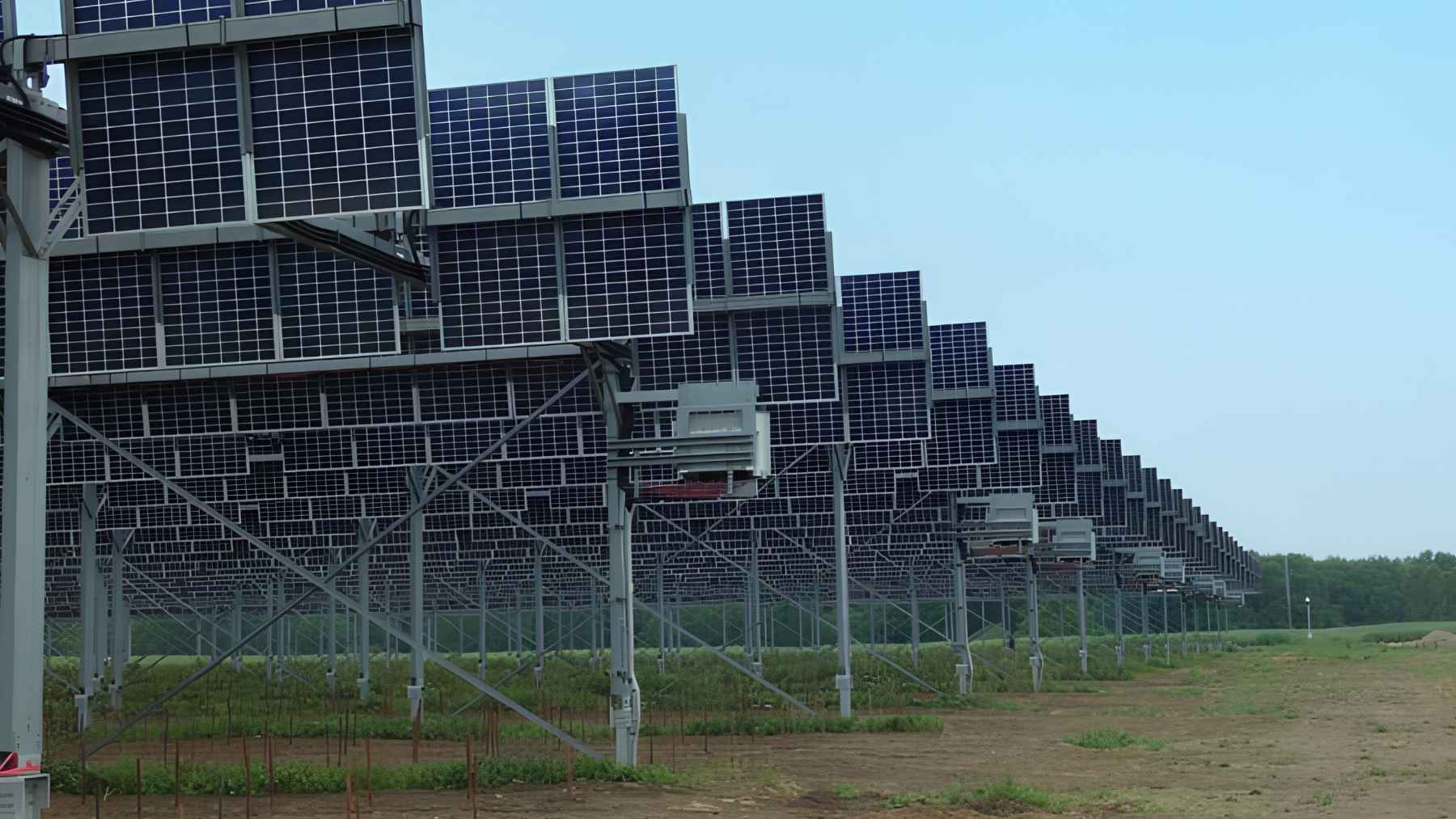
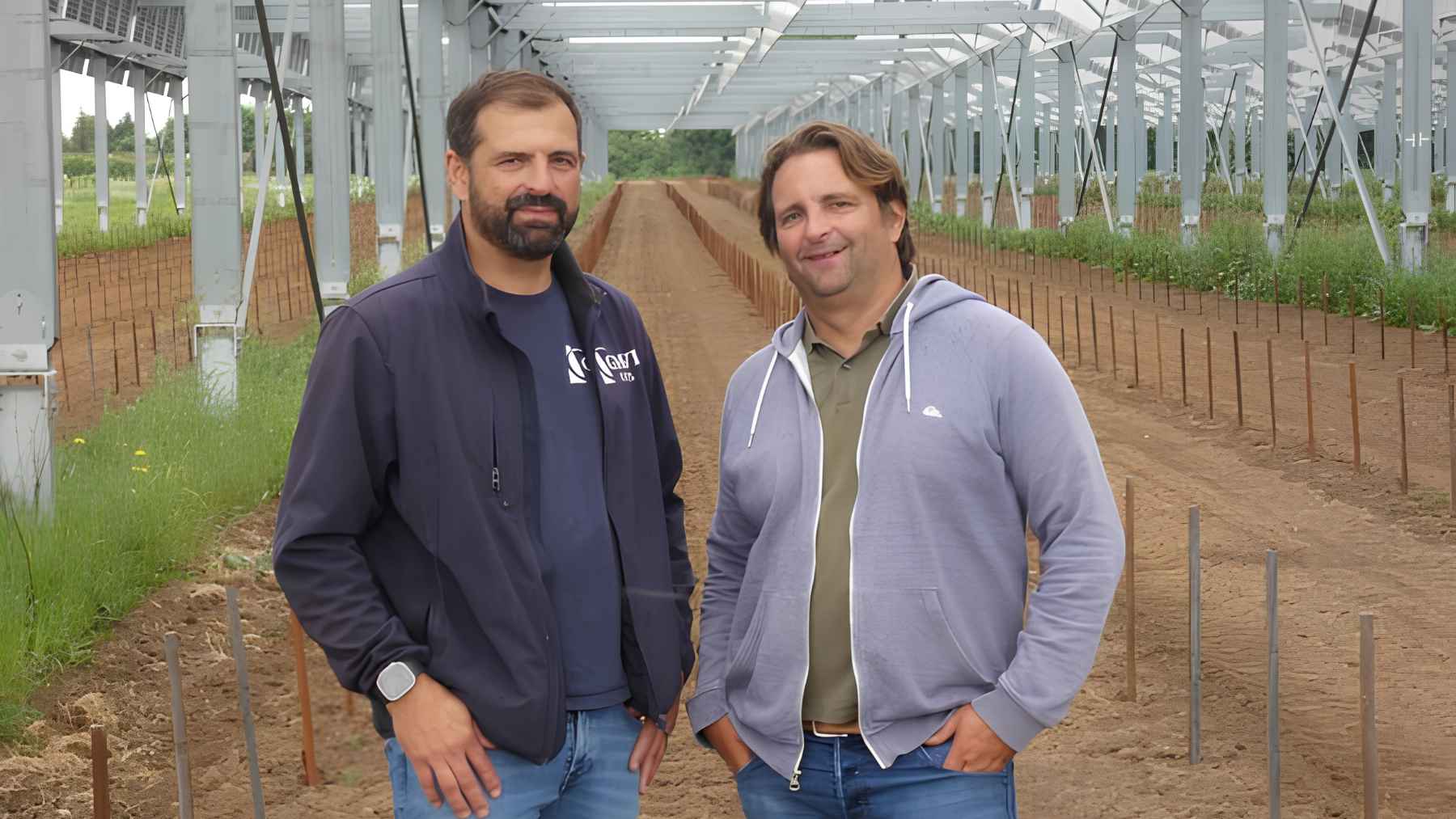
The wine world is quite a niche, right? In this case, we will start with a french winegrower who has been testing one of the biggest and more complete climate dilemmas ever seen in viticulture. His name is David Moreau and in Saint-André-de-Lidon, he planted in his field 4 hectares of ugni blanc grapes under 6,000 solar panels. He did this actually knowing that, for now, the wine that will be sold will have to be without the protected geographic certification.
The idea of this whole project, David Moreau says, is actually to take care of the young vines from extreme heat, hail, and late frost. But what is the difference here? That also with the solar panels, electricity is generated. What everyone is asking about is if this system will be capable of saving large enough quantity and high enough quality of grapes to justify giving up and “quitting” the Cognac-linked designation.
A moving shield above the vines
The solar panels are placed five meters above the plant rows and they change their inclination throughout the day. This happens by the use of meteorologic sensors and plant-growth models. And specifically when there is hot weather, the panels provide shade. But if the case is a big hailstorm, the structure stays completely flat to protect the crop.
Moreau together with his company estimate that, with a hailstorm,with all this new project, it could save between 70 to 80 percent of the plants or even drastically reduce frost risk. It is important to say that the numbers and estimations they share are theirs, since they still do not have information from their own harvest.
The economics are unusual
Sun’Agri calculates that the cost of the construction was about €4 million. In this case, the investor keeps with the electricity revenue, and Moreau is paid €600 a year for 30 years. This is relevant because the company says that this system can generate energy equivalent to the annual use of 800 to 1,000 family houses.
This makes us think that the main business is not renting the place to position the solar panels. Here, Moreau is betting that having a stable harvest is worth much more than that symbolic payment, mostly when there can be different difficult weather conditions -as the ones named before- that can erase many months of work in the vineyard.
Early data needs caution
In past tests at some vineyards in the south of France, Sun’Agri reported higher yields. For them the numbers can be quite promising, but still they are data that come from the company itself and France’s 2024 agrivoltaics rules require that these kinds of projects have a meaningful agricultural production and show a concrete benefit. This can be either heat, water or weather protection.
As you can imagine, this is the reason why the Saint-André-de-Lidon is being watched and supervised by the French Vine and Wine Institute during these first years. And yes, it will not be the electricity meter that will give be the final verdict. It will be the grapes!
American vineyards face a different choice
To compare, on the other side of the ocean, U.S. federal AVA rules require that at least 85 percent of the wine comes from harvested grapes in the named area. The actual federal regulation does not prohibit the use of elevated solar structures, and the Colorado State University is already studying how an elevated array affects frost, hail, soil moisture, grape chemistry, and labor.
What happens next
So, for French growers, the biggest challenge to adopting agrivoltaics in France is not about the price of steel or glass, but more about the name stamped on the bottle.
The latest official statement on vineyard protection experiments was published on INAO.