Photovoltaic self-consumption has leaped for decades thanks to an invention that shatters preconceived ideas. This is the first solar panel that works inside your home. Do you know how it does it? In the most unexpected way: with the light generated by your light bulbs. This means you’ll have almost free electricity and save like never before.
The first-ever indoor solar panel? This invention could revolutionize photovoltaics.
The innovation is also a first for the startup firm – for Ambient Photonics, it marks a significant step in indoor solar harnessing technology with the first bifacial solar cell unveiled by the firm. This revolutionary design enables a power absorption on both the front and the rear of the solar cell.
A breakdown of this new indoor solar panel as to its features, composition, and operation shall be largely explored in this article. The indoor solar panel is unique due to its ability to be efficient during low light conditions, this makes the Ambient Photonics one fit for a lot of uses.
It can also be employed in gadgets like remote controls, wireless keyboards, and numerous other internet-connected devices, which may not require batteries again, thus decreasing the girth and volume of innovations. The panel is printed using an industrial print method that incorporates an energy-harvesting molecule.
How does this solar panel work? That’s how you get almost free electricity at home.
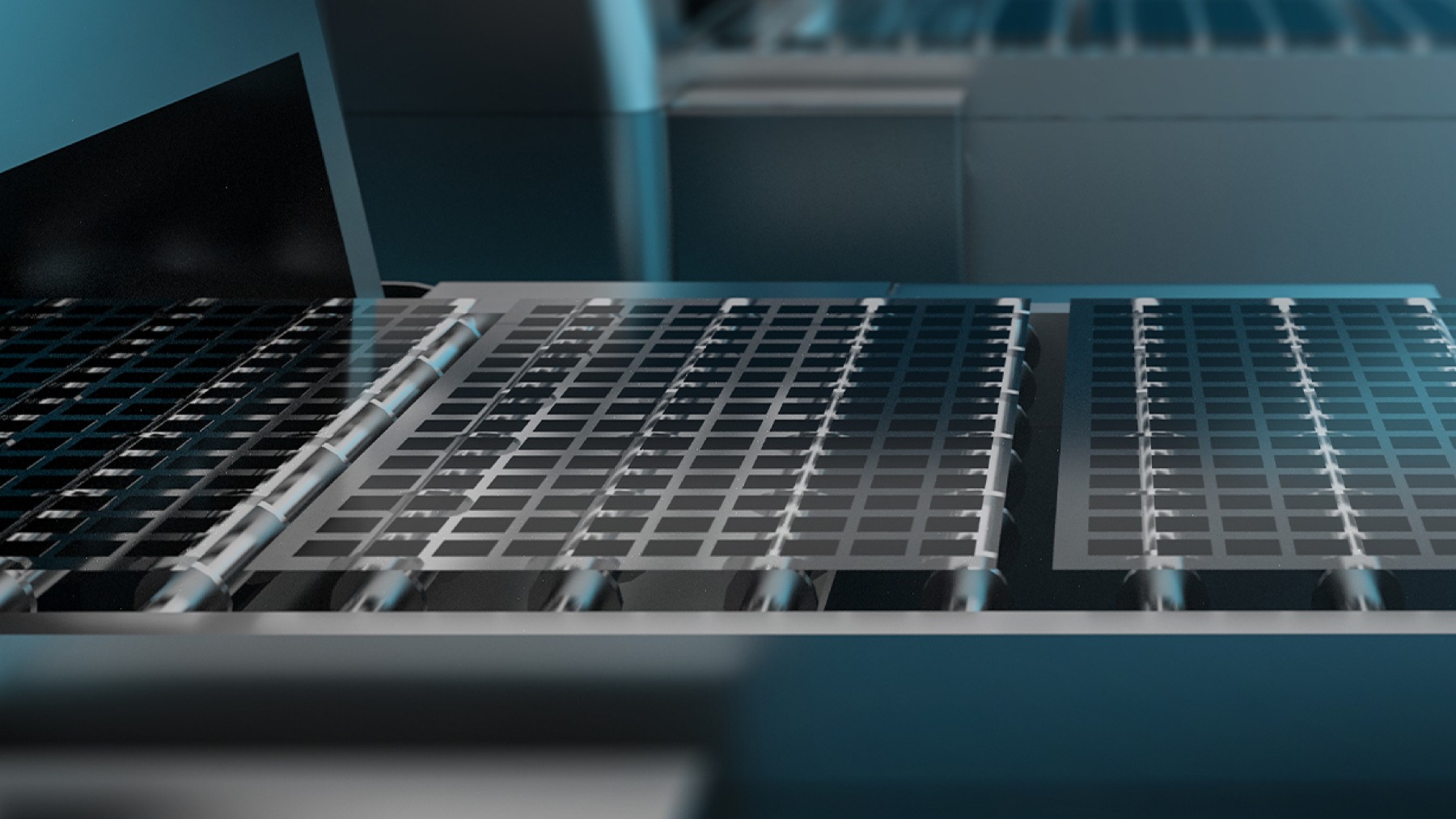
It uses a material called dye-sensitized solar cells (DSSC) to build the solar panel. These cells are constructed using optically transparent glass, are free from metal, and have organic synthetic dyes whose characteristic features are electronically and optically programmable.
This material enables the solar panel to work with any type of light found indoors whether it is compact fluorescent, halogen, LED, incandescent or even dim or low natural light. The pneumatic solar panel actually designed to work indoors and its name – Ambient Photonics – refers to this specific product.
Just like other solar cells, it captures the energy both in front of and behind the solar cell. Due to the structure being double-sided sided, it is able to absorb light from both sides therefore having more converting power. The front side gives 100% of power that Ambient cells are familiarize.
100 % efficiency and IoT: how these indoor solar panels are futuristic but realistic
The indoor solar panel, also known as Ambient Photonics, has benefits that differentiate it from other solar panels. The technology can produce up to three times as much energy as traditional technology while also working in low-light situations.
This makes it quite suitable for the interiors and where it might not be directly exposed to the sunlight. Furthermore, the panels are not rigid; they may easily rotate so that they can be mounted in different positions making them suitable for many devices.
The Atmosphere Ambient Photonics indoor solar panel has a variety of usages. It can be implemented in extra-EM technologies like remote controls, wireless keyboards, and other connected devices, which could forget batteries altogether and make the size and weight of electronics significantly less.
It could also be used for building sensors and ambient IoT in buildings, thus enabling intelligent systems that are self-sustainable and do not require batteries. Indoor light-harvesting system indoor solar panel has been invented by a start-up known as Ambient Photonics; it has involved Google and Universal Electronics.
What do you think of this new indoor solar panel? The key now is to develop them from a material that does not depend only on pervoskite, given the sanctions we have imposed on its main importing country. As an example, you have already seen what happened with monocrystalline silicon (more traditional, but not old) or even with diamond, which we told you about a few weeks ago.