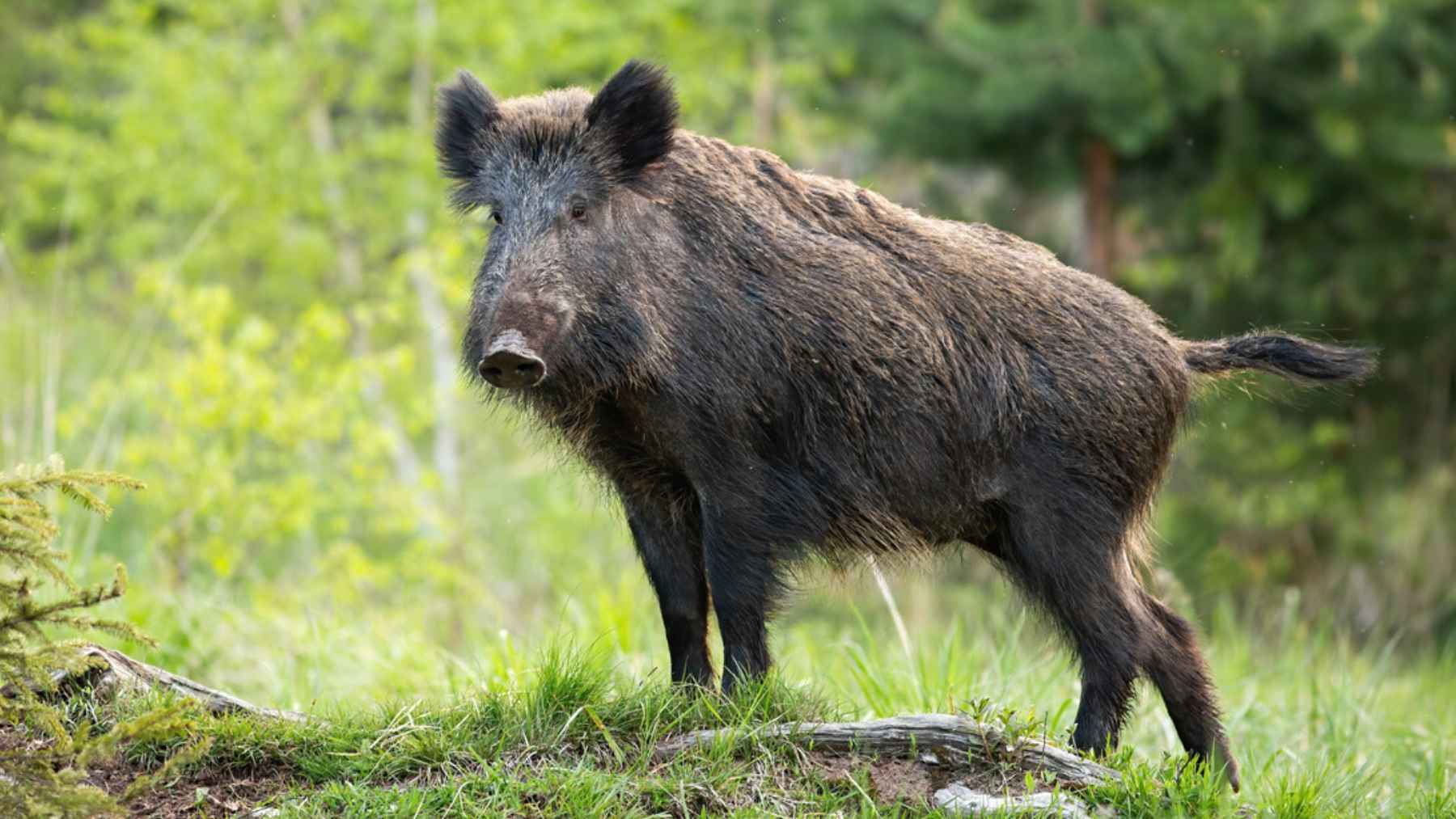
Wild boars are no longer just a countryside headache in Europe. New genetic work suggests that, over time, some city-dwelling boars can become a distinct group from their rural neighbors, even if a few animals still move back and forth.
That raises a practical question for anyone who has seen a boar near a playground or a bike path. Are these animals local “city residents,” or visitors arriving from nearby forests, and does that change what cities should do next?
Wild boars are settling into city life
As cities spread outward, parks, wooded edges, and green belts can turn into long-term shelter for large mammals. Wild boars have taken advantage of that, establishing stable urban populations in places like Berlin and Barcelona.
For residents, the issue can feel personal and sudden. A rooted-up lawn, a tense moment at a crosswalk, or a nervous dog on a leash can turn an ordinary routine into a reminder that wildlife is now part of city life.
How researchers read a boar’s DNA
Instead of relying only on sightings and tracks, scientists can use genetics to see which animals are related and which groups are separate. They do this by checking “genetic markers,” small sections of DNA that vary among individuals and can act like fingerprints for a population.
The Berlin-Barcelona project is led by Jörns Fickel and Stephanie Kramer-Schadt, with field collaboration in Barcelona through Wildlife Ecology & Health and veterinarian Jorge Ramón López-Olvera at the Universidad Autónoma de Barcelona. Alongside DNA work, the team is also interested in migration routes, because movement is what connects or separates populations in the real world.
Urban and rural boars split into different groups
In the project, researchers genotyped about 400 wild boars from each city and compared them with animals from nearby rural areas. The results so far show that urban wild boars in both Berlin and Barcelona form a recognizable genetic cluster that is clearly different from the rural cluster, while a smaller number of “mixed” animals reveal ongoing exchange between city and countryside, stronger in Berlin and weaker in Barcelona.
That difference is more than academic. If a boar turns up in an unfamiliar neighborhood, genetics can help assign it to an urban or rural group, giving officials and researchers a clearer picture of where conflict animals are likely coming from.
The city-country border is not a wall
Those “mixed” animals matter because they show the border between city and countryside is leaky. In other words, even a distinct urban group can still receive newcomers from outside, or send animals out, depending on local conditions.
This is often described as source and sink dynamics. A “source” is an area that produces more animals than it can hold, while a “sink” draws in newcomers, sometimes because it looks safe or rich in food, even if it comes with risks like traffic and close contact with people.
Why genetics can change management
The research points to one clear takeaway for policy. Managing wild boars only inside city limits may miss the bigger system, because populations can remain connected across municipal borders, which is why coordinated plans with neighboring communities are often needed. A 2022 paper led by Justus Hagemann made a similar case for Barcelona, arguing that management should reduce the attractiveness of urban areas and limit habituation, so boars do not get too comfortable around people.
It also pushes back on a simple story many people assume, that urban boars are mainly living off garbage. In a Berlin-focused diet study, researchers found mostly natural foods in the animals’ stomachs, with human food showing up in only four out of 247 samples, suggesting that city parks and forests can supply plenty of calories on their own.
Earlier studies help explain the pattern
A Berlin analysis described in a 2016 research update found several genetically distinct groups living in urban forests, while many wild boars found in built-up areas matched the surrounding rural population. Lead researcher Milena Stillfried summed it up as two parallel processes, isolated city forest groups and a steady stream of rural animals using the city as an attractive sink, and the results were reported in Journal of Applied Ecology.
The underlying Berlin genetic dataset was later shared on the Dryad research repository, including samples collected between 2012 and 2015 and the DNA markers used to separate urban clusters from a rural cluster. Making this kind of data public can help other cities compare their own wildlife problems and see whether the same genetic patterns are showing up elsewhere.
What happens next
The big open question is how general this story is. If Berlin and Barcelona show similar genetic splits, researchers still need to test whether the same pattern holds in other large cities, or whether local landscapes and policies change the outcome.
For now, “urban wild boar” is not just a label for where an animal is spotted. Over time, city living can leave a genetic footprint, and that may shape how European cities plan for coexistence in the years ahead.
The main official project update has been published by the Leibniz Institute for Zoo and Wildlife Research.