Brazil is moving into one of the most aggressive offshore oil expansion cycles in its history, and the center of gravity is Búzios, a giant pre-salt field in the Santos Basin. Petrobras says its current plan will complete 11 floating production, storage, and offloading (FPSO) vessels in Búzios by 2027, even as the company keeps talking about a “just energy transition.”
The timing is hard to ignore. On May 1, Petrobras brought P-79 online ahead of schedule, making it the eighth platform operating in Búzios and lifting the field’s installed oil capacity to about 1.33 million barrels per day. This is big news for Brazil. It is also a climate-era test.
Búzios becomes the main stage
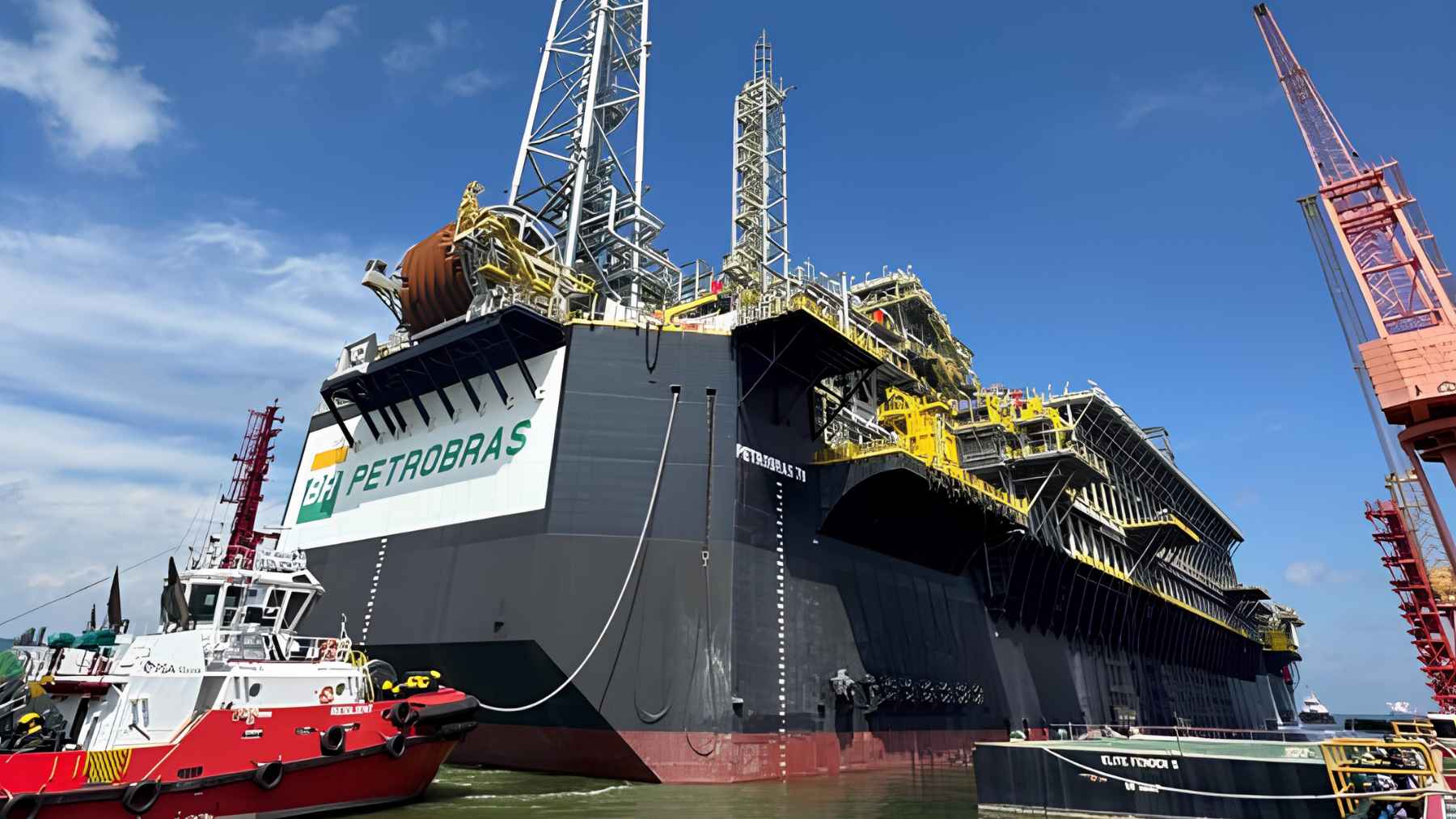
An FPSO is basically a floating factory at sea. It produces, stores, and transfers oil from fields that are far too deep and distant for ordinary offshore infrastructure.
Búzios sits about 112 miles off Rio de Janeiro state, in waters deeper than 6,560 feet. Petrobras says the field, discovered in 2010, has already passed the mark of 1 million barrels per day and is the largest in Brazil by reserves.
P-79 alone can process 180,000 barrels of oil per day and compress about 254 million cubic feet of gas per day. Its link to the Rota 3 pipeline could add up to about 106 million cubic feet of gas per day to Brazil’s supply.
A crowded offshore schedule
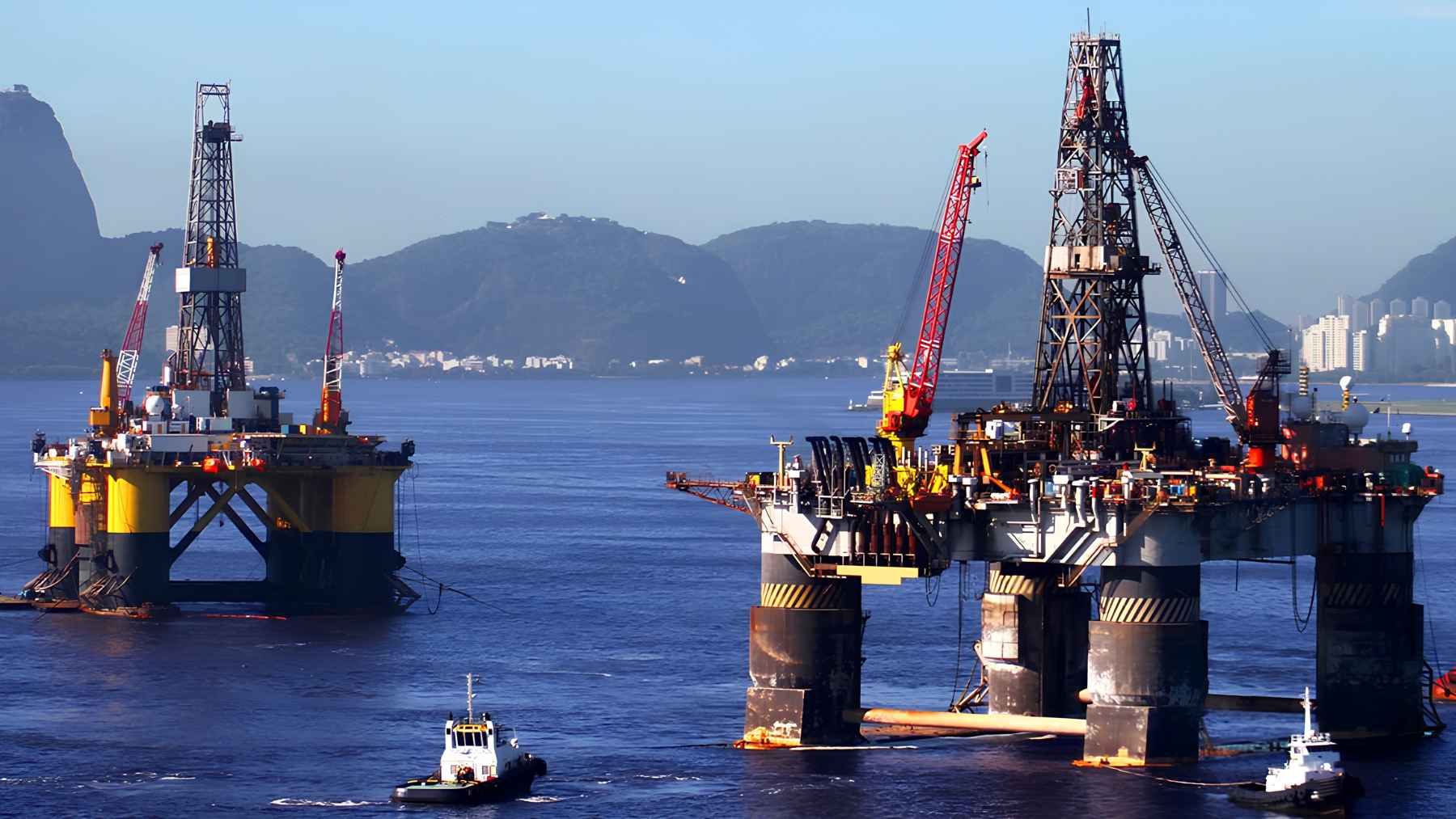
The newest business plan confirms the scale of the next wave. Petrobras says Búzios should complete 11 FPSOs by 2027, including the contracted P-78, P-79, P-80, P-82, and P-83 units.
The older 2023 pre-salt expansion plan framed this as 11 new platforms across the pre-salt by 2027, with six of them bound for Búzios. It listed Almirante Tamandaré, P-78, P-79, P-80, P-82, and P-83 as the Búzios package.
In practical terms, that means Búzios is becoming a whole industrial district out at sea. P-80, P-82, and P-83 are each listed in Petrobras materials with capacity of 225,000 barrels per day.
The money tells the story
Petrobras’s 2026 to 2030 plan puts total planned capital spending at $109 billion. Within that, $69.2 billion goes to exploration and production projects, and 62% of that portfolio is tied to the pre-salt.
That is the clearest signal of priorities. The company is not walking away from oil and gas while building lower-carbon businesses on the side.
Magda Chambriard, Petrobras’s president, said the plan reaffirms the company’s ambition to “grow together with Brazil.” She also linked the strategy to energy security, jobs, taxes, and the idea of leading a just energy transition.
The environmental tension is obvious
Petrobras argues that its portfolio can compete under lower oil prices and lower emissions. The company says its oil and gas projects average a prospective Brent breakeven of $25 per barrel and carbon intensity of up to about 33 pounds of CO2 equivalent per barrel of oil equivalent over the five-year period.
That matters, but it does not make the climate question disappear. Cleaner production is still production, and the oil eventually moves into cars, ships, planes, factories, and long supply chains.
At the same time, Petrobras says energy transition investments will reach $13 billion over the same plan period. That money is focused largely on biofuels, sustainable aviation fuel, biomethane, renewable diesel, operational decarbonization, and research.
Oil demand may not wait forever
Here is the tricky part for Brazil. The International Energy Agency says that under its Stated Policies Scenario, global oil demand levels off around 2030 at about 102 million barrels per day before beginning a slow decline.
That does not mean oil vanishes from daily life overnight. Traffic jams, diesel trucks, petrochemicals, and aviation still keep demand alive, especially in emerging economies.
But long-lived offshore platforms are not short-term bets. If demand weakens faster than expected, projects that look strong today can face price pressure, delayed payback, or even stranded-asset concerns.
Jobs, gas, and local industry
For Brazil, the appeal is easy to understand. A field like Búzios supports shipyards, offshore crews, engineering firms, equipment suppliers, and public revenue.
Petrobras says its broader 2026 to 2030 investment plan could generate and sustain 311,000 direct and indirect jobs. For families tied to the oil chain, that is not an abstract number. It is rent, groceries, and the electric bill.
There is also the gas angle. More offshore gas reaching shore could help Brazil diversify supply and ease pressure on power and industrial systems, especially during dry periods when hydropower struggles.
Security or stranded risk
The buildout gives Brazil a stronger seat in the global energy map. At a time when oil markets can swing on wars, shipping disruptions, and OPEC decisions, domestic production is a form of insurance.
On the other hand, the clock is moving. Every new platform deepens Brazil’s dependence on fossil-fuel revenue just as governments, automakers, utilities, and investors are reworking the rules of energy.
So the answer is not simple. Búzios may strengthen Brazil’s energy security in the near term, but it also raises the cost of getting the transition wrong later.
What comes next
The next test is execution. P-79 started early, but offshore megaprojects can still face delays, cost pressure, weather, supply-chain bottlenecks, and technical surprises once they scale up.
For Petrobras, the message is clear enough. Oil and gas remain the cash engine, while lower-carbon projects are still growing around the edges.
At the end of the day, Búzios is more than an oil field. It is Brazil’s bet that a country can expand fossil fuel production and still claim a place in the energy transition. That bet is now floating 112 miles offshore.
The official statement was published in Petrobras’s Investor Relations website.