What if one piece of a city’s flood defense started not in a giant tunnel, but beside a downspout or inside a bathroom? A new Drexel University study suggests household water fixes can make a measurable dent in urban flooding when enough neighbors take part.
Researchers modeled Camden, New Jersey’s flood-prone Cramer Hill neighborhood and found that a combined package of rain barrels, cisterns, water-efficient fixtures, and sink-to-toilet graywater reuse could reduce sewer overflows by as much as 11% and floodwater volumes by up to 13% under broad adoption.
The result is not a replacement for big infrastructure, but it gives cities a practical clue for the climate era. Sometimes the first gallon to manage is the one that never reaches the pipe.
A flood fix at home
For years, urban drainage has relied on big public works, such as tunnels, pumping stations, detention tanks, and treatment plant upgrades. They matter, but they are expensive and slow, especially in older neighborhoods where one summer storm can turn streets into ankle-deep waterways.
The Drexel team looked at the other end of the system. Instead of asking only how cities can move water faster, they asked how homes can hold back or reuse water before it reaches crowded sewers.
Led by Amanda Carneiro Marques, an assistant professor at Drexel’s College of Engineering, the study focused on Cramer Hill, a residential area in Camden that sits in a coastal hazard zone and faces frequent flooding and combined sewer overflows.
Why Cramer Hill matters
Cramer Hill is the kind of place many older coastal cities will recognize. It has aging infrastructure, heavy rain, tidal pressure from nearby water, and a combined sewer system that carries stormwater and wastewater through the same pipes.
When those pipes are overwhelmed, untreated sewage and stormwater can be pushed toward streets and waterways. Camden and Philadelphia have reported about 16 billion gallons of combined sewer overflow, a number that shows how quickly local drainage trouble becomes an environmental problem.
This is not just about Camden. Cities from Boston to New York to Philadelphia face similar risks because combined sewer systems remain part of their urban plumbing. Add rising seas and stronger downpours, and the problem starts to look less like an occasional emergency and more like a routine stress test.
What the model tested
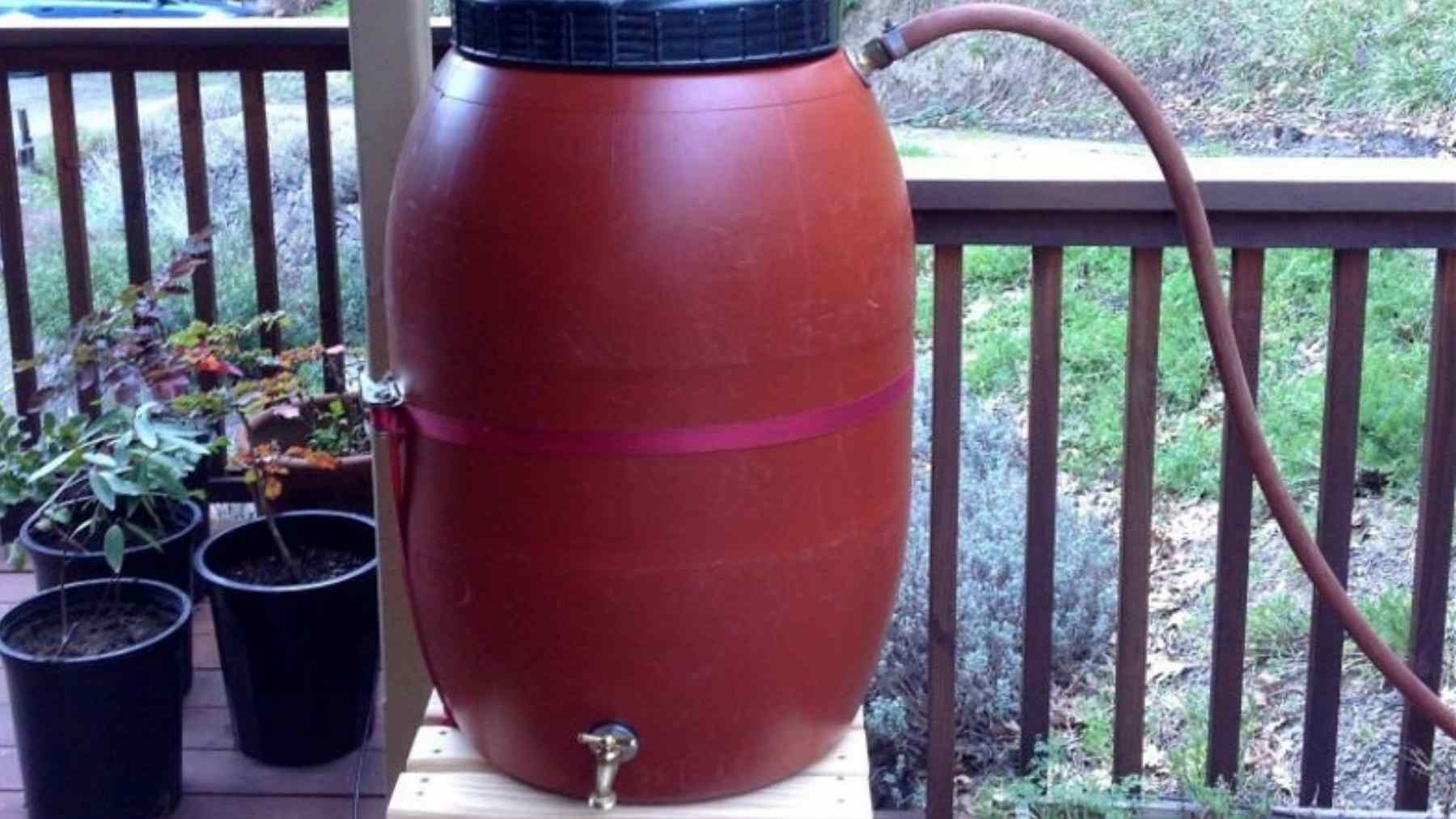
The researchers built a detailed stormwater model using Cramer Hill data and tested 16 combinations of household-scale strategies. Some were outside the home, including rain barrels and cisterns. Others were inside, including efficient fixtures and graywater reuse, where sink water helps flush toilets.
The model also tested different adoption levels. That matters. A rain barrel at one house is useful, but a whole block of homes holding and reusing water changes the math.
Under current conditions, the strongest results came when several measures worked together. With 75% household adoption, combined strategies reduced combined sewer overflow volume by as much as 11% and floodwater volume by up to 13%, according to Drexel’s release.
Why small systems add up
The core idea is surprisingly simple. Every gallon held in a barrel, stored in a cistern, or reused indoors is a gallon that does not rush into a sewer during the worst part of a storm.
That can matter on a street where storm drains are already gurgling and drivers are inching through flooded intersections. It also matters downstream, where sewer overflows can send bacteria, nutrients, and pollution into rivers.
“Individual decisions genuinely move the needle,” Fernanda Cruz Rios, a co-author of the study, said in Drexel’s engineering release. That statement is the practical heartbeat of the research. The benefit depends less on one perfect device and more on many homes doing something at once.
The climate stress test
The team did not stop at today’s weather. It also stress tested the model with rainfall increases of 10%, 20%, and 30%, along with sea-level rise scenarios of about 1 foot, 3 feet, and 5.9 feet.
The results were not tidy, because real flooding rarely is. Heavier rain increased overflow and flood volumes, while high sea levels created backpressure that made it harder for the sewer system to drain. In the worst climate scenario, Drexel Engineering reported that baseline flood volume nearly doubled.
Still, the household strategies held much of their value. Under climate stress, combined measures reduced sewer overflow by 11% to 12% and flood volumes by 11% to 13% compared with each climate-stressed baseline. That is a sign of resilience, not a magic shield.
Not a silver bullet
One clear message from the paper is that rain barrels alone will not save coastal cities. The authors found that decentralized strategies can reduce pressure on sewers, but projected climate extremes still point to the need for larger infrastructure upgrades.
That nuance matters. A city cannot ask residents to solve a public infrastructure problem with a plastic barrel and a low-flow toilet, especially in low-income neighborhoods where upfront costs can be a barrier.
Cruz Rios warned that Camden residents already face significant economic pressure and should not be expected to cover those upgrades on their own. In practical terms, that means rebates, utility programs, grants, and landlord participation could decide whether the approach works beyond a computer model.
A cleaner river starts upstream
The environmental payoff reaches beyond flooded streets. When combined sewers overflow, polluted water can enter rivers and coastal areas, hurting water quality and aquatic ecosystems.
Water reuse also reduces demand on treated drinking water. That saves energy across the system, from pumping and treatment to wastewater processing. The electric bill for a utility may not be the first thing people think of during a storm, but water does not move through a city for free.
At the end of the day, this study points to a more layered way of managing rain. Big tunnels and treatment plants still matter, but homes, roofs, bathrooms, and backyards can become part of the city’s flood defense too.
What cities should remember
The biggest barrier may be participation. The model showed that neighborhood adoption was a key driver of success, which means the policy challenge is social as much as technical.
Would people install rain barrels or graywater systems if the process were cheaper, simpler, and supported by the city? The research suggests that this is not just a lifestyle question. It is a resilience question.
For older coastal neighborhoods, the takeaway is clear enough. Flood protection does not have to start only with a massive construction project. It can also begin with thousands of smaller choices, lined up block by block, before the next storm hits.
The study was published in Urban Climate.