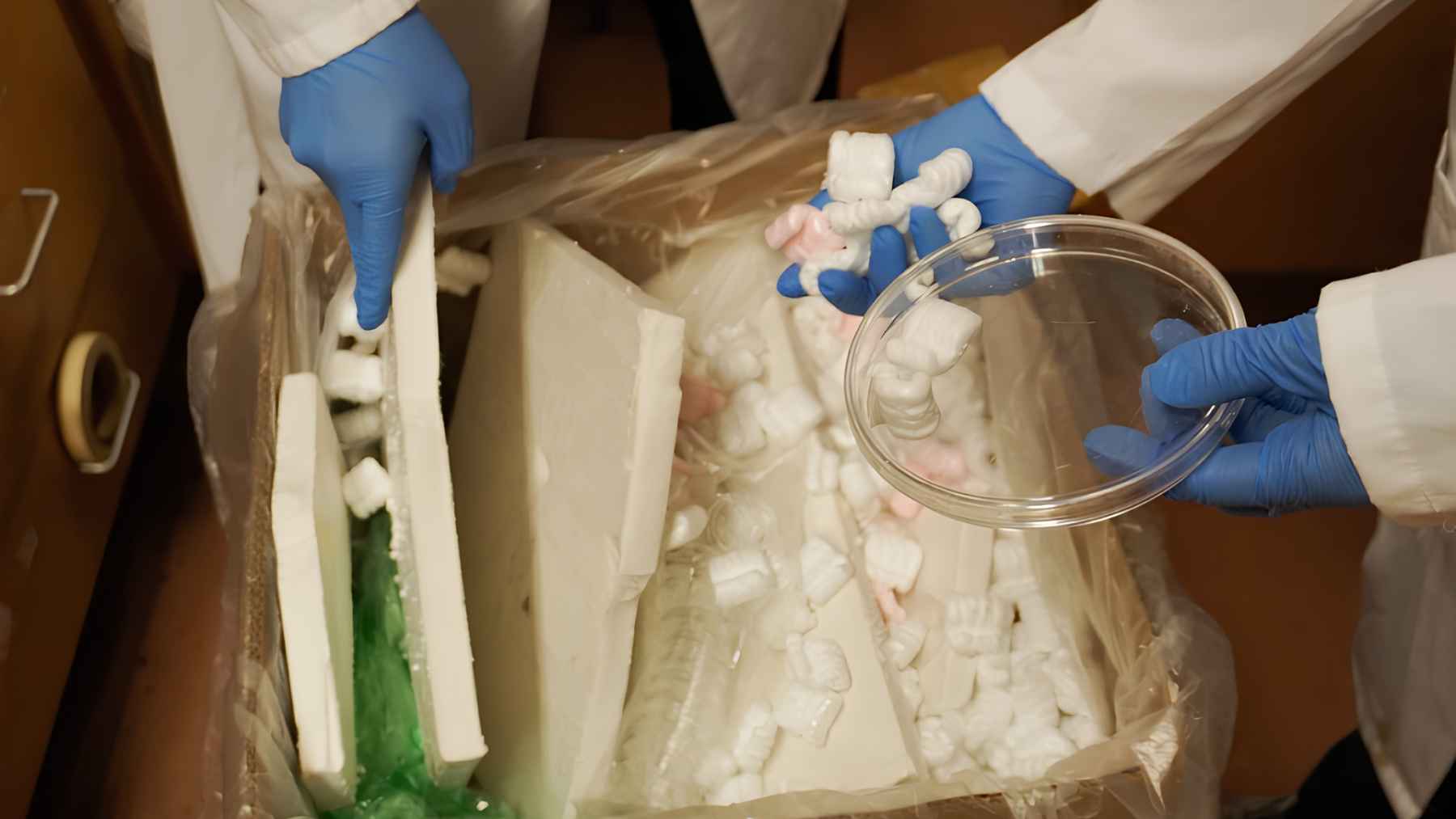
A familiar plastic problem may have a surprisingly plain-looking solution. Researchers have reported a method that breaks down polystyrene, the plastic used in many foam cups, food containers, packing pieces, and disposable products, with a common iron-based chemical, air, and light.
The work does not mean every takeout box can be tossed into the sun and vanish by lunchtime. But it points to a lower-energy way to turn tough plastics into smaller materials that could be reused, instead of letting them drift into landfills, rivers, and the tiny plastic fragments now turning up in food chains.
Why polystyrene matters?
Polystyrene is popular because it is cheap, light, and good at keeping hot food hot or cold drinks cold. That same lightness is also part of the problem, since broken foam can blow through streets, stick in drains, and travel far before anyone notices.
What many people casually call “Styrofoam” is often polystyrene foam. A polymer is just a long chain of repeating molecules, a little like beads on a string, and polystyrene’s chain is built to resist quick natural breakdown. That is why a container used for a few minutes can become a waste problem for years.
A simple lab recipe
Dr. Maxime Michelas, from the University of New South Wales School of Chemical Engineering, worked with Professor Cyrille Boyer and Laura Wimberger on the new process. “I think it’s very important to degrade the polymer and turn it into another feedstock we can use for other things, or just to reduce the amount of microplastics in the world,” Michelas said.
The method uses iron trichloride, also known as ferric chloride, plus oxygen from air and a light source. In simple terms, the chemical behaves like a light-activated helper, pushing the plastic chains to break apart once the mixture is exposed to light.
What the tests showed
In the experiments, the plastic first had to be dissolved in an organic solvent, which is a liquid that can hold the polymer in solution. Once the team added ferric chloride and shone light on the mixture, the plastic chains began to break into much smaller compounds.
The reported numbers are what make the result stand out. At room temperature, the team showed that seven types of polymers could be reduced by 90% in less than 30 minutes, and by 97% after three hours.
Why sunlight matters
The researchers first used dim purple light and pure oxygen in a more controlled setup. Then they tried sunlight and ordinary air, a much more everyday combination, and the process still worked, though a bit more slowly.
No giant furnace is the appeal. In practical terms, less heat can mean a smaller electric bill, though the full cost has not been tested at industrial scale.
A related 2024 Nature Communications review noted that chemical recycling can make cleaner raw materials than basic mechanical recycling, but many routes use a lot of energy, so light-driven methods are drawing attention.
Microplastics are the bigger shadow
Microplastics are tiny plastic pieces that come from larger items as they crack, wear down, or shred. Think of a foam cup breaking into flakes so small they are hard to see, then smaller still as wind, water, and sunlight keep working on it.
The United Nations Environment Programme says the world produces around 474 million U.S. tons of plastic each year, after converting its metric figure, and much of it soon becomes waste. The same organization says microplastics have been found in water, soil, air, food chains, and the human body, although scientists are still studying what that means for health.
Not a magic cleanup button
Here is the catch. The process still needs an organic solvent, and the researchers say their current system is not compatible with water. That means it is not ready to be poured into wastewater plants or used directly in oceans, rivers, or storm drains.
The team also does not yet fully control the exact products formed after the plastic breaks apart. In practical terms, that matters because a recycling plant needs predictable outputs, not a mystery mix that changes from batch to batch.
Why the finding still matters
Even with those limits, the method offers a useful clue for waste managers and chemical companies. If the process can be improved, it could help convert old plastic into simple organic compounds, including materials that may be reused as feedstock for new products.
At the end of the day, this is not a license to keep making disposable plastic without thinking. It is one more possible tool in a much larger fight that includes better design, less single-use packaging, stronger collection systems, and recycling that actually works.
The road ahead
The timing is important. The OECD has warned that global plastic waste is on track to almost triple by 2060, with around half expected to end up in landfills and less than one-fifth recycled unless stronger action is taken.
That is why work like this draws attention even before it becomes industrial equipment. A simple chemical, sunlight, and air will not solve plastic pollution alone, but in a world drowning in cheap throwaway packaging, even one cleaner pathway is worth watching closely.
The main study has been published in Macromolecular Rapid Communications.