A wall that holds a hammer, a picture frame, or a kitchen knife without a nail sounds a little like a magic trick. But in Argentina, 29-year-old industrial engineering student Marco Agustín Secchi has developed Ironplac, a magnetizable construction material designed to turn ordinary walls into functional surfaces without drilling, screws, or wall anchors.
The invention is not on store shelves yet. Still, it has already moved beyond a simple idea, with working prototypes, pilot installations, laboratory validation, and an intellectual property process underway through the international patent system, according to technical reports and Secchi’s own interview statements.
Walls that do more
Ironplac is described as a magnetizable construction system that can be integrated into cement, panels, and coatings. Instead of making the wall itself an active magnet, the surface reacts when an object with a magnet is placed on it.
That detail matters. Secchi has said the mix is “100% passive” and that it “does not emit any magnetic field,” which means the wall is not constantly producing magnetism on its own.
In practical terms, the object does the work. A frame, tool, panel, or accessory needs a magnet attached to it, and the Ironplac surface provides the hidden layer that lets it stay in place.
How the material works
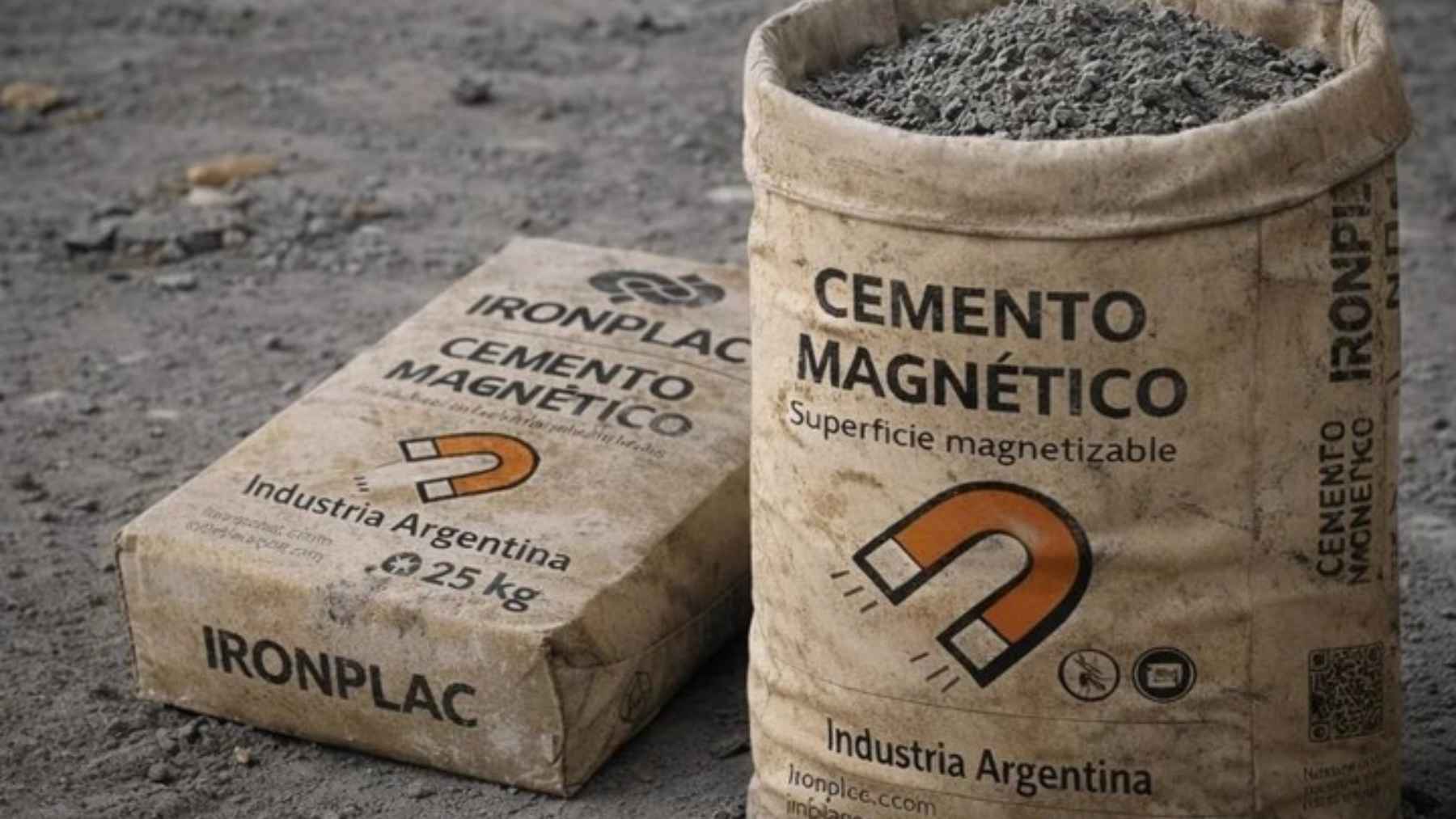
For wet construction, Ironplac is meant to be applied as a final fine plaster-like layer. It comes as a prepared bag that is mixed with water and spread over the surface in a similar way to a traditional finishing coat, but with added magnetizable properties.
The material is also being designed for dry construction systems. That could include drywall, panels, steel framing, and other surfaces where builders already use modular components rather than masonry alone.
The exact formula has not been disclosed. Public descriptions point to a cementitious mix with mineral and ferrous fillers, but the recipe is being kept private for intellectual property reasons.
Why builders are watching
The most obvious benefit is convenience. Anyone who has drilled into a wall knows the little drama that follows, with dust on the floor, a crooked hole, and sometimes a repair job waiting when the object is moved.
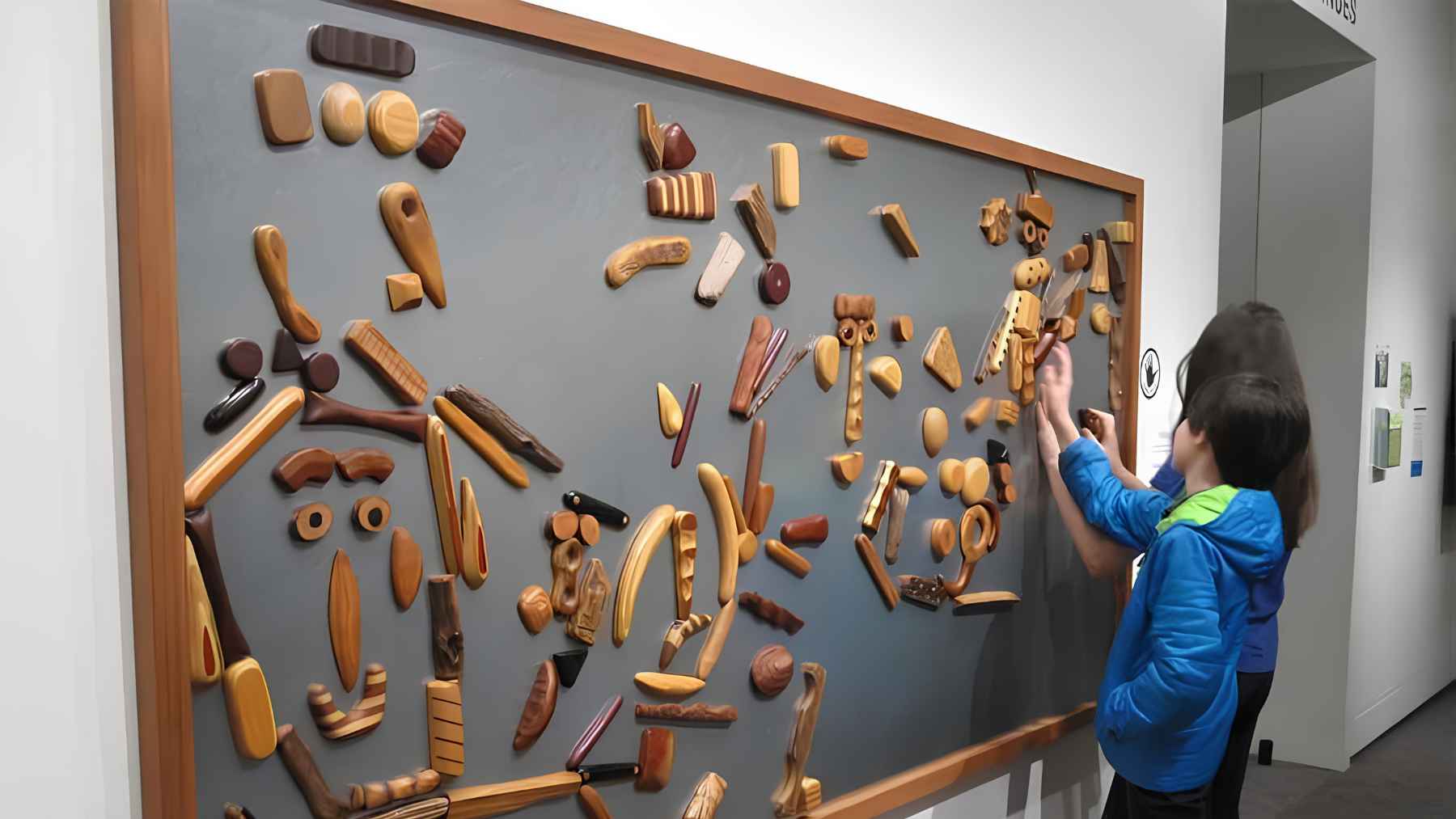
Ironplac tries to solve that everyday problem by making walls reconfigurable. Secchi has shown tools, knives, small boards, panels, and even a shovel attached to treated surfaces during tests, according to reports based on his demonstrations.
For homes, that could mean moving a picture without leaving a scar. For workshops, classrooms, offices, and labs, it could mean faster layouts and less damage when a space needs to change.
The environmental angle
This is not a low-carbon cement breakthrough, at least not based on the public information available so far. There are no published emissions data showing that Ironplac itself has a smaller climate footprint than conventional wall finishes.
Still, the idea touches a real sustainability issue. Buildings and construction consume 32% of global energy and contribute 34% of global carbon dioxide emissions, while materials such as cement and steel are responsible for 18% of global emissions, according to UNEP and GlobalABC.
There is also the waste problem. In the United States alone, the EPA estimated that 600 million U.S. tons of construction and demolition debris were generated in 2018, more than twice the amount of municipal solid waste produced that year.
Small changes can add up
A magnetizable wall will not fix the construction sector’s climate footprint by itself. That would be a stretch, and the science is not there yet.
But adaptable interiors can reduce small, repeated damage. Fewer holes can mean fewer patching materials, fewer repairs, and less premature replacement of wall surfaces in places that change often, such as schools, rental homes, coworking spaces, and workshops.
At the end of the day, that is where Ironplac feels interesting. It is not trying to reinvent the whole building, but it may change the way people use the surfaces already around them.
What still needs proof
The big unanswered questions are practical ones. How much weight can different magnets safely hold; how does the surface behave with moisture, paint, impacts, or years of daily use; and how much will it cost compared with ordinary finishes?
Those questions matter because construction materials do not succeed on novelty alone. They must pass durability tests, comply with building standards, work with existing trades, and make financial sense for builders and homeowners.
Secchi has acknowledged that the project is still seeking financing and industrial partners to scale production. For now, Ironplac remains a promising pre-commercial material rather than a product ready for every hardware store shelf.
A new role for the wall
The clever part of Ironplac is not just that objects can stick to it. It is that the wall becomes a flexible tool instead of a passive divider.
That could be especially useful in places where people rearrange equipment often. Imagine a science classroom that changes from one lesson to the next, or a garage where tools can move with the project instead of staying trapped on a fixed pegboard.
There is still a long road ahead. But if the material proves durable, safe, and affordable, drilling a hole just to hang a frame may eventually feel as outdated as rewinding a videotape.
The official project description was published on the Ironplac website.