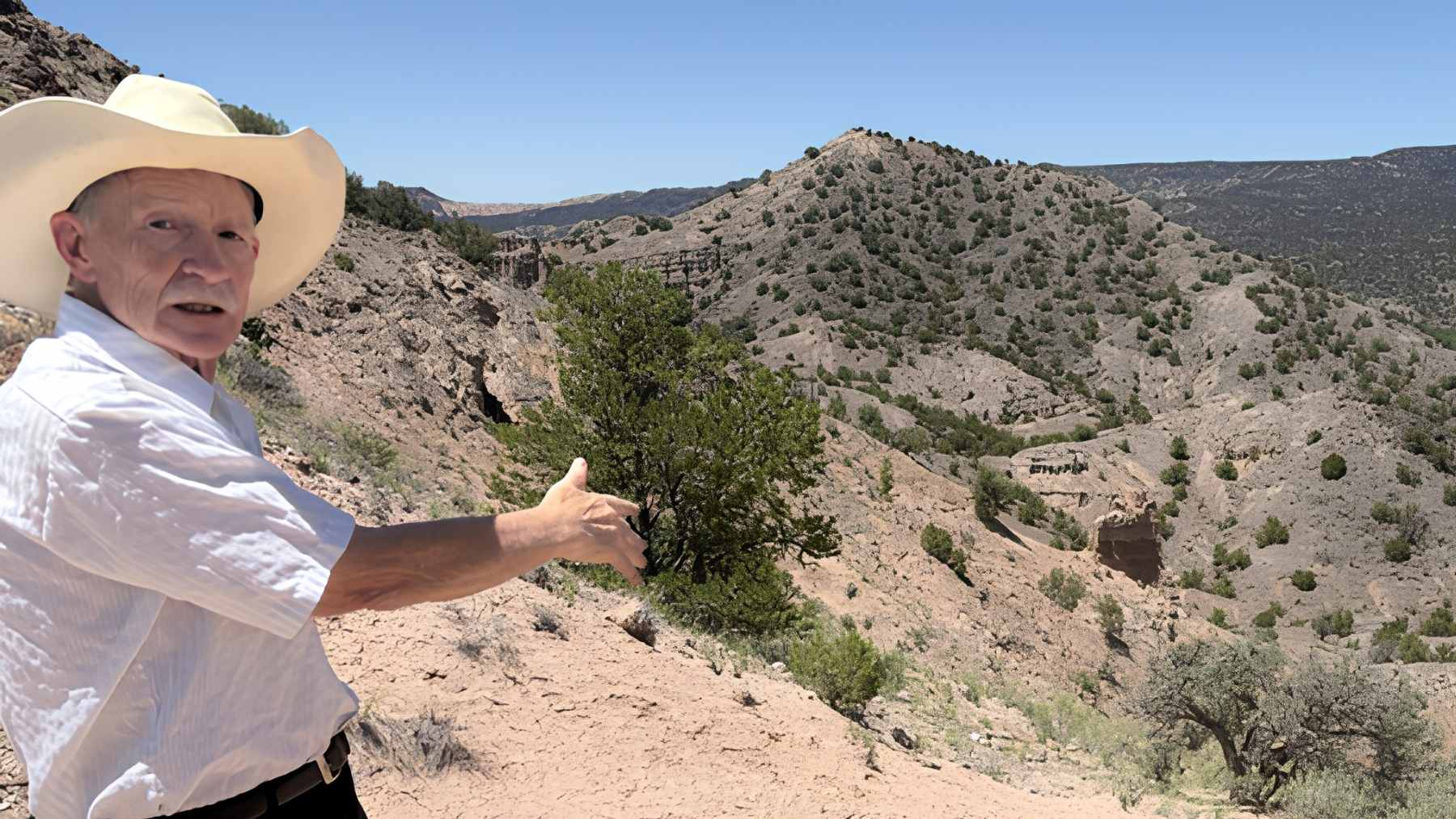
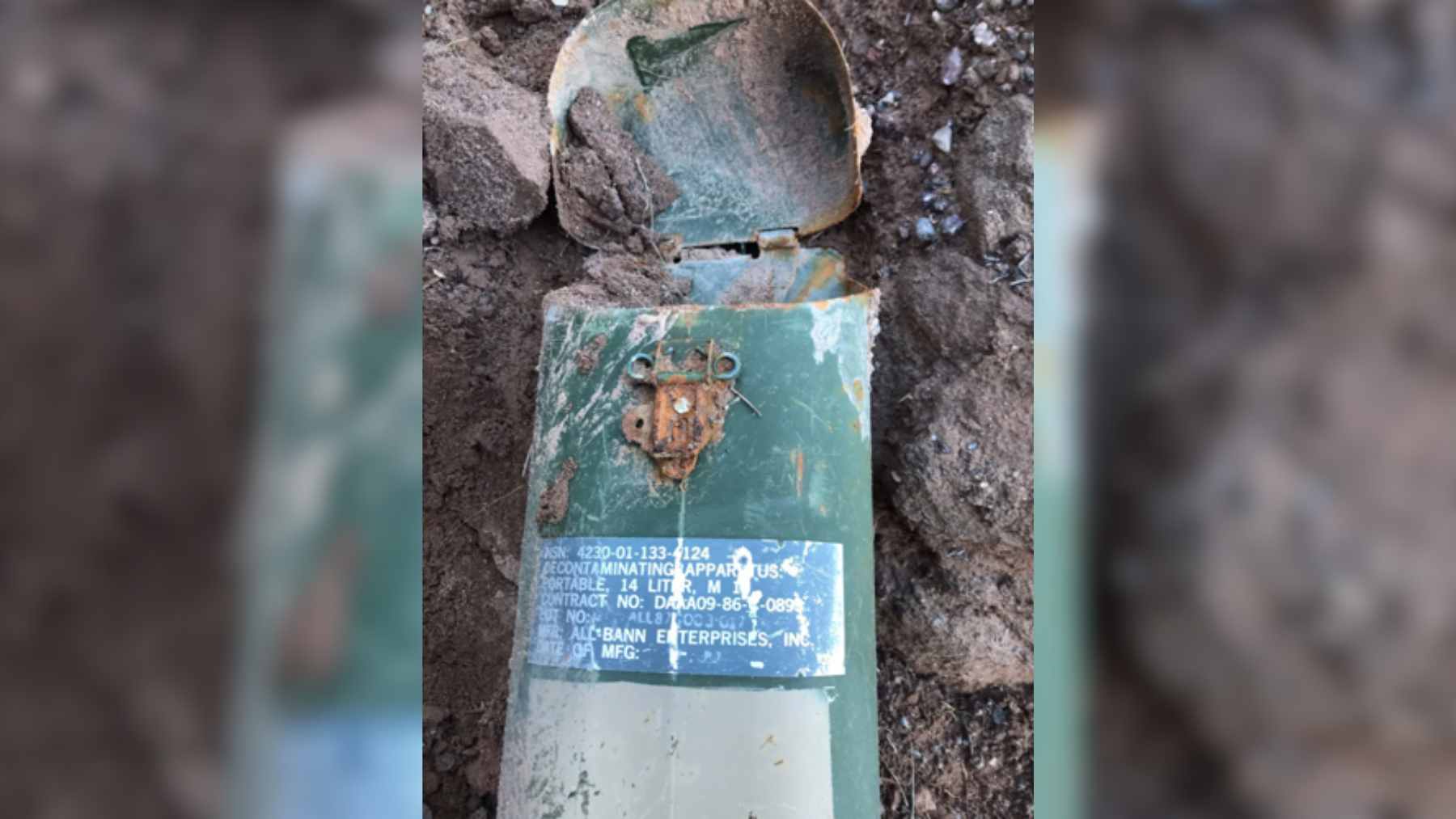
A routine hike near Dixon, New Mexico, has turned into a strange environmental mystery. On February 12, Alva Morrison found several green containers labeled “Decontamination Apparatus” and other old equipment below a cliff in a remote part of Rio Arriba County, near the small communities of Rinconada and Dixon.
State officials are investigating, but the biggest question remains open. No one has publicly confirmed whether the site poses a health or environmental risk, and that uncertainty is exactly why the discovery matters. Old equipment can look harmless from a distance, until someone has to figure out what it once held.
A remote discovery
Morrison, a 70-year-old Dixon resident and avid hiker, said the spot was not the kind of place most people would stumble across. “It’s in a remote area and, clearly, somebody who explored a lot around there, or somebody who was from here and knew the area, found this place and chose it because it is very hard to get to,” he said.
The containers were found under a cliff overlooking dry, rugged terrain northeast of Española. The site sits in a ravine on federal land, according to the information provided about the discovery, and some of the equipment appeared to date back to the 1980s.
That detail changes the feel of the story. This is not a tipped-over trash can on the side of a road. It is more like an old footprint in the landscape, one that someone finally noticed.
What the label means
So, what is a decontamination apparatus? In simple terms, decontamination is cleanup after exposure to something dangerous, such as chemicals, biological material, or radioactive particles.
A federal guide from the National Institute of Standards and Technology says decontamination equipment can include delivery systems, containment devices, shelters, showers, cleaning solutions, and larger systems used for people, equipment, buildings, and other surfaces. In plain English, the label suggests gear made for cleaning contamination, not ordinary household trash.
Still, the words on a container do not tell the whole story. The equipment could be empty, obsolete, damaged, contaminated, or simply abandoned after years in storage. That is why officials have to look at the objects themselves, not just the label.
Why officials are cautious
A label is not a lab test. Empty, unused, or long-abandoned equipment may turn out to be harmless, but containers tied to decontamination work can require careful handling until their condition and contents are checked.
That is why the state investigation matters. New Mexico waste officials say the state deals with solid waste, hazardous waste, liquid waste, wastewater, and other categories, including radioactive waste, and that proper management helps protect air, land, groundwater, surface waters, and public health.
In dry country, a ravine can look frozen in place for months. Then a strong rain can turn it into a pathway for mud, trash, and anything loose enough to move. The concern is practical, not dramatic.
A problem beyond one cliff
Illegal dumping on public land is not just trash in a pretty place. The Bureau of Land Management says abandoned materials on its lands can range from one-time dumping at campsites to long-term disposal sites tied to communities, farms, businesses, or industrial activity.
The agency also warns that these sites can attract more dumping. In practical terms, one hidden pile can become a quiet invitation for another, especially in remote areas where few people pass by and cleanup is expensive.
That is part of what makes Morrison’s discovery important beyond Dixon. A hard-to-reach dump can sit outside everyday view for years, while still creating work for investigators and uncertainty for the people who live nearby.
The unanswered questions
The most pressing questions are basic. How many containers are there? Were they empty? Who left them there? Were they carried in years ago, or dumped more recently?
Some of the equipment appeared to date from the 1980s, which widens the possible timeline. That does not prove who dumped it or what was inside, but it does suggest the site may have sat unnoticed for a very long time.
There is also the question of access. Morrison’s description suggests that whoever dumped the material either knew the terrain or took time to find a secluded spot. That points investigators toward a simple but difficult task, finding a trail backward from a place chosen precisely because it was hidden.
What residents should do
For anyone who sees similar containers while hiking, hunting, or driving back roads, the safest move is simple. Do not open them, move them, or try to bring them home as a curiosity.
State officials say public tips and complaints help identify possible violations. They also advise people to call 911 first if a public health or environmental issue appears to pose an immediate threat, then contact the environmental emergency line.
A photo from a safe distance can help. So can a clear location, nearby landmarks, and the date of the sighting. Curiosity is natural, but with old containers, distance is often the smartest tool you have.
A small find with larger stakes
This discovery is not just about a few green containers in a remote ravine. It is about what can happen when old equipment, unknown contents, and hard-to-reach public land meet in the same place.
For most residents, public land is where people hike, hunt, take photos, and get away from noise for a while. Finding decades-old decontamination gear there is a reminder that remote does not always mean untouched.
Now the story moves from discovery to verification. Investigators have to determine what the equipment is, whether it poses a risk, and what cleanup, if any, is needed.
The main official investigation into the Dixon discovery is being handled by the New Mexico Environment Department.
The original local report was published in The Santa Fe New Mexican.