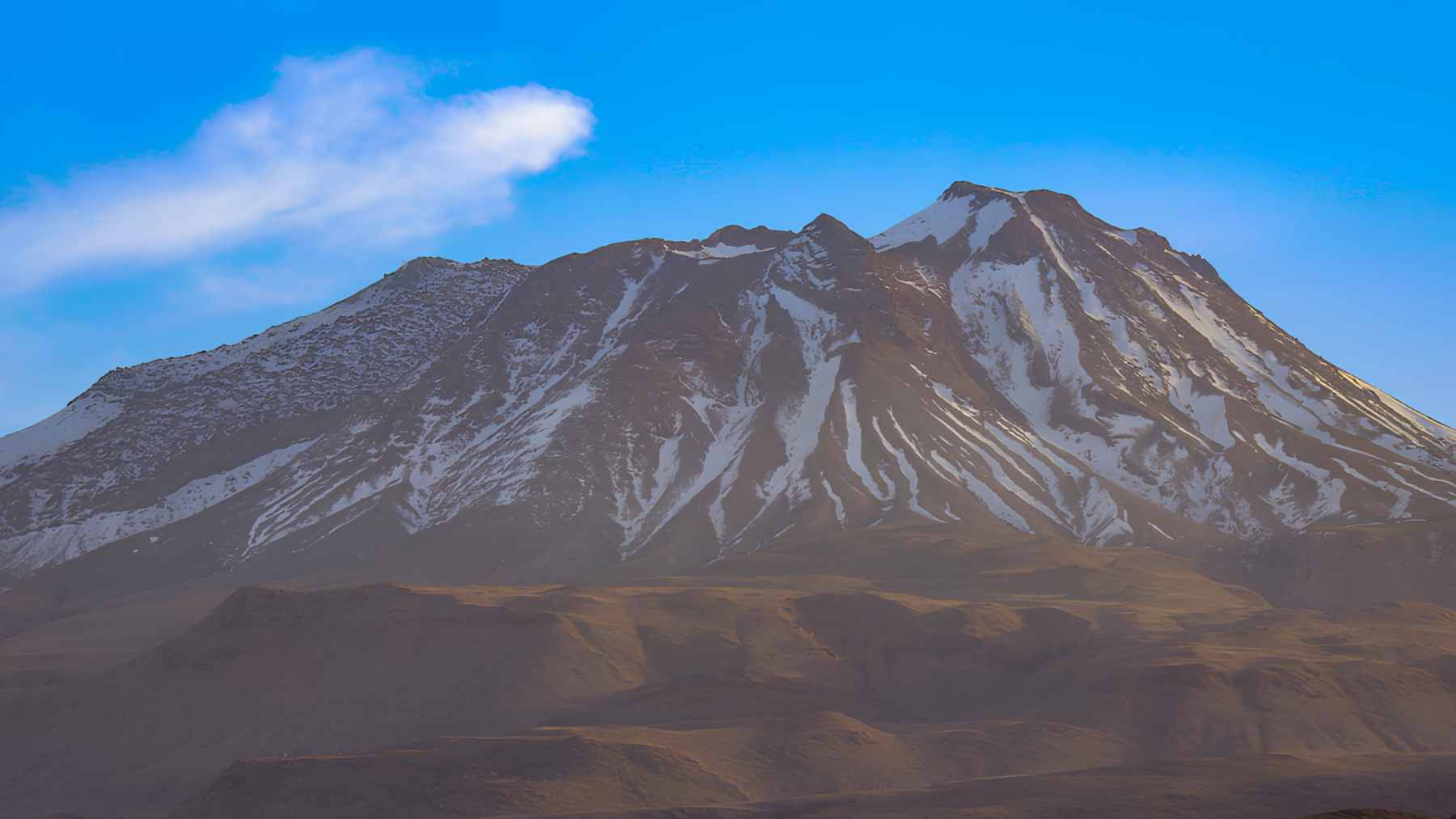
A remote volcano in southeastern Iran has shown a small but meaningful sign of life. Taftan volcano rose by about 3.5 inches near its summit over 10 months, even though it has no known eruption in human history.
The finding does not mean an eruption is about to happen. It does suggest, however, that pressure is building under the volcano, most likely from gases moving through hot water and fractured rock beneath the surface.
Taftan is not dead
Taftan is a steep stratovolcano, a type of volcano built from layers of lava and ash. It stands about 12,927 feet high in southeastern Iran, close to the Pakistan border.
For a long time, Taftan looked quiet enough to be treated as extinct or nearly extinct. That label now looks too simple, because the volcano still releases sulfur-rich gas through vents near its summit.
Those vents are called fumaroles. In plain English, they are cracks where hot gases escape from deep inside the mountain, sometimes with a rotten-egg smell that people can notice from far away.
Satellites saw the swelling
Scientists used a radar method called Interferometric Synthetic Aperture Radar (InSAR), which compares satellite images taken at different times to measure tiny changes in the ground. It is a bit like checking whether a floorboard has lifted, except the floorboard is a mountain and the ruler is in space.
The study used Sentinel-1 satellites, part of Europe’s Copernicus program. The European Space Agency says these radar satellites can image Earth’s surface day or night and in all weather, which is especially useful in remote places with few instruments on the ground.
That matters at Taftan because the volcano does not have the kind of dense GPS and seismic network found at better-monitored volcanoes. Without satellites, this slow swelling might have been missed.
Pressure is building close to the top
The research team found that the source of the swelling was shallow, roughly 1,600 to 2,070 feet below the surface. That is close to the summit in volcanic terms, and it points toward pressure in the upper part of the system.
This does not necessarily mean fresh magma is racing upward. The deeper magma reservoir appears to sit more than two miles down, so the current movement may be coming from gases collecting above it.
Think of it as a blocked plumbing system under a mountain. Hot water, steam, and gas can build pressure in cracks and pores, then push the ground upward even when no lava is moving toward the surface.
Why gas can be dangerous
The most immediate concern is not a river of lava. It is the possibility of steam-driven blasts, which happen when hot fluids suddenly flash into vapor near the surface.
These blasts can be sudden and local, but they can still be hazardous near the summit. Gas emissions can also irritate eyes, lungs, and crops if the wind carries sulfur-rich fumes toward nearby communities.
The city of Khash is about 31 miles away, close enough for people to notice sulfur smells when the wind is right. Pablo J. González, a volcanologist at Spain’s Institute of Natural Products and Agrobiology (IPNA-CSIC), and one of the senior researchers on the work, told Live Science that pressure “has to release somehow” but stressed that the study was “a wake-up call,” not a reason for panic.
The team behind the study
The study was written by Mohammadhossein Mohammadnia, Man Wai Yip, A. Alexander G. Webb, and González. Their affiliations include the University of Hong Kong, Free University of Berlin, and IPNA-CSIC, part of the Spanish National Research Council (CSIC).
Their main conclusion is careful yet important. Taftan is more active than previously recognized, and the lack of a known recent eruption does not prove that the system is harmless.
That is the bigger lesson here. A volcano can stay quiet for hundreds of thousands of years, then shift in months when pressure, heat, and gases find new paths underground.
A hidden volcanic setting
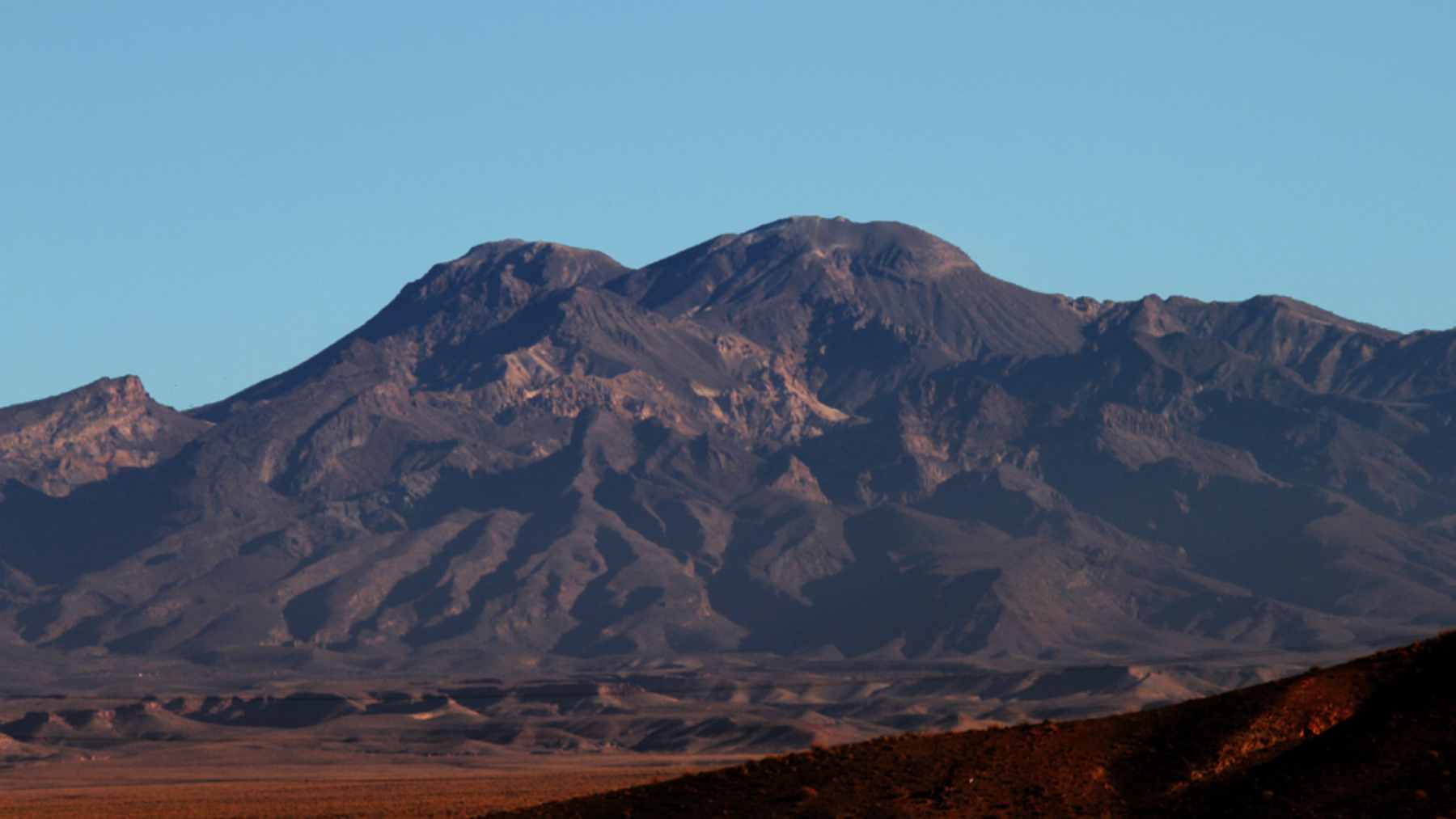
Taftan sits in a subduction zone, where one tectonic plate slides beneath another. That process can melt rock deep underground and feed volcanic systems with magma, hot water, and gas.
Subduction sounds abstract, yet the basic idea is simple. One slab of Earth’s crust dives downward, heats up, and helps create the ingredients that keep volcanoes alive.
This means Taftan is not just an isolated mountain. It is part of a broader volcanic arc where hidden activity can matter for people, roads, farms, and local emergency planning.
What scientists want next
The next step is to measure the gases coming from Taftan more directly. Changes in sulfur dioxide, carbon dioxide, and water vapor can help show whether pressure is rising, falling, or finding a safer way out.
Researchers also want basic ground instruments, including seismometers and GPS units. Even a modest network could detect small earthquakes, slow swelling, and changes that satellites might only partly capture.
Authorities can also prepare without raising an alarm. Hazard maps, evacuation routes, clear public instructions, and regular updates can turn a surprise into a manageable problem.
Taftan’s future remains uncertain
If the ground begins to sink again, that may mean pressure is easing. If the summit keeps rising or gas levels climb and stay high, scientists would have more reason to watch closely.
For people living nearby, the practical advice is simple. Pay attention to official guidance, know where the wind usually blows, and take sulfur smells seriously if local authorities issue warnings.
Taftan is not roaring. For now, it is whispering, and the point of science is to hear that whisper before it becomes something louder.
The official study has been published in Geophysical Research Letters.