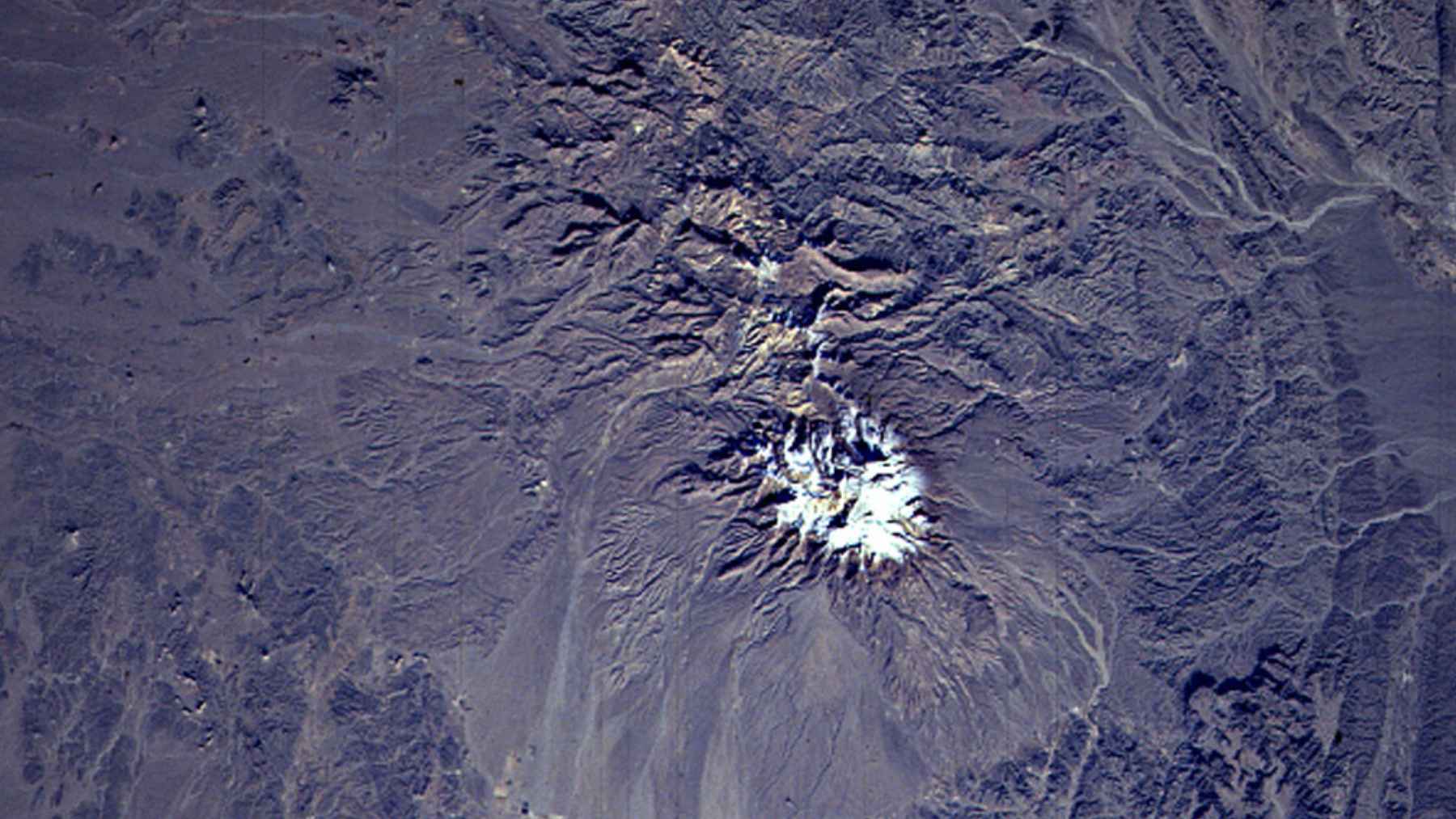
If a volcano swells by a few inches, would anyone notice from the ground? At Taftan, a remote stratovolcano in southeastern Iran, the answer is usually no, unless you are watching from orbit.
A new analysis of radar satellite data shows Taftan’s summit area lifted about 3.5 inches (9 centimeters) over roughly ten months in 2023 and 2024. It is not an eruption forecast, but it is a measurable sign that pressure is building underground and that the volcano deserves closer monitoring.
A rise you could miss from the ground
The uplift unfolded from mid-July 2023 into May 2024 and was concentrated near the summit, according to the study. At its fastest point, the rise reached an annualized pace of about 4.3 inches per year (11 centimeters per year) before slowing down.
What stands out is what happened next, which is basically nothing. The ground did not drop back after the episode ended, a detail that can suggest the system is still holding extra pressure even after the surface stopped rising.
Space is doing the job that instruments cannot
Taftan sits in a region with limited on-the-ground monitoring, so researchers leaned on Interferometric Synthetic Aperture Radar, or InSAR, using Europe’s Sentinel-1 satellites. They also applied a noise-reducing technique called “common mode filtering” to cut down atmospheric artifacts that can muddy radar measurements.
InSAR can sound technical, but the basic idea is easy to picture. Compare two radar “snapshots” of the same slope, line them up carefully, and you can see where the surface has shifted by fractions of an inch.
The pressure source is surprisingly shallow
Modeling the deformation points to a pressurized zone roughly 1,500 to 2,070 feet (about 460 to 630 meters) beneath the surface. That is shallow enough to implicate the hydrothermal system, the network of hot water and volcanic gases that can expand as fluids move and get trapped.
The study also describes a deeper magma-related reservoir several miles down, far below the best-fit source for the uplift. Because the current signal is so shallow, the authors argue the push is more consistent with gas and fluid pressure above the deeper magma, not fresh lava surging toward the surface.
Why rain and earthquakes are not the best suspects
Outside triggers were the obvious first place to look. The team compared the uplift timeline with rainfall records from Khash, about 31 miles (50 kilometers) away, and with regional earthquakes, and neither matched the pattern well.
Instead, the study describes the episode as “triggerless,” pointing to internal changes such as shifting permeability in the rock. As the uplift slowed, local news reports also noted several gas emission events in early 2024, which fits the idea of pressure searching for new escape routes.
“Extinct” is a risky label
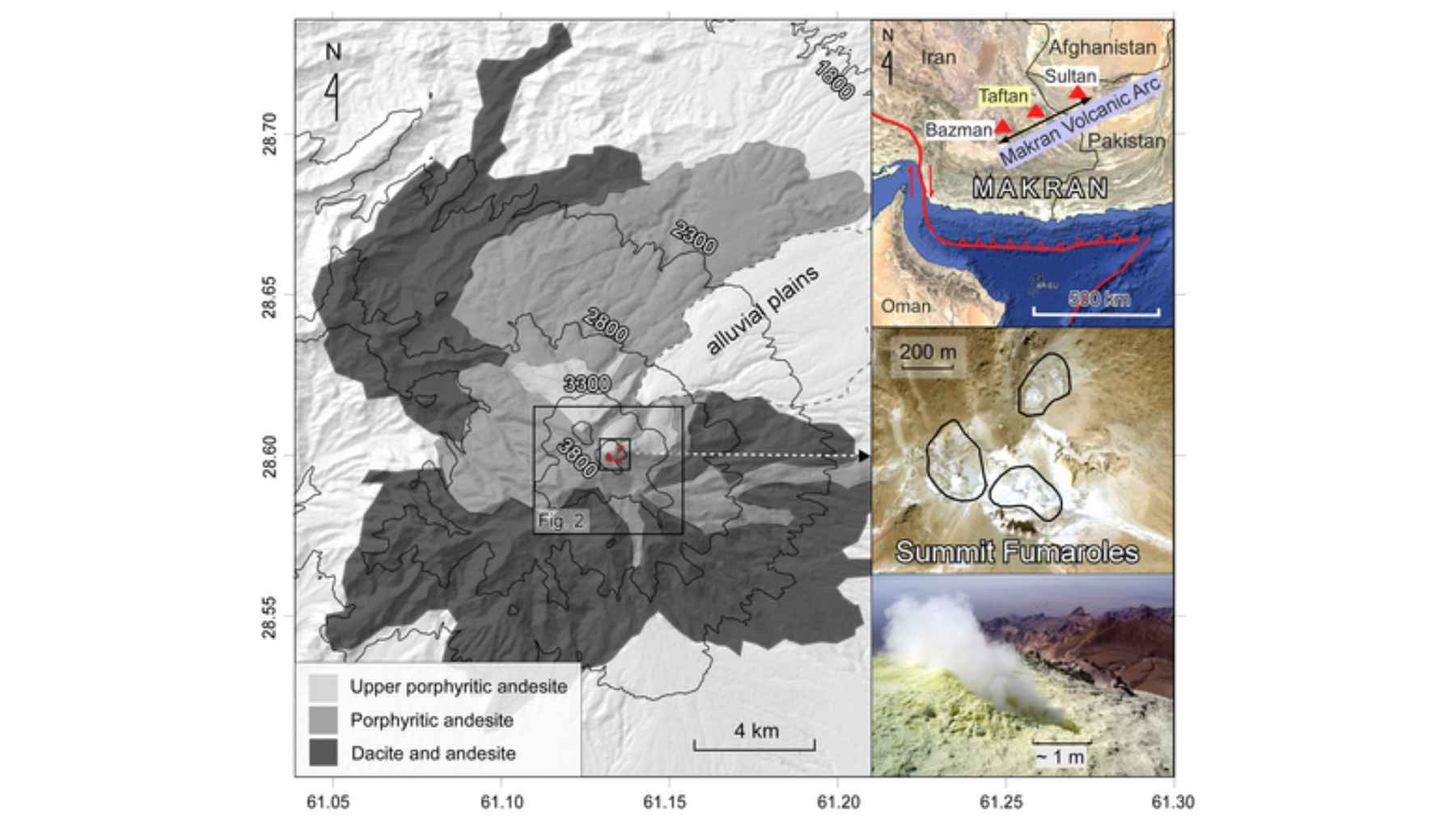
Taftan rises to about 12,927 feet (3,940 meters), and even without a headline-grabbing eruption, it has long-lived fumaroles that vent steam and sulfur-rich gases at the summit.
The Smithsonian Institution’s Global Volcanism Program has documented persistent degassing and past reports of unusual activity, including heavy “smoking” in 1902 and a reported 1993 flow that may have been molten sulfur rather than lava.
Geologic estimates for Taftan’s last major eruptive phase vary, but they can place it on the order of 700,000 years ago, which helps explain why it was often treated as a low priority. The problem is that long quiet stretches do not mean the plumbing is sealed forever, and this new deformation is a reminder that measurements matter more than labels.
The near-term hazard is not a lava river
The study does not argue that a large eruption is imminent. Even so, the authors highlight a different concern that can show up at hydrothermal systems, namely phreatic explosions that occur when hot fluids flash into steam close to the surface.
These blasts can be sudden, and they are notoriously difficult to forecast without dense sensors. Add windblown volcanic gases, and you also get a more familiar risk, since short-term sulfur dioxide exposure can make breathing difficult, and at high concentrations sulfur oxides can harm plants by damaging foliage and slowing growth.
What better monitoring would look like
So what would a sensible response look like? The researchers recommend continuous measurements of sulfur dioxide, carbon dioxide, and water vapor at fumaroles, plus a basic network of seismometers and GPS stations to track tremors and slow ground changes in real time.
Pablo J. González, the study’s senior author, stressed that the aim is preparedness, not alarm. He said the work is “not intended to generate panic,” calling it a “wake-up call” for authorities to invest in monitoring while “the mountain is whispering, not shouting.”
What residents can keep in mind right now
Taftan sits in the Makran subduction setting where one tectonic plate sinks beneath another, a recipe for volcanism over long time scales. That does not mean an eruption is around the corner, but it does mean the region has the geological wiring for both earthquakes and volcano-related hazards.
For people living nearby or downwind, the smartest moves are often the simplest. Know the usual wind direction, keep masks available for dusty or sulfur-smelling days, and follow local guidance if officials issue updates or restrict access. A little more monitoring now can prevent a lot of confusion later.
The study was published in Geophysical Research Letters.