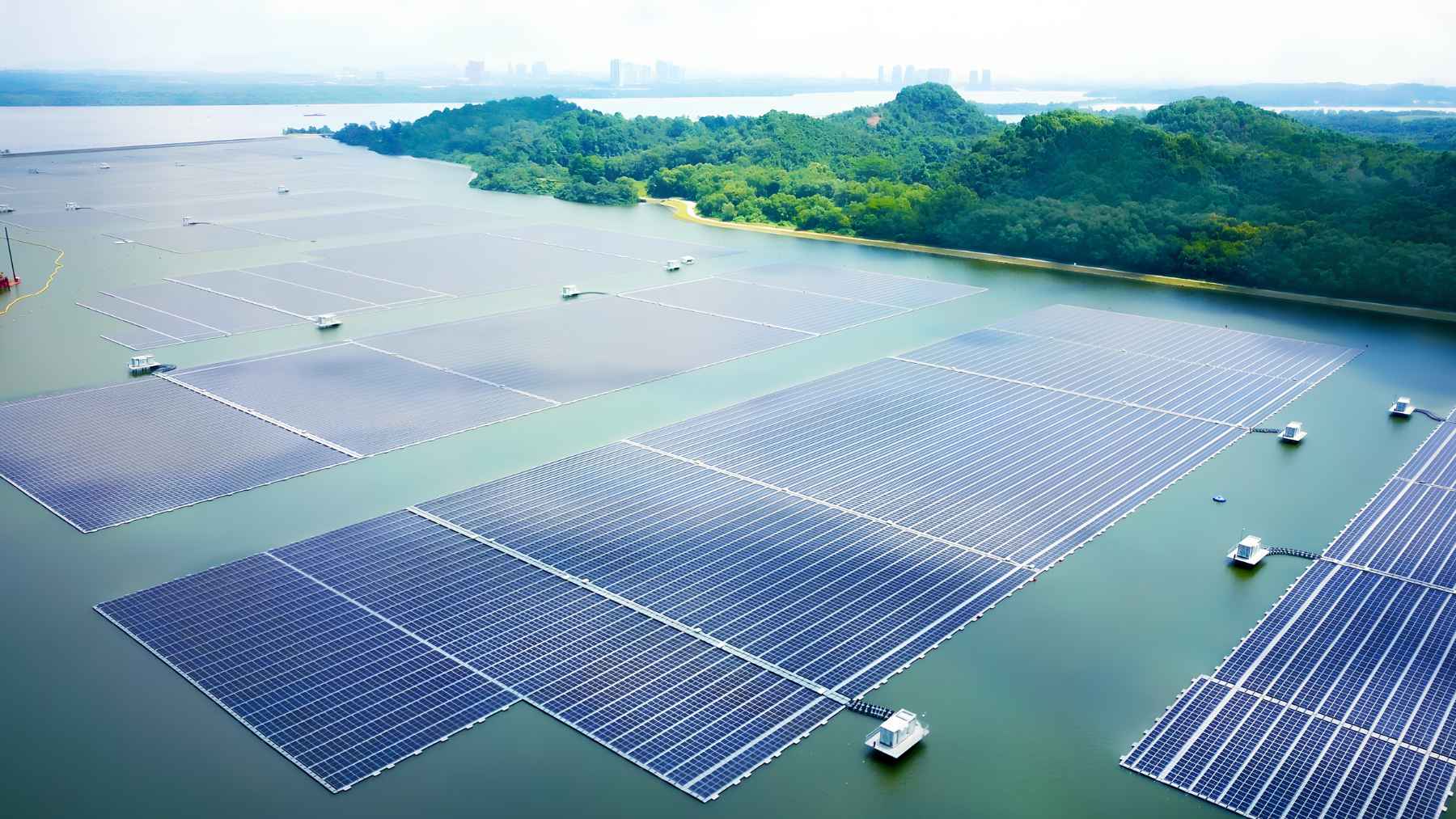
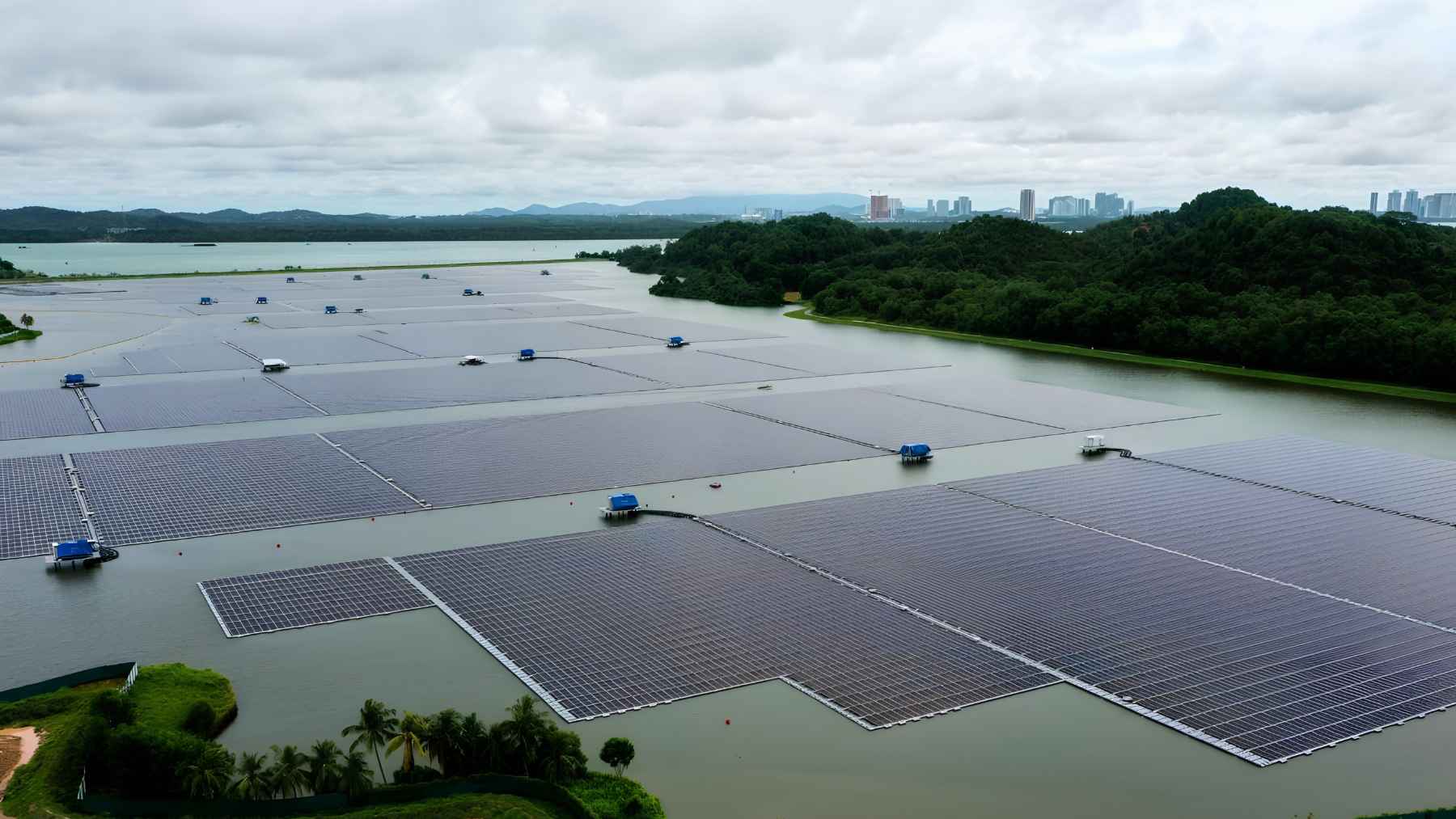
Singapore has turned a drinking-water reservoir into one of its most visible clean-energy tests, covering about 111 acres of Tengeh Reservoir with more than 122,000 floating solar panels. The Sembcorp Tengeh Floating Solar Farm produces 60 megawatts-peak (MWp) of solar capacity, enough to power about 16,000 four-room public housing flats for a year.
The point is not just to build a striking solar farm on water. It is to solve a stubborn energy problem in a country where land is scarce, power demand is rising, and imported natural gas still generates about 95% of electricity. When fuel prices move, even a small island can feel it through energy costs and, eventually, the electric bill.
Why solar went floating
Why put solar panels on a reservoir instead of on land? In Singapore, the answer is simple. There is not much land to spare for a traditional solar farm, especially in a city-state packed with homes, roads, offices, factories, and port infrastructure.
At the 2021 opening, Lee Hsien Loong said Singapore “still lacked large-scale plots of land” for solar power, which made reservoirs more attractive. Floating solar lets the same water surface do two jobs at once, storing water below and producing electricity above.
Floating solar is basically what it sounds like. The panels sit on buoyant platforms, are anchored in place, and send electricity back to land through cables. It looks futuristic, but the goal is very practical.
What Tengeh produces
The Tengeh project was built by Sembcorp Industries with the Public Utilities Board (PUB), Singapore’s national water agency. Its 60-MWp rating refers to the highest output the system is designed to reach under strong sunlight.
The electricity goes toward PUB’s water system, helping power the treatment and pumping of clean water. According to Sembcorp, the solar farm avoids about 35,000 U.S. tons of carbon dioxide emissions each year, similar to removing 7,000 cars from the road.
That matters in a country where water and energy are both strategic. Singapore’s 1962 Water Agreement with Malaysia, which allows it to draw raw water from the Johor River, runs until 2061.
Built for water
Putting electrical equipment on a reservoir sounds risky at first. What happens to water quality, fish, algae, or the wildlife around the banks?
PUB said its earlier Tengeh testbed showed no observable change in water quality and no significant impact on surrounding wildlife. The full project was designed with gaps between panels to let air and sunlight through, plus aerators to maintain oxygen levels in the reservoir.
The floating parts are made from high-density polyethylene, a recyclable material used because it can handle sun, water, and corrosion. That does not remove every concern, but it shows the project was built as water infrastructure, not just as an energy display.
Tuas adds pressure
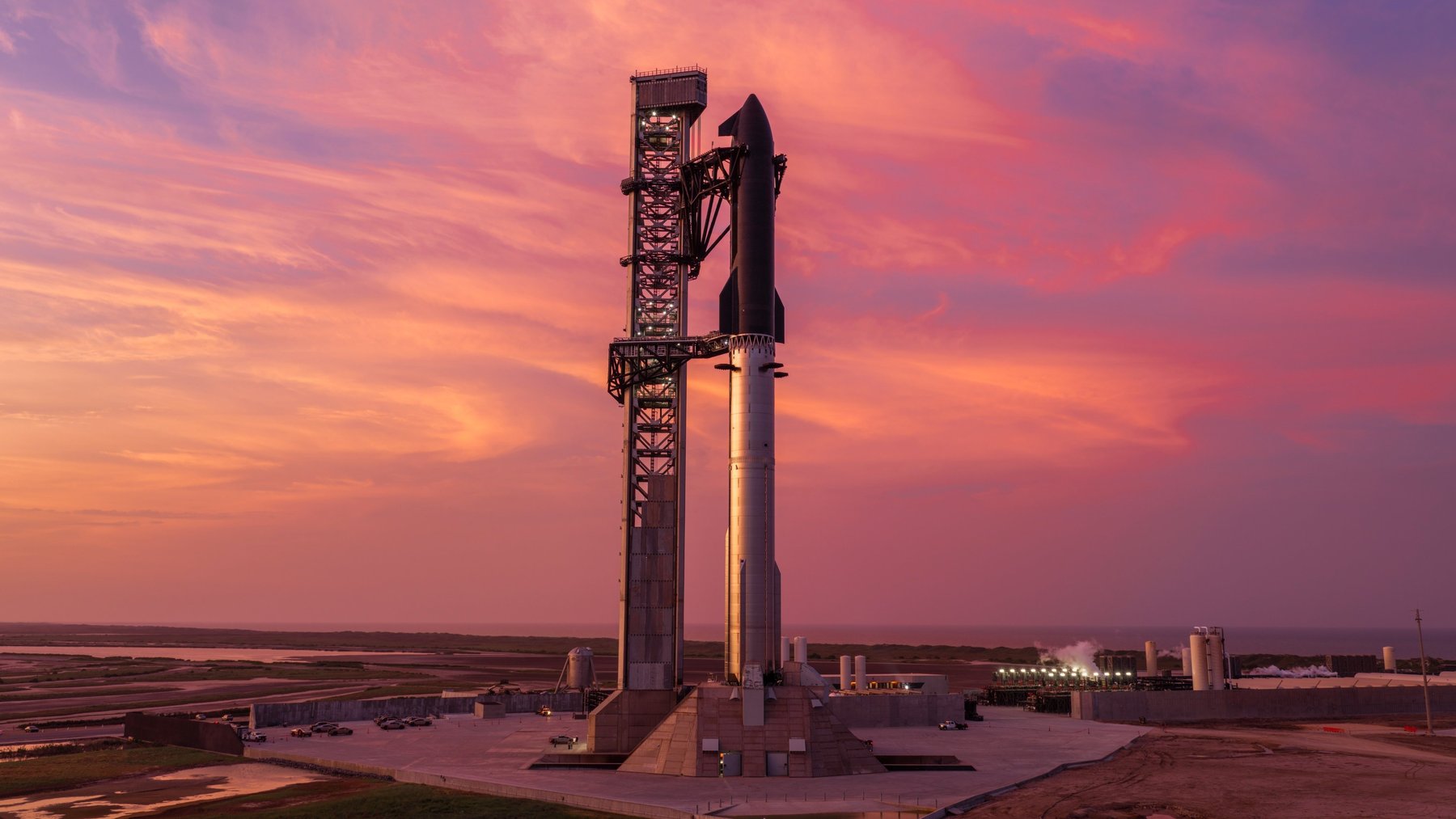
Tengeh sits in the western part of Singapore near Tuas, the industrial district where the country is building its next-generation port. Tuas Port was officially opened on September 1, 2022, and is expected to handle 65 million standard container units a year when completed in the 2040s.
The port will eventually cover about 3,300 acres, with 66 berths and about 16 miles of berth space for large container ships. It is not just big. It is designed to be automated, with electrified yard cranes, automated guided vehicles, and remote management from a control center.
That does not mean the port runs only on Tengeh’s panels. Yet it does show why local clean power is becoming more valuable. Cranes, vehicles, data systems, cooling, and logistics all need electricity, and nobody wants more noise, exhaust fumes, or fuel shocks than necessary.
The wider solar push
Singapore’s solar plan has already moved beyond its older target. The Energy Market Authority says the country reached its earlier 2 gigawatts-peak (GWp) solar goal ahead of schedule and has now raised the 2030 target to 3 GWp.
Effectively, rooftops, reservoirs, vacant land, and other usable surfaces all matter. A second Sembcorp solar farm in Tuas, built on about 25 acres of temporary vacant land, adds 17.6 MWp and more than 33,000 solar panels to the same industrial landscape.
So Tengeh is not the finish line. It is the proof of concept. For the most part, Singapore is trying to squeeze clean power from spaces other countries might overlook.
Risks remain
Floating solar is promising, but it is not a free pass. A 2024 review in Renewable and Sustainable Energy Reviews found that floating solar systems can affect aquatic environments through shading, changes in water movement, effects on bottom-dwelling life, and interactions with mobile species.
That is why monitoring matters. A reservoir is not an empty parking lot with water in it. It is a living system, and even small changes in sunlight, oxygen, and temperature can matter over time.
Singapore’s early results are encouraging, but experts warn that every location has to be judged on its own conditions. What works in a managed reservoir may need changes before being copied in a natural lake, a fishery, or open sea.
Why others are watching
Countries with large reservoirs are paying attention because floating solar solves a real land problem. In Brazil, research reported by Pesquisa FAPESP found that covering just 1% of artificial dam reservoirs with floating solar could produce a major amount of electricity, while also reducing evaporation in drier regions.
That is the bigger lesson from Singapore. The country did not wait for unlimited land or a perfect energy mix. It used the surface it had, tested the environmental risks, and turned a reservoir into part of the power system.
Ultimately, Tengeh is a reminder that the energy transition is not always about giant deserts or distant wind farms. Sometimes, it starts with a quiet sheet of water, a tight map, and a country trying to make every acre count.
The official press release has been published by the Public Utilities Board (PUB) and Sembcorp Industries.