A Cold War wreck lying more than a mile beneath the Norwegian Sea is still releasing radioactive material from its reactor, according to a new study in the Proceedings of the National Academy of Sciences.
The Soviet K-278 Komsomolets sank in 1989 with a nuclear reactor and two nuclear warheads onboard, and researchers say the leak appears to come from the slowly corroding reactor fuel, not the weapons.
It sounds like the opening of an environmental disaster movie. For now, though, the science points to a more contained problem. Samples from water, sediment, and deep-sea organisms show little evidence that radionuclides are building up near the wreck, largely because the material is being rapidly diluted in the surrounding seawater.
A wreck deeper than most eyes can reach
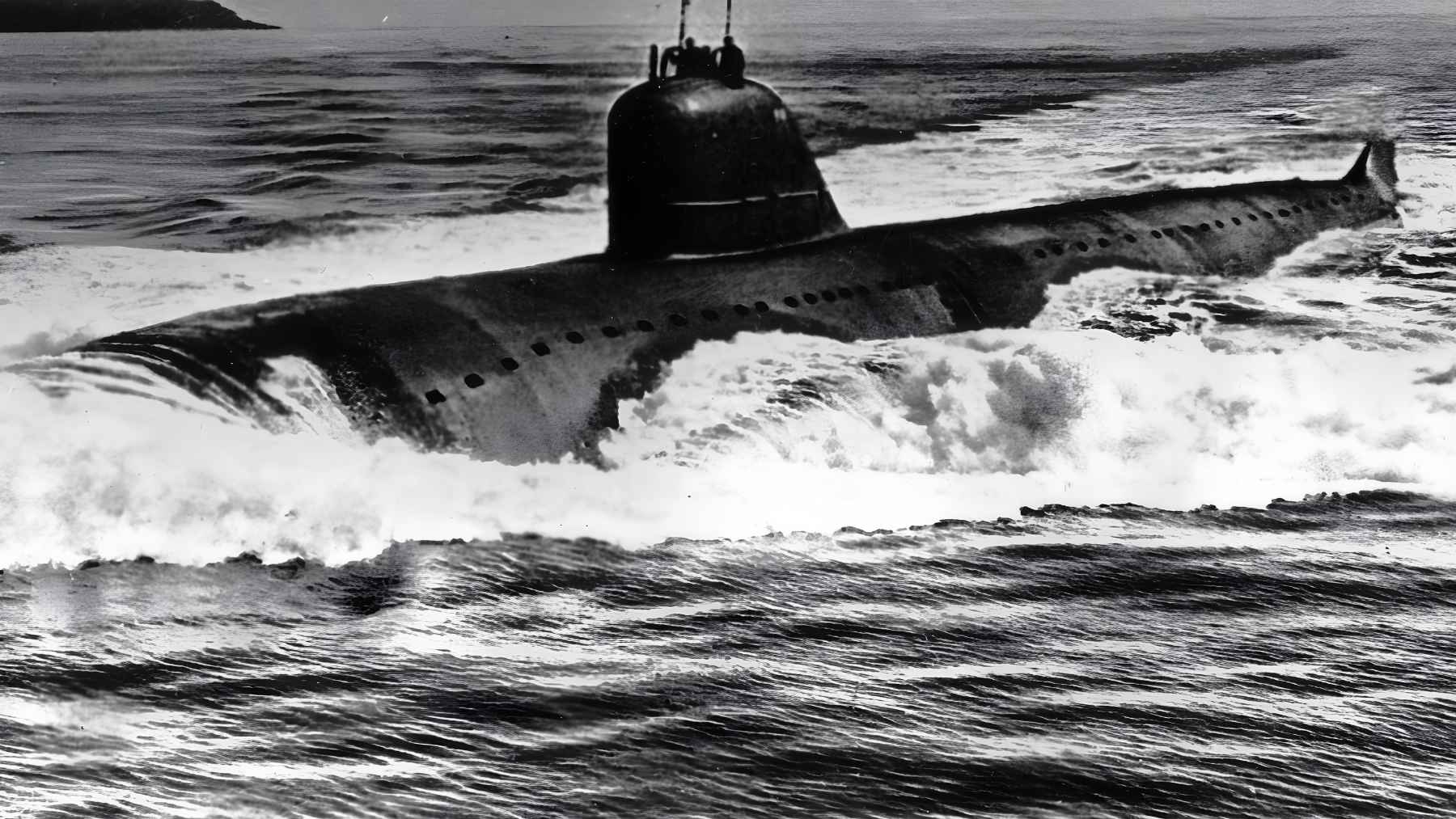
The Komsomolets was not an ordinary submarine. The Soviet Union built just one of this class, using a titanium double hull that allowed it to operate at extreme depths for its time. Today, it rests about 5,500 feet below the surface, southwest of Bear Island.
On April 7, 1989, a fire broke out in the rear section of the vessel and grew out of control. Of the 69 crew members onboard, only 27 survived. What sank that day was not only a military machine, but also a long-term environmental question.
That depth matters. A wreck sitting far below fishing boats and ordinary human activity may seem out of reach, but ocean currents, corrosion, and time can still turn old metal into a living problem.
What Norway found
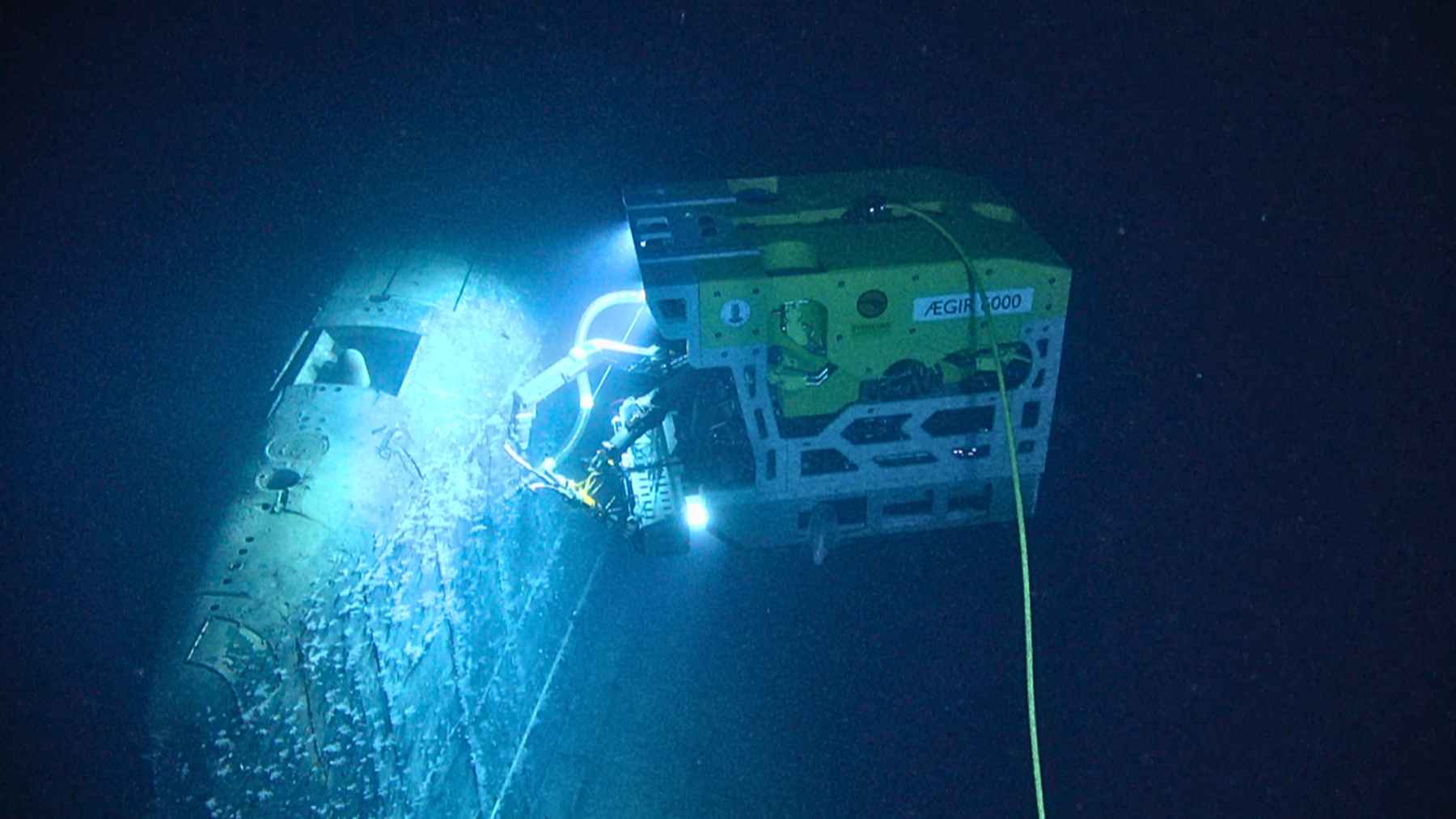
Researchers used the remotely operated vehicle Ægir 6000 in 2019 to inspect the submarine with sonar and video, while also collecting water, sediment, and biological samples. The mission focused on possible pathways between the submarine’s interior and the marine environment.
The team saw intermittent releases from the reactor area, including plumes coming from a ventilation pipe and near a metal grill. In one seawater sample collected after a visible release, cesium 137 rose 1,000-fold compared with a sample collected before the release.
The sharpest numbers came from samples taken right near the metal grill. Maximum concentrations of strontium 90 and cesium 137 reached 400,000 and 800,000 times typical Norwegian Sea levels, respectively, but that does not mean the whole sea is contaminated, since the same study found rapid dilution away from the release point.
The reactor seems to be the source
The isotope evidence points toward the reactor. Elevated plutonium and uranium readings, along with their ratios, suggest that nuclear fuel inside the reactor is corroding over time. In practical terms, the wreck is not frozen in history – It is still changing.
The good news is just as important. Researchers found no evidence of plutonium from the nuclear warheads in the nearby environment, and the remedial work that Russia carried out in the 1990s was still in place.
This is the line between alarm and perspective. A leaking reactor on the seafloor is serious, yett the current evidence does not show broad contamination of the surrounding ecosystem.
The authors wrote that releases to date have had “no impact on the near or wider marine environment.”
Why seafood is still being watched
For Norway, this is not just a Cold War story. It is also about public trust in the ocean, in fisheries, and in the seafood that reaches dinner plates far from the Arctic.
The Institute of Marine Research says the Komsomolets wreck is the only known source of radioactive pollution in Norwegian sea areas. Its update also notes that the levels are low, the wreck lies deep, and there is no danger to people or fish.
Still, monitoring matters. Anyone who has ever checked a weather app before a beach day understands the basic idea. Low risk does not mean no need to look, especially when the source contains nuclear material and corrosion keeps moving the clock forward.
Cold War waste has a long afterlife
The Komsomolets shows how military technology can leave environmental questions behind for generations. The fire lasted hours, the sinking took one day, but the monitoring has continued for decades.
Russian teams visited the wreck after the accident and, in the 1990s, sealed vulnerable areas around the torpedo compartment with titanium plugs and plates. Those efforts appear to have helped limit today’s risk, especially around the nuclear warheads, but the reactor is different.
The new findings suggest that fuel corrosion is still feeding intermittent releases, and scientists do not yet fully understand why the leak varies over time. That is where the next expeditions come in.
What happens next?
Researchers want to return with new submersibles to study the mechanism behind the releases. Is the leak controlled by corrosion, pressure changes, damaged piping, or something else happening inside the wreck?
That question matters because the deep ocean is not a museum. Metal weakens, seals age, and the sea quietly works on everything it touches.
For now, the message is measured. The Komsomolets is still leaking radioactive material, but current evidence shows little accumulation nearby and no clear impact on local marine life.
The study was published in PNAS.