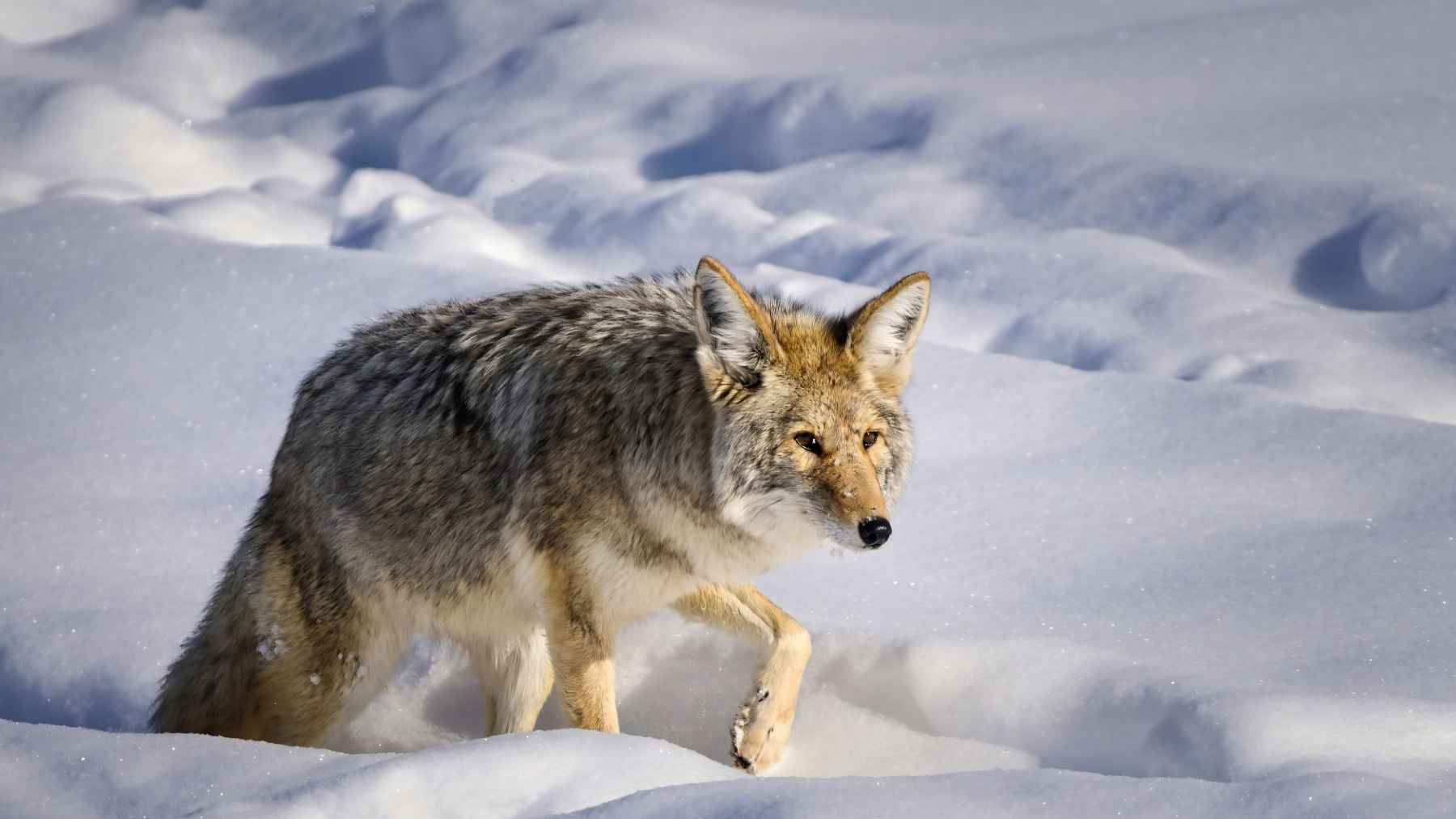
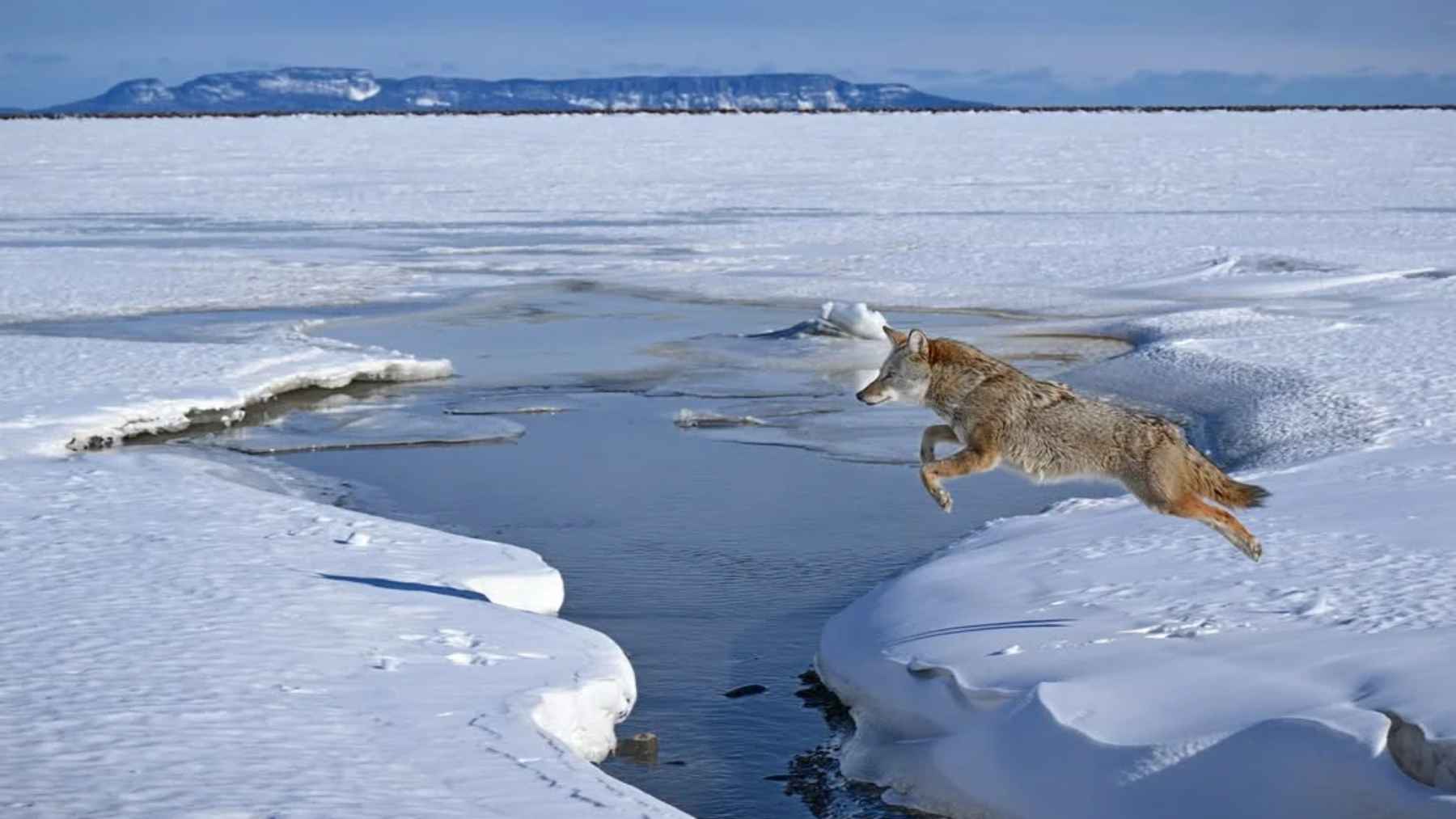
A coyote, a crack in the ice, and one clean leap. That was the split-second moment photographer Jamie Ruggles captured on the northern shore of Lake Superior in northwestern Ontario, Canada, after years of returning to places where coyotes are known to find open water in winter. The image shows the animal suspended above a narrow channel of water, with the Sleeping Giant visible far behind it.
At first glance, it looks like luck. And to some extent, it was. But Ruggles says the shot came after roughly four years of watching, waiting, and learning the habits of the animals that move through this icy landscape, a reminder that powerful wildlife photography often begins long before the shutter clicks.
A four-year wait
Ruggles, who is based in Thunder Bay, had been imagining this photograph for years. He told PetaPixel, “In a way, I waited for four years,” explaining that he often visits the coyotes’ favorite winter drinking spots because open water remains available there.
That detail matters. The picture is not only a dramatic action shot, but also a glimpse into how wildlife uses small openings in a frozen environment. For a coyote, a break in the ice can be a route, a risk, and a lifeline all at once.
Ruggles also credited a piece of advice he once received from a National Geographic editor, who told him to “just spend the time in the field.” Simple words. In wildlife photography, though, they can mean cold fingers, long waits, and many evenings when nothing appears at all.
Why coyotes use the ice
Coyotes are built for this kind of flexible living. The National Park Service describes them as widely distributed across North America and highly adaptable, with a diet that can include small mammals, fish, frogs, insects, snakes, fruit, and grass. They typically weigh about 25 to 35 pounds, which helps explain how one can move quickly across uneven snow and ice without the heavy footprint of a larger predator.
That does not mean the animal in the photograph was hunting. Based on Ruggles’ account, this location is one of the places coyotes visit in winter because they can still drink from open water. Anyone who has watched a pet hesitate before stepping onto a slick sidewalk knows the feeling, but for wild animals, that calculation can be about survival.
Ontario’s own guidance on coyote-human interactions notes that coyotes are common in southern and central Ontario and in parts of northern Ontario. It also says sightings often rise in late winter because animals are easier to see against snow, young coyotes may be dispersing, and hunger can become a factor when snow limits access to food.
Lake Superior’s winter stage
Lake Superior gives the image much of its power. NOAA describes it as the largest and deepest of the Great Lakes, reaching depths of up to 1,333 feet. It is also the second largest lake in the world by surface area, stretching across the United States and Canada like an inland sea.
The Sleeping Giant in the background adds another layer. Ontario Parks lists Sleeping Giant Provincial Park as a 60,300-acre natural environment park with more than 62 miles of hiking trails and wildlife viewing in boreal forest habitat. In the photograph, that famous shape is not the subject, but it quietly tells viewers exactly where this wild moment belongs.
That is the beauty of the frame. It is not a studio-clean image of an animal separated from place. It is a coyote inside a real winter landscape, where ice, water, wind, shoreline, and animal behavior all meet for less than a second.
Patience, not just luck
Ruggles said he was in the right place at the right time. But that phrase can hide the work behind the moment. In practical terms, being in the right place often means learning where animals travel, returning when the weather is uncomfortable, and accepting that nature owes the photographer absolutely nothing.
There is also restraint in this kind of work. The best wildlife images are rarely made by chasing animals into a performance. They come from watching patterns until one moment finally lines up, almost like a door opening and closing before most of us even notice it.
Interestingly, Ruggles’ first reaction after seeing the photo was not simply celebration. He said he immediately began thinking about how he might improve it next time, a familiar habit among photographers who know that every strong image still leaves room for another try.
Wildlife at a distance
The photo may inspire people to look more closely at the wild animals around them, but there is an important caution here. Coyotes are wild animals, and Ontario officials advise people to keep their distance, never feed them, and avoid actions that make them less fearful of humans.
That advice is not just about human safety. Feeding coyotes or leaving out attractants like pet food and poorly stored garbage can change their behavior and increase conflict. A good wildlife encounter should end with the animal still acting wild.
So what should viewers take from this image? Not that everyone should head onto icy shorelines hoping for a similar shot. The better lesson is quieter than that, and maybe more useful. Pay attention. Give wildlife space. Let patience do the work.
A fleeting winter lesson
In a world full of fast images, this one stands out because it was slow in the making. A coyote crossed the ice in an instant, but the photograph behind that instant took years of observation, missed chances, and repeated visits to the same cold places.
That is why the image feels bigger than one leap. It shows the sharp beauty of a winter predator, the scale of Lake Superior, and the quiet discipline behind serious nature photography. Sometimes the wildest moments are not found by rushing toward them.
The original report was published on PetaPixel.