Modern cars often feel disposable after a decade or two. In the mining world, one monster machine is moving in the opposite direction. The Marion 8750 at the Estevan Mine in Saskatchewan was built in 1989, yet recent background on the machine says it may keep working until it reaches a 60-year useful life.
That longevity is astonishing, but it comes with a complicated environmental story. The machine is electric and built to be repaired, which is a useful lesson in durability. At the same time, it helps expose lignite coal, one of the fuels at the center of Canada’s coal-power transition debate.
A machine the size of a building
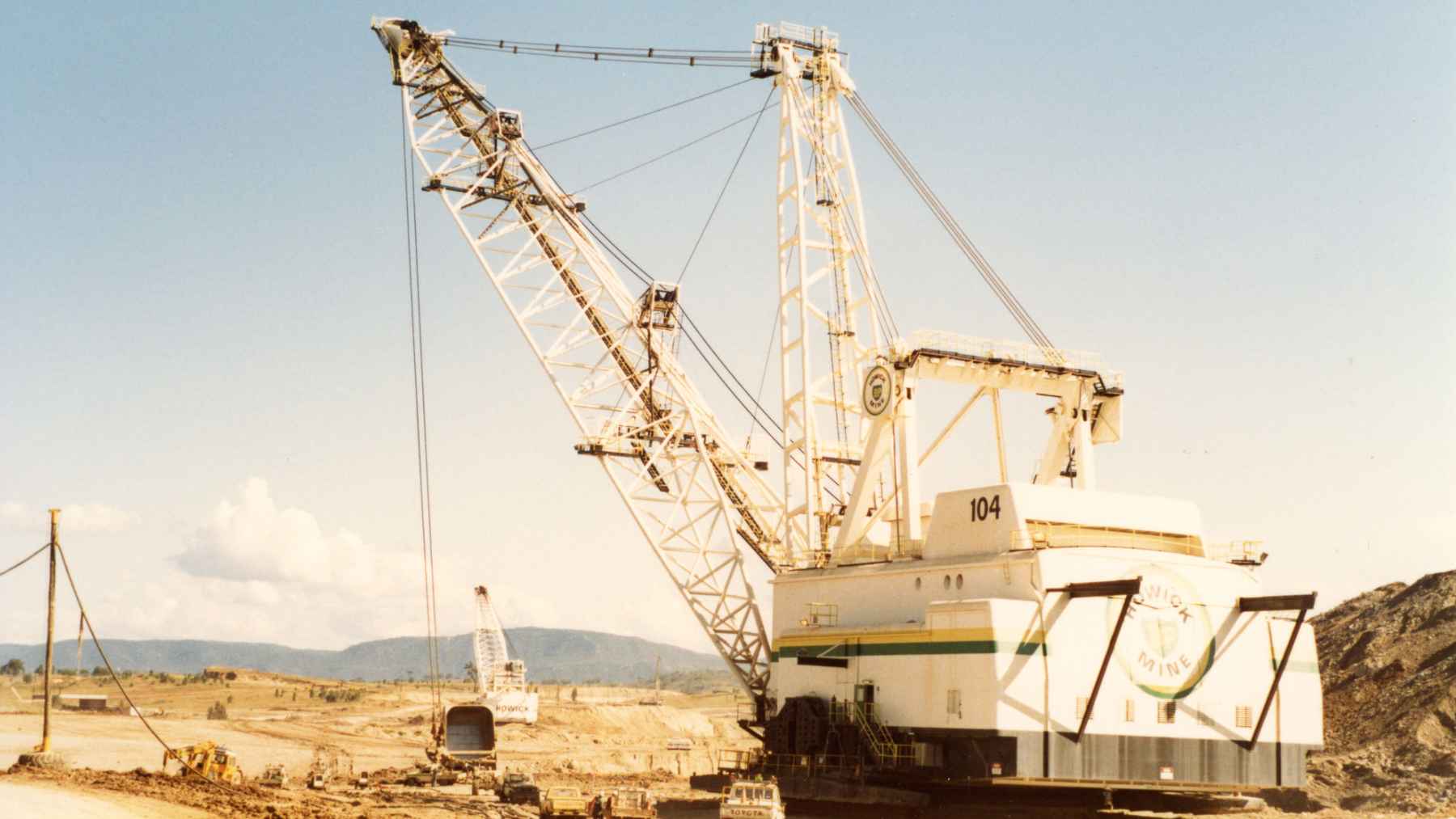
Caterpillar lists the 8750 dragline with a boom range of 360 to 435 feet, a bucket capacity of 100 to 152 cubic yards, and an approximate working weight of 13.1 million to 15.9 million pounds. That puts it in a category where ordinary construction equipment suddenly feels like garden tools.
Picture a nine-story apartment building set on a huge steel turntable, then give it a boom longer than a U.S. football field including both end zones. That is roughly the scale described for the Marion 8750 now working in Estevan, where its long arm and huge bucket remove earth and rock above coal seams.
The bucket alone tells the story. With more than 100 cubic yards of capacity in Caterpillar’s published range, each pass can move a volume of material that would overwhelm a normal job site.
It does not dig like a backhoe
Smaller excavators usually rely on hydraulic cylinders that push and pull a boom. The Marion 8750 works differently, using the classic walking dragline approach with thick steel ropes, chains, and a bucket pulled across the ground.
One set of cables lifts the bucket, while another drags it horizontally through soil and rock. In practical terms, that means the machine scrapes, fills, swings, and dumps without the same hydraulic arm motion people see on roadwork sites.
Why use cables on something this large? For a machine with a boom stretching hundreds of feet, the cable system helps keep the structure lighter and more workable than a comparable hydraulic setup.
Nineteen motors keep it moving
The Estevan machine is described as having 19 electric motors producing at least 19,830 horsepower. According to the background provided for this story, eight motors help lift the heavy bucket, six pull it across the ground, and five more help rotate the massive upper structure.
That electric layout does not mean the overall operation is climate-neutral. It means the machine itself is driven by electricity rather than a giant diesel engine doing every motion on board, and Caterpillar says its dragline design uses less power and emits fewer greenhouse gases than other overburden removal methods.
Then there is the way it moves. It uses large walking shoes to lift and shift itself forward a few feet at a time, slow enough to sound strange until you remember the whole machine weighs millions of pounds.
The coal catch
Estevan Mine covers about 50,240 acres in southeastern Saskatchewan between Estevan and Bienfait. Westmoreland Mining says the operation produces more than 3 million tons per year and supplies Saskatchewan Power’s Boundary Dam and Shand generating stations, along with activated carbon and char operations.
That is where the clean-looking electric machinery meets a dirtier reality. A dragline can be efficient, durable, and impressive, but in this case its job is to uncover lignite coal.
Canada has been trying to move away from conventional coal-fired electricity. The federal government says regulations were amended in 2018 to accelerate the phase-out of conventional coal-fired power by 2030, although the politics and practical details of that shift remain especially important in coal regions.
Why 60 years still matters
Even with the coal catch, the Marion 8750’s long life is worth noticing. A machine that can be rebuilt, inspected, repaired, and kept in service for six decades pushes back against the throwaway mindset that shapes so much of modern technology.
The maintenance schedule is part of the record. The Estevan dragline is reportedly taken out of service for short four-hour inspections and, when needed, longer rebuilds that can last about two weeks.
There is a sustainability lesson here, though it is not a simple one. Keeping equipment alive can reduce waste and the need to manufacture replacements, but mining also disturbs land, moves enormous volumes of soil, and feeds fuel into power systems.
Reclamation is part of the test
Westmoreland says Estevan Mine uses topsoil stockpiling, contour leveling, drone surveying, 3D modeling, and equipment simulation to improve reclamation and re-vegetation of disturbed land. Those steps matter because surface mining does not just remove coal, it rearranges landscapes.
Still, reclamation is not a magic undo button. Restored land can be valuable, but the original ecosystem, soil layers, water movement, and habitat connections may take years to recover.
The Marion 8750 is a marvel of engineering, and maybe that is exactly why it deserves a closer look. It shows how far heavy industry can go when durability is treated as a design goal.