Electric vehicle batteries are often treated as the biggest question mark in the used-car market. A new analysis of 9,954 battery health tests suggests the reality may be less alarming, with two popular models retaining more than 97% of their original capacity after 62,000 miles.
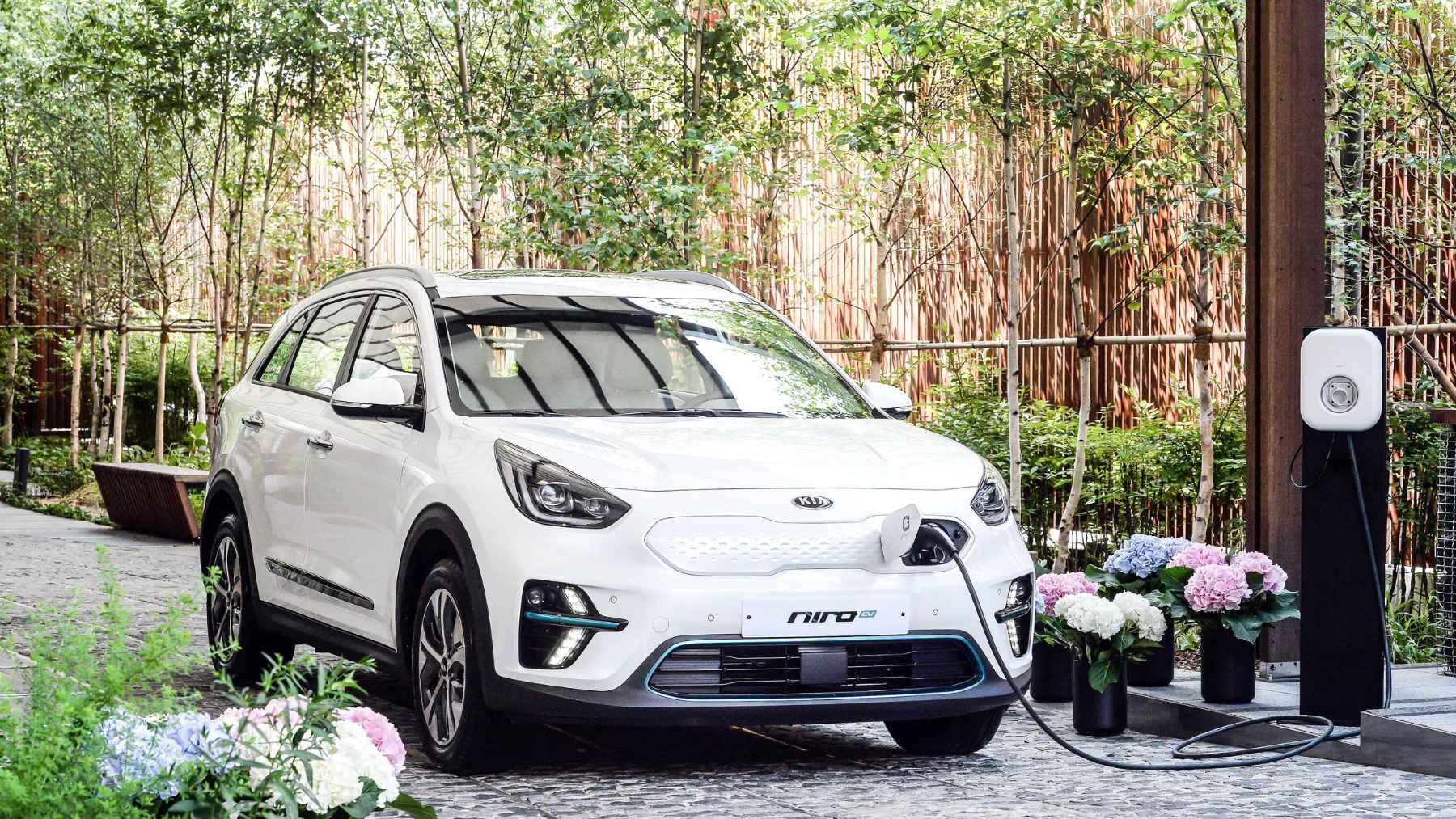
The Kia e-Niro led the results with 97.25% remaining, closely followed by the Hyundai Kona at 97.18%. The Kia EV6 placed third with 95.95%, giving South Korean manufacturers all three of the strongest results in the comparison.
Two Korean EVs set the pace
The analysis was conducted by Carla, a Swedish marketplace for used electric vehicles. It examined battery tests carried out between 2022 and 2026 to compare how much usable capacity different models retained at the 62,000-mile mark.
Battery “state of health” is a simple way of comparing a used battery with the same battery when it was new. A reading of 97% means the pack has lost only about three percent of its original capacity, at least according to the test used in the analysis.
The 64 kilowatt-hour Kia e-Niro reached 97.25%, while the 64 kilowatt-hour Hyundai Kona recorded 97.18%. The 77.4 kilowatt-hour Kia EV6 followed at 95.95%, leaving a noticeable gap between the first three vehicles and most of the field.
Tesla, Audi, BMW, and Volvo also performed well
The next group remained comfortably above 94%. The BMW i3 with a 120 amp-hour battery recorded 94.77%, the Volvo XC40 Recharge with a CATL battery reached 94.70%, and the CATL-equipped Polestar 2 finished at 94.35%.
A second Polestar 2 fitted with an LG Chem battery retained 93.53%. The difference between the two versions is small, but it suggests that the battery supplier and pack configuration may matter even when the vehicle name is the same.
Tesla appeared several times in the results. A Model 3 using a CATL lithium iron phosphate battery retained 93.34%, while another Model 3 with an LG Chem pack recorded 92.83%.
The Model S reached 92.80%, the Model X posted 92.52%, and the Model Y came in at 92.18%.
The lower-ranked models still stayed above 91%
Audi’s e-tron 50 retained 93.02%, while the larger e-tron 55 recorded 92.93%. The Audi Q4 e-tron finished at 92.18%, putting all three Audi entries within a relatively narrow range.
The Skoda Enyaq iV appeared twice with results of 92.88% and 92.60%. Two Volkswagen ID.4 entries reached 92.77% and 92.27%, while the Volkswagen ID.3 closed the list at 91.7%.
That last figure is important. Even the lowest-ranked vehicle in the published comparison retained more than nine-tenths of its battery capacity after 62,000 miles.
For drivers worried that an EV battery will quickly become unusable, that is a useful reality check.
What battery degradation actually means
Battery degradation is the gradual loss of the energy a battery can store as it ages and is used. Less capacity can eventually mean less driving range between charges, although the analysis focused on battery health rather than real-world range.
The leading Kia and Hyundai models had lost less than three percent at the mileage point used in the study.
The Volkswagen ID.3 at the bottom of the list had lost about 8.3%, which is still far from the kind of sudden battery collapse that some prospective buyers fear.
The spread also shows why EV comparisons are rarely simple. Vehicle design, battery size, battery chemistry, and pack supplier can all shape the result, and the table includes examples of the same model with different battery makers. One badge does not tell the whole story.
Why the findings matter for used EV buyers
Battery health remains one of the biggest concerns for people considering a secondhand electric car. Mileage is easy to see on an odometer, but it does not reveal how much usable battery capacity remains.
That is why a battery health test can add valuable information before a purchase. A car with 62,000 miles and more than 95% capacity may look different from another vehicle with similar mileage but heavier battery wear.
The Carla report also points to another Swedish study that found eight out of ten used electric cars retained more than 90% of their battery capacity.
The organization behind that separate study was not identified in the material, so its methods cannot be compared directly here, but its broad conclusion follows the same direction.
Strong results do not answer every question
The ranking is encouraging, but it should not be treated as a guarantee for every example of each model. The information provided does not specify the model years, climates, charging patterns, battery temperatures, ownership histories, or exact testing method behind all 9,954 checks.
Those missing details mean a market-wide snapshot cannot show how every individual vehicle was used.
The safest reading is that these results describe the tested cars and offer a useful benchmark, rather than proving that every Kia e-Niro or Hyundai Kona will deliver the same number. Still, the overall pattern is difficult to ignore.
Every listed result remained above 91% after 62,000 miles, suggesting battery wear may be slower than many shoppers expect.
The battery health analysis was published by Carla.