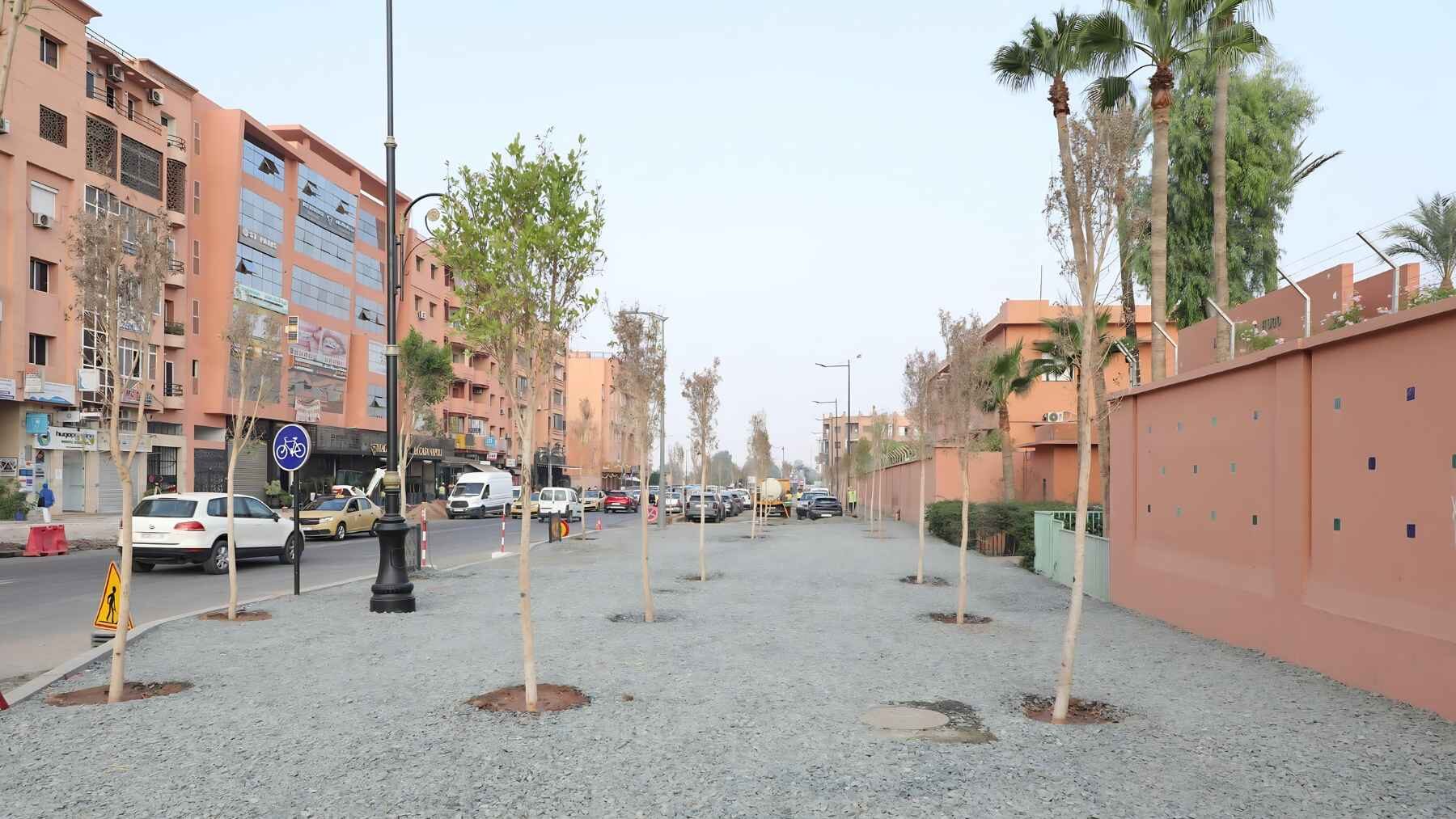
Black asphalt has ruled city streets for generations, but parts of Marrakech and Agadir are reportedly becoming testing grounds for a different surface. Moroccan media describe limited experiments that replace selected areas of conventional bitumen with permeable pavement, allowing water to pass below the surface instead of sending every drop toward a drain.
The idea goes far beyond making roads feel less punishing during summer. In the right location, this “sponge” pavement can reduce runoff, improve drainage, filter some pollutants, and cool itself through evaporation when enough moisture is available.
Why black asphalt runs so hot
Dark pavement absorbs solar energy during the day and releases part of it later as heat. That helps create the “urban heat island,” the familiar pattern in which built-up neighborhoods remain hotter than surrounding areas, sometimes well after sunset.
The numbers can be striking. During an Arizona pilot cited by the U.S. Environmental Protection Agency, conventional pavement reached about 152°F around midday, while specially designed cool surfaces remained 10°F to 16°F cooler. Anyone who has crossed a parking lot in thin-soled shoes knows the feeling.
How sponge pavement works
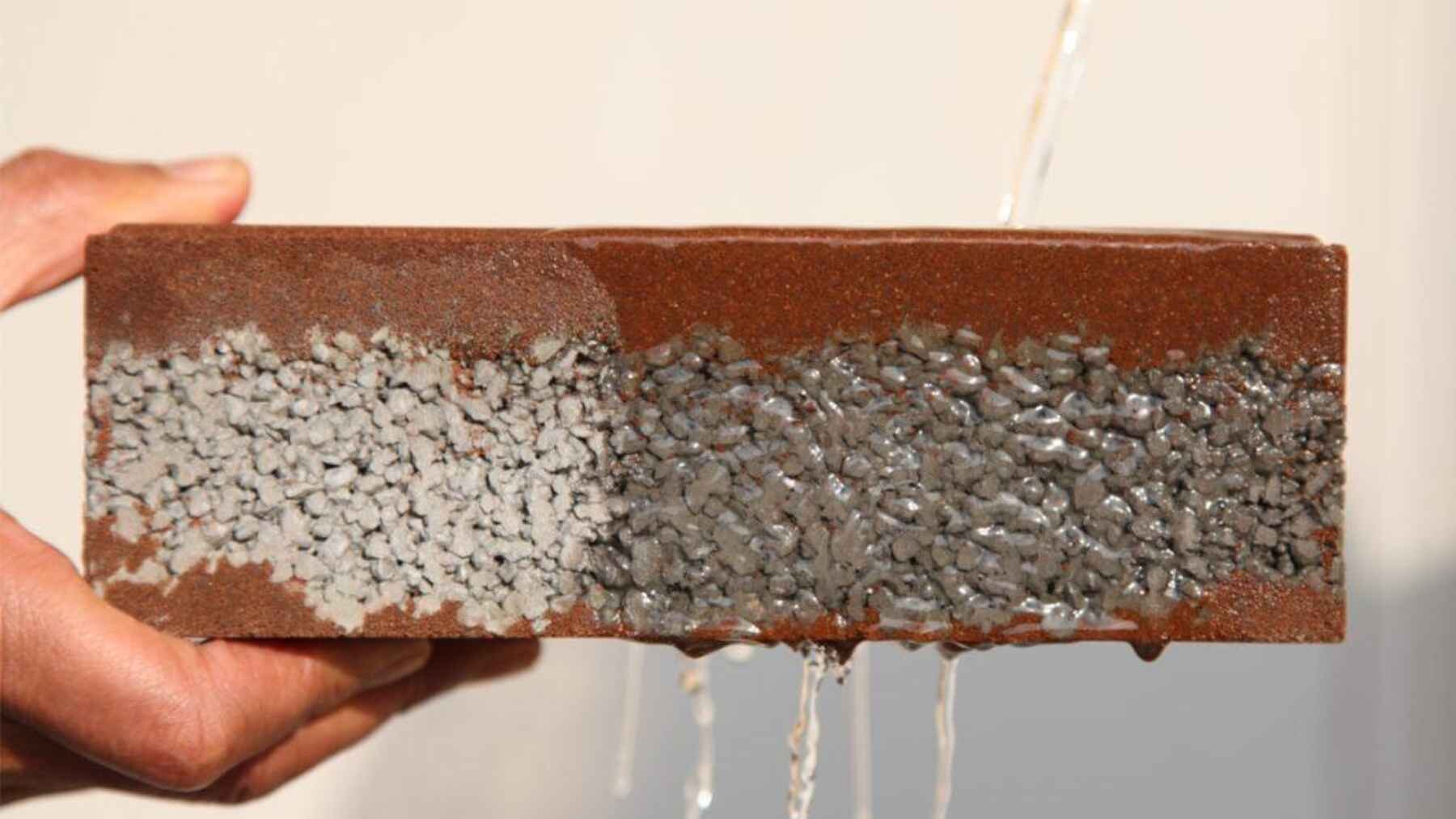
Traditional asphalt forms a mostly sealed layer, so rainwater runs across it and into gutters or sewers. Permeable pavement contains connected spaces that let water enter a stone base and, where soil conditions permit, continue into the ground.
Once moisture is stored below or within the surface, some of it can evaporate. Evaporation uses heat, much as sweat cools the human body, so the process may lower pavement temperatures while slowing the sudden rush of water during heavy rain.
But there is an important catch. Research summarized by Rutgers University found that permeable concrete released 25% to 30% less heat than conventional concrete on days after rainfall, yet it could release slightly more heat on dry, sunny days. The cooling benefit depends on moisture, design, and local conditions.
A limited Moroccan experiment
The available reports describe experiments involving some urban surfaces, not a blanket nationwide removal of black asphalt. They also do not provide a public inventory showing how many streets have been treated, so the scale should not be exaggerated.
The reported tests fit a broader shift in Marrakech. Its “Marrakech Sustainable City” program, launched in 2023, brings together Morocco’s Ministry of Energy Transition and Sustainable Development, local authorities, the United Nations Development Programme, and the Global Environment Facility to improve climate resilience, mobility, waste management, biodiversity, and energy efficiency.
The program has $9.5 million in Global Environment Facility funding and is expected to benefit more than 1 million people directly. The pavement experiments are one possible tool within that wider agenda, showing how ordinary infrastructure can become part of climate adaptation.
What drivers may notice
For drivers, the clearest benefit may arrive when rain falls. Water that drains through a properly designed surface is less likely to remain in thick films, while the EPA says permeable roadways can reduce spray and improve traction through better drainage.
A cooler urban microclimate could also lower the demand placed on vehicle air conditioning. That matters for gasoline cars and electric vehicles, but the Moroccan reports contain no measured EV range results, and any gain would probably be modest and dependent on weather, traffic, speed, and time spent on treated streets.
The bigger payoff may be felt at neighborhood level. Less heat radiating from roads and parking areas can make a walk, a bus stop, or an evening meal outdoors more comfortable during that sticky summer heat everyone knows.
Spain offers another approach
Across the Mediterranean, Spain tested a related idea through the “LIFE HEATLAND” project. Instead of relying mainly on water infiltration, its light-colored pavement was designed to reflect more solar energy than conventional asphalt and store less heat.
Murcia officials installed the material across roughly 258,000 square feet of city streets. At the time, the installation was designed to reduce road-surface temperatures by about 18°F and nearby air temperatures by roughly 2.7°F, while sensors tracked heat, humidity, solar radiation, lighting, and noise.
The comparison matters because “cool pavement” is not one single product. Some surfaces reflect sunlight, some encourage evaporation, and some combine several features. Cities must match the material to rainfall, traffic, soil, maintenance capacity, and water availability.
The limits beneath the surface
Permeable pavement is not a drop-in replacement for every highway or busy avenue. Fine dirt, tire debris, and sediment can clog its pores, so periodic cleaning and careful stormwater design are essential if the surface is to keep draining over time.
Heavy traffic, extreme loads, and polluted runoff can also make certain sites unsuitable. That is why many current applications focus on sidewalks, plazas, parking areas, rest areas, and lightly traveled streets rather than promising a total end to conventional asphalt.
Water scarcity adds another layer in Marrakech, where rising temperatures and intensifying heat stress are already pressuring city infrastructure. When stored moisture disappears, evaporative cooling fades too, so planners must balance the desire for cooler streets with the need to use water carefully.
A cooler road ahead
Morocco’s reported experiments matter because they connect two problems that cities often handle separately. Heat waves make streets harder to live with, while sudden rain can overwhelm drainage systems built for a different climate.
Will permeable pavement solve either problem on its own? No. But alongside shade trees, reflective materials, better drainage, and water-smart planning, it can help turn the ground beneath people’s feet into part of the solution.
The reported experiment is still limited, but it points to a broader shift in urban design.
The details of Marrakech’s wider climate-resilience program were published on Marrakech Durable.