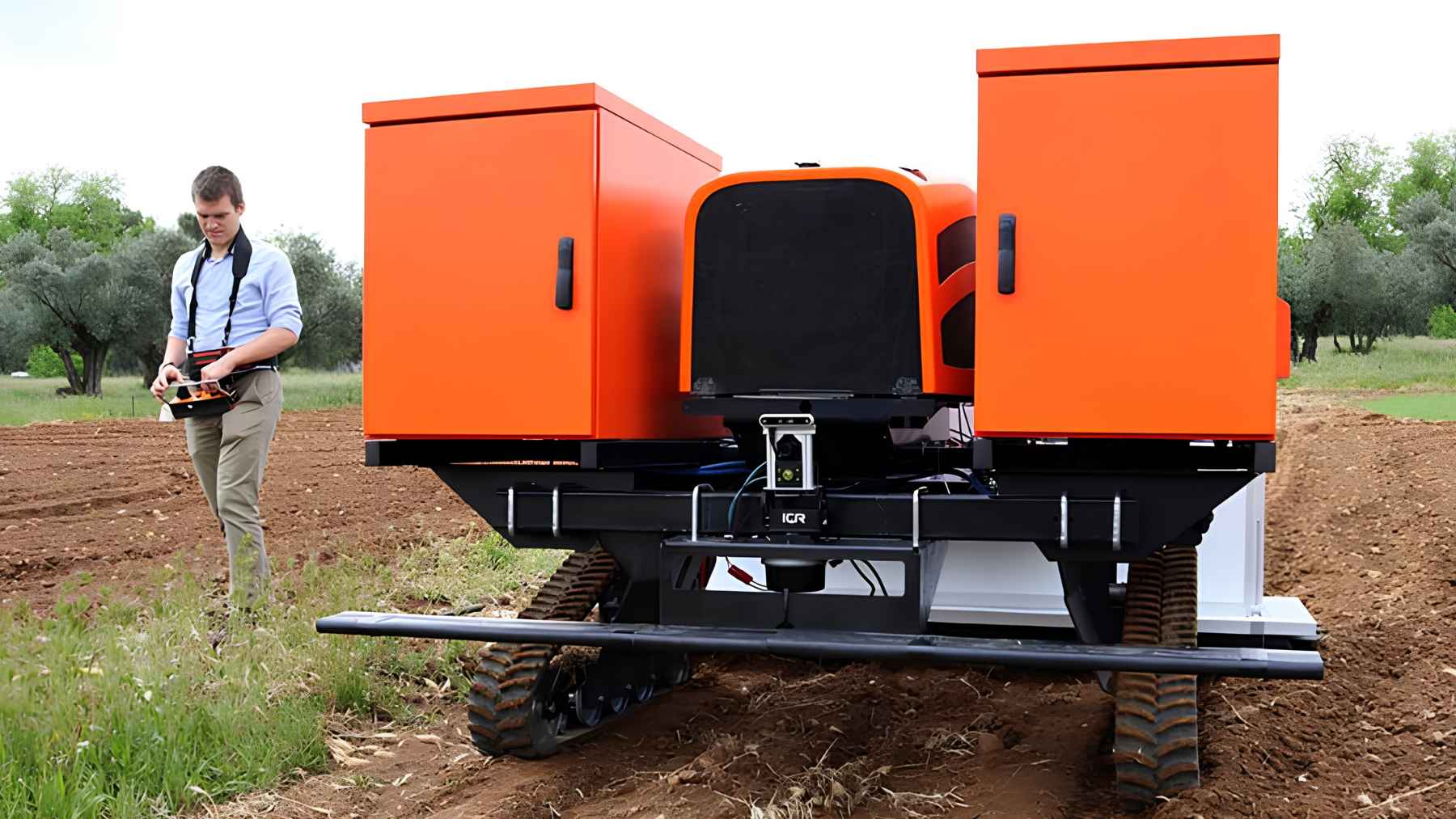
It sounds harsh at first. A machine rolls across a field and fires laser energy at tiny plants, not to help them grow, but to stop them before they spread.
But the target is not the crop. It is the growth point of unwanted weeds, and that is why Europe’s WeLASER project is getting attention. The EU-backed system uses artificial intelligence, laser scanners, and an autonomous vehicle to attack weeds without spraying chemical herbicides across the field.
For farmers, that could mean less chemical pressure on soil, insects, animals, and people. For the rest of us, it could mean a cleaner food chain, if the technology can clear the last hurdles before commercial use.
A laser aimed at the weak spot
WeLASER focuses on “meristems,” the growth centers that allow weeds to keep developing. Instead of coating an entire field with weedkiller, the system looks for these small points and applies a lethal dose of energy only where it is needed.
Why does that matter? Europe uses about 130,000 metric tons of herbicides a year, which is roughly 143,000 U.S. tons. By the EU’s own project summary, those chemicals can persist in the environment, harm non-target plants and beneficial insects, and raise concerns for animal and human health.
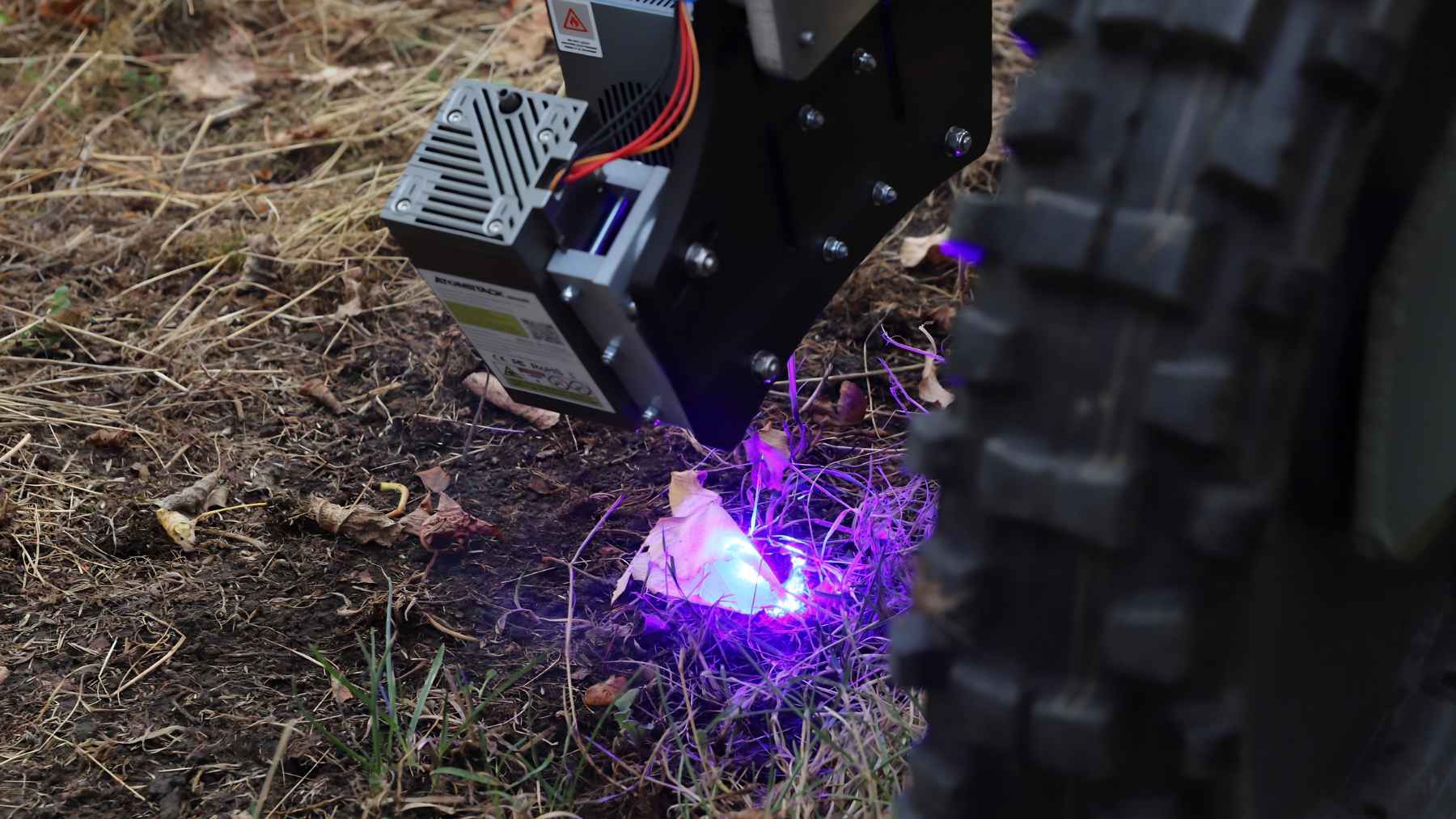
The basic idea is surprisingly easy to picture. Think of it less like a flamethrower and more like a surgical tool. The robot needs to spot the weed, separate it from the crop, find the growth center, and hit that target before the plant gets big enough to compete for water, light, and nutrients.
Why Germany is part of the story
Germany plays a central role, but this is not only a German invention. The project is coordinated by Spain’s Consejo Superior de Investigaciones Científicas (CSIC), with partners from Germany, Denmark, France, Spain, Italy, Poland, Belgium, and the Netherlands.
Two German organizations stand out in the technical work. Futonics Laser GmbH and Laser Zentrum Hannover are listed as German participants, and Laser Zentrum Hannover described its role as developing image processing and laser targeting systems that can distinguish crops from weeds.
The price tag also shows why public funding matters here. CORDIS lists the project’s total cost at about $6.3 million, with roughly $5.8 million coming from the EU, based on the European Central Bank’s June 16, 2026 reference rate. That is a lot of money for weed control, but not much when compared with the scale of Europe’s pesticide challenge.
The robot is smart, but not magic
The system combines several moving parts. There is a high-power laser, an AI vision system, a laser tool, smart navigation, cloud computing, and an autonomous vehicle that carries the equipment across the field. In practical terms, that means the robot is trying to do what a trained farmer does with their eyes, only faster and with a much smaller margin for chemical waste.
The final report shows real progress. The team developed a laser source with up to 507 watts of continuous output power, and the perception system recognized and differentiated plants with more than 90% mean average precision when trained for the field. It also identified weed meristem positions with more than 75% mean average precision.
Still, the project did not end with a perfect robot ready for every farm. CORDIS notes that integrated field testing was difficult because of technical and agricultural issues, including subsystem reliability and the seasonal rhythm of farming. Anyone who has tried to fix equipment during harvest season knows the problem. Fields do not pause for engineers.
Less chemistry, new questions
The strongest promise is obvious. If a farmer can kill weeds without spraying herbicide, there may be fewer chemicals drifting into soil, water, insects, and nearby wildlife. That matters for biodiversity, and it also matters for the people who live near fields or handle farm products every day.
But lasers are not environmental magic wands. A 2024 life cycle assessment found that the energy required to operate an autonomous laser weeding machine is one of the biggest challenges, especially for climate and fossil fuel indicators. In other words, the electric bill and the energy source behind the machine still matter.
There is also a safety question. The WeLASER report says the tool includes a safety system that turns off the laser when the housing door is opened and keeps the beam confined. That detail may sound technical, but it is essential when a machine is moving around open farmland near workers, animals, stones, dust, and uneven ground.
What farmers should watch next
For farmers, the big question is not whether the concept is exciting. It is whether it can work reliably, quickly, and affordably in real fields. Stakeholders consulted by the project said future implementation needs to be cost-effective, have enough working capacity, and be multifunctional.
That last point is important because a machine that only does one job may be a hard sell on a tight farm budget.
The science also suggests timing will matter. A 2024 Frontiers in Plant Science study tied to WeLASER found that weed species were most vulnerable to laser treatment at their youngest growth stage, and that susceptibility dropped as plants grew larger. Wait too long, and the laser has to work harder.
So, is this the end of herbicides? Not yet. But it is a serious step toward a different kind of farming, one where weed control looks less like blanket spraying and more like precision medicine for a field.
The official report was published on CORDIS, the European Commission’s research results service.