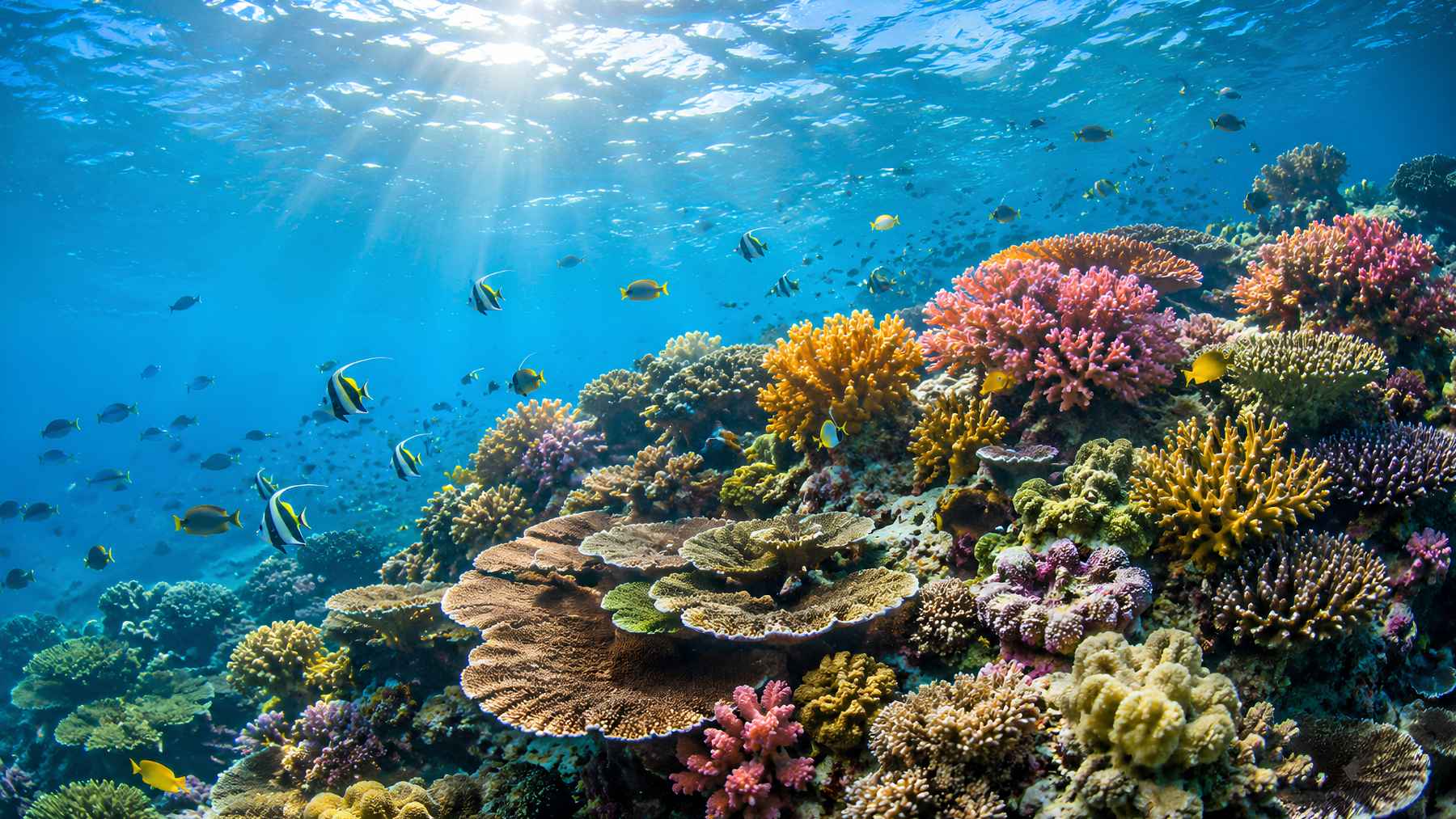
For years, coral reef news has felt like one long alarm bell. Marine heatwaves have turned once-colorful reefs ghostly white, and each bleaching event has made the future of these underwater cities look more fragile.
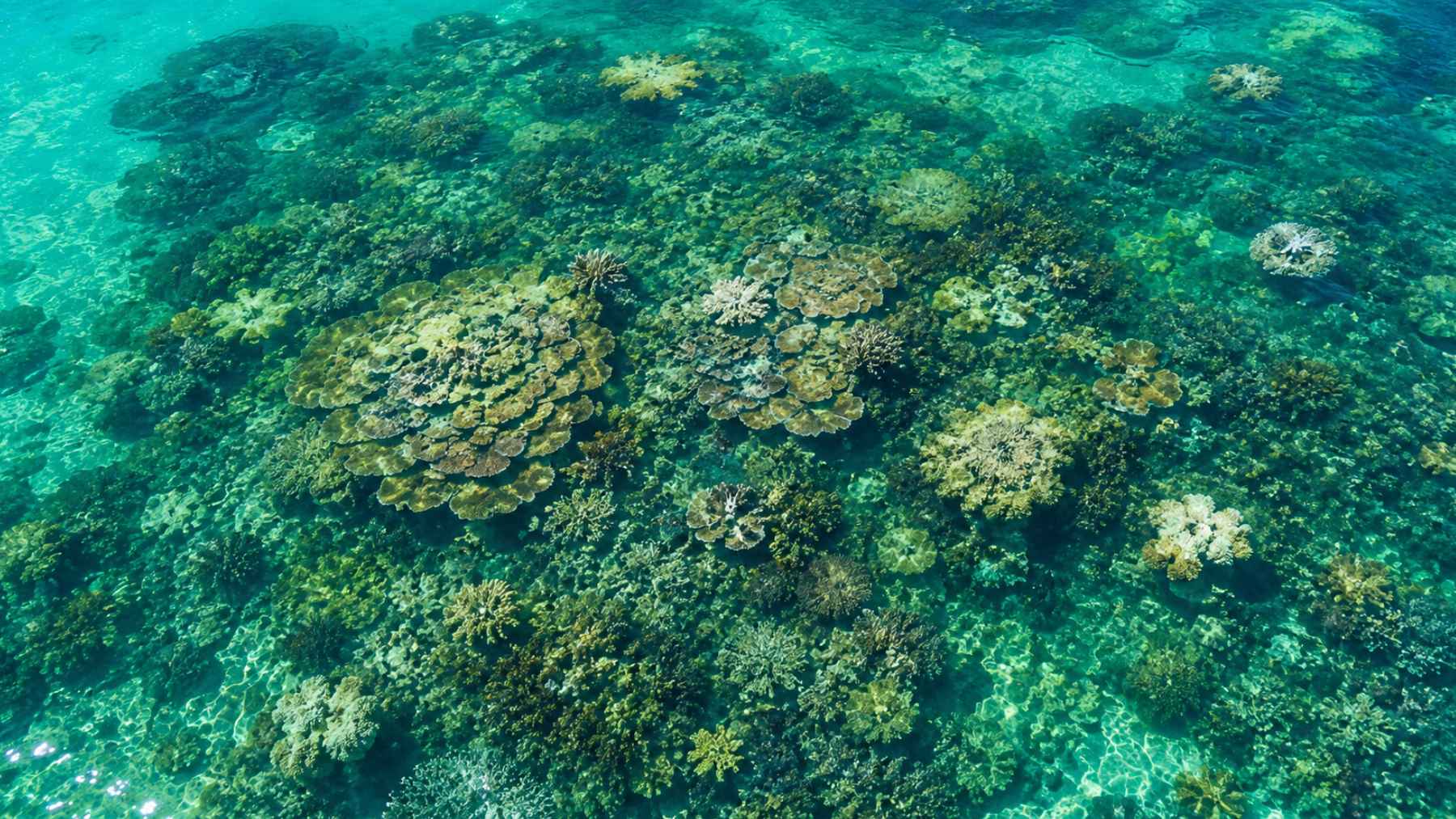
Now, a new global analysis offers a rare bit of hope. Scientists have identified about 64,200 square miles of coral reefs that may be able to persist through future warming, a much larger area than earlier estimates suggested, although researchers are careful to say this is not a reason to relax.
A wider map of reef hope
The research, known as 50 Reefs+, used 45,091 coral field observations collected from 1960 to 2025. It also included 42 climate, ocean, biological, and human-pressure factors, then used machine-learning models to map reef areas at a resolution of about 820 ft.
In practical terms, that means scientists were not just looking for pretty reefs on a map. They were looking for places where corals may be able to avoid, resist, or recover from heat stress, storms, and other climate-linked pressure.
The preprint reports 166,364 km² of climate-resilient reefs, equal to about 64,200 sqm. These reefs span more than 70 countries and 100 territories or jurisdictions, adding many places that were not included in the original 50 Reefs assessment.
Why some reefs stand out
So, what makes one reef more likely to survive than another? Sometimes it comes down to cooler currents, local ocean chemistry, depth, or the kinds of corals living there.
Think of it like a city during a heatwave. Some blocks get shade, a breeze, or better access to water, while others bake in the sun all day. Reefs can differ in similar ways, even when they are part of the same warming ocean.
More than half of the resilient habitat identified in the study is concentrated in five countries. The Bahamas, Cuba, Australia, Indonesia, and the Philippines together hold about 38,900 square miles of these potential refuges.
Good news, not a pass
“Coral reefs are often framed as ecosystems beyond saving,” said Emily Darling, a co-author of the study and director of coral reefs at the Wildlife Conservation Society. “Our research shows that there are three times more reefs that may be capable of surviving the climate crisis than previously thought.”
That statement matters, but it needs a careful reading. “May be capable” is not the same as “will be safe,” especially as oceans continue to absorb heat from a warming atmosphere.
NOAA experts said the fourth global coral bleaching event likely ended in mid-2025, after bleaching-level heat stress affected 84% of the world’s coral reef area and mass bleaching was documented in at least 83 countries and territories. That is the trouble with this hopeful map, it arrives after the most extensive bleaching crisis ever recorded.
Why reefs matter
Coral reefs cover less than 1% of the seafloor, but they support at least 25% of marine species. They also help protect coastlines, support food security, and provide income for coastal communities that rely on fishing and tourism.
For many people, reefs are not abstract environmental treasures. They are the reason a fishing boat comes back with food, a shoreline takes less damage during storms, or a snorkeling business survives another season.
UNEP warns that even if warming is held to 2.7 degrees Fahrenheit above preindustrial levels, up to 90% of corals could disappear by 2050. That makes the new study less like a victory lap and more like an emergency map.
The protection gap
Here is the catch. Only 28% of the climate-resilient reefs identified in the study currently fall within protected or conserved areas, according to the analysis reported by Inside Climate News.
That leaves about 46,000 square miles of potentially critical reef habitat without formal safeguards. Pollution from sewage, runoff from farms, destructive fishing, coastal construction, and poorly managed tourism can all weaken reefs before climate heat even gets its turn.
The study’s authors argue that governments can use these maps to guide conservation plans, including efforts linked to the global “30 by 30” target. That agreement calls for conserving at least 30% of land, inland waters, and oceans by 2030.
What happens next
Maps are powerful, but they are not magic. Local surveys, Indigenous and community knowledge, long-term monitoring, and careful management will still be needed to test whether these predicted refuges are truly holding up.
Some local conservation leaders have already urged caution, noting that places with limited historic monitoring need more ground-level data before broad claims become policy. That kind of skepticism is useful, not negative. It keeps hope tied to evidence.
At the end of the day, the message is simple. More coral reefs may have a fighting chance than scientists once thought, but that chance depends on what governments, coastal communities, and the world do next.
The preprint was published on EcoEvoRxiv.