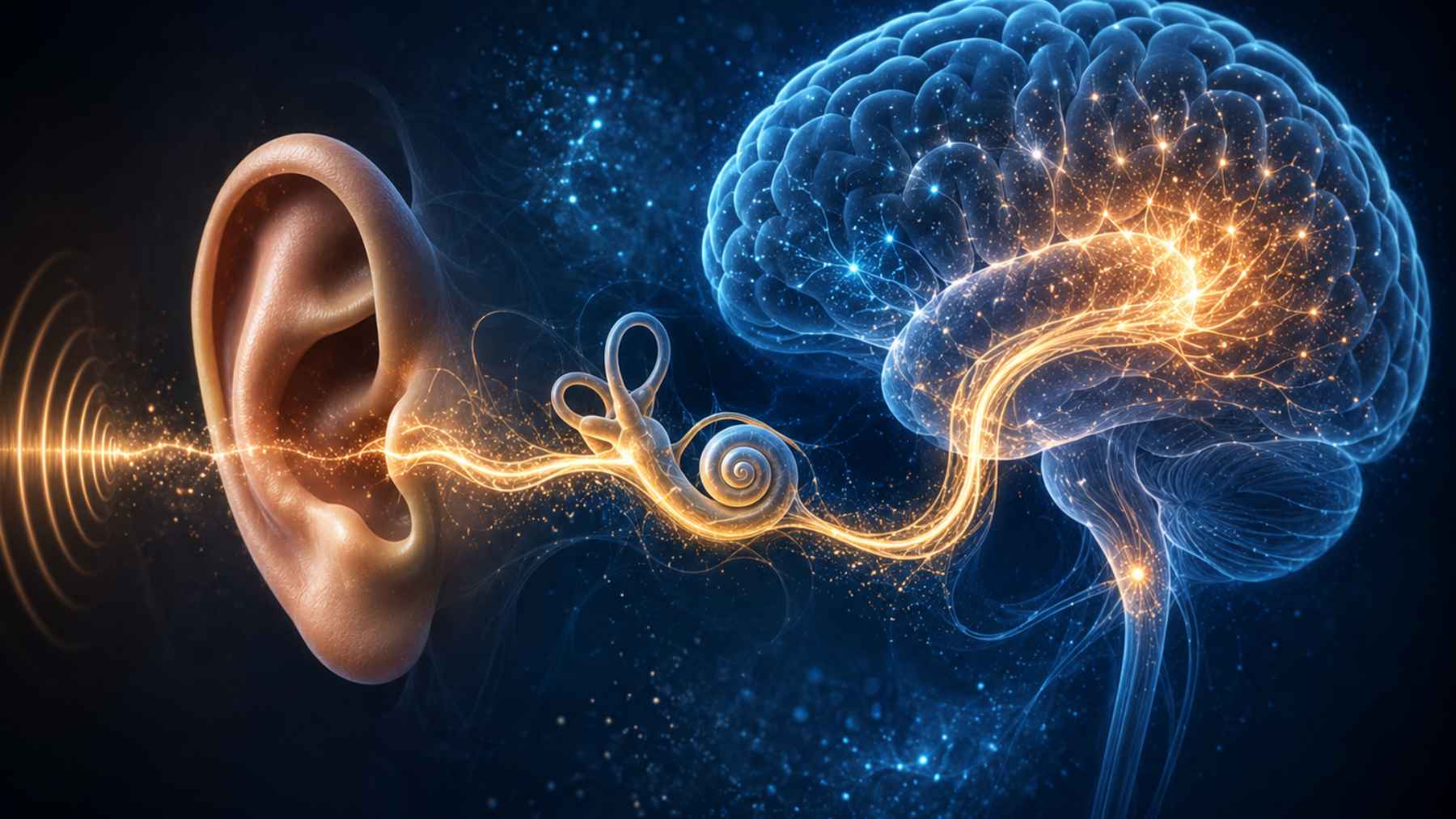
That high-pitched ringing in the ears may not be just an annoying glitch. A new scientific review argues that tinnitus could, to a large extent, be the unwanted side effect of the brain trying to keep hearing signals alive after sound input has been weakened.
The idea centers on a process called stochastic resonance, where a small amount of noise can help a weak signal get through. Patrick Krauss and Achim Schilling, whose listed affiliations include Friedrich-Alexander-University Erlangen-Nürnberg, University Hospital Mannheim at University Heidelberg, University Hospital Erlangen, the Mannheim Center for Neuromodulation and Neuroprosthetics, and BG Clinic Ludwigshafen, review 10 years of evidence behind this model.
What tinnitus really is
Tinnitus is the perception of sound when there is no outside sound source. People often describe it as ringing, buzzing, roaring, or hissing, and surveys estimate that 10 to 25 percent of adults experience it.
For some people, it is a brief annoyance after loud noise. For others, it lasts for months and can make sleep, focus, or quiet moments harder. That is why this question matters so much. What is the brain actually doing?
The brain’s noisy workaround
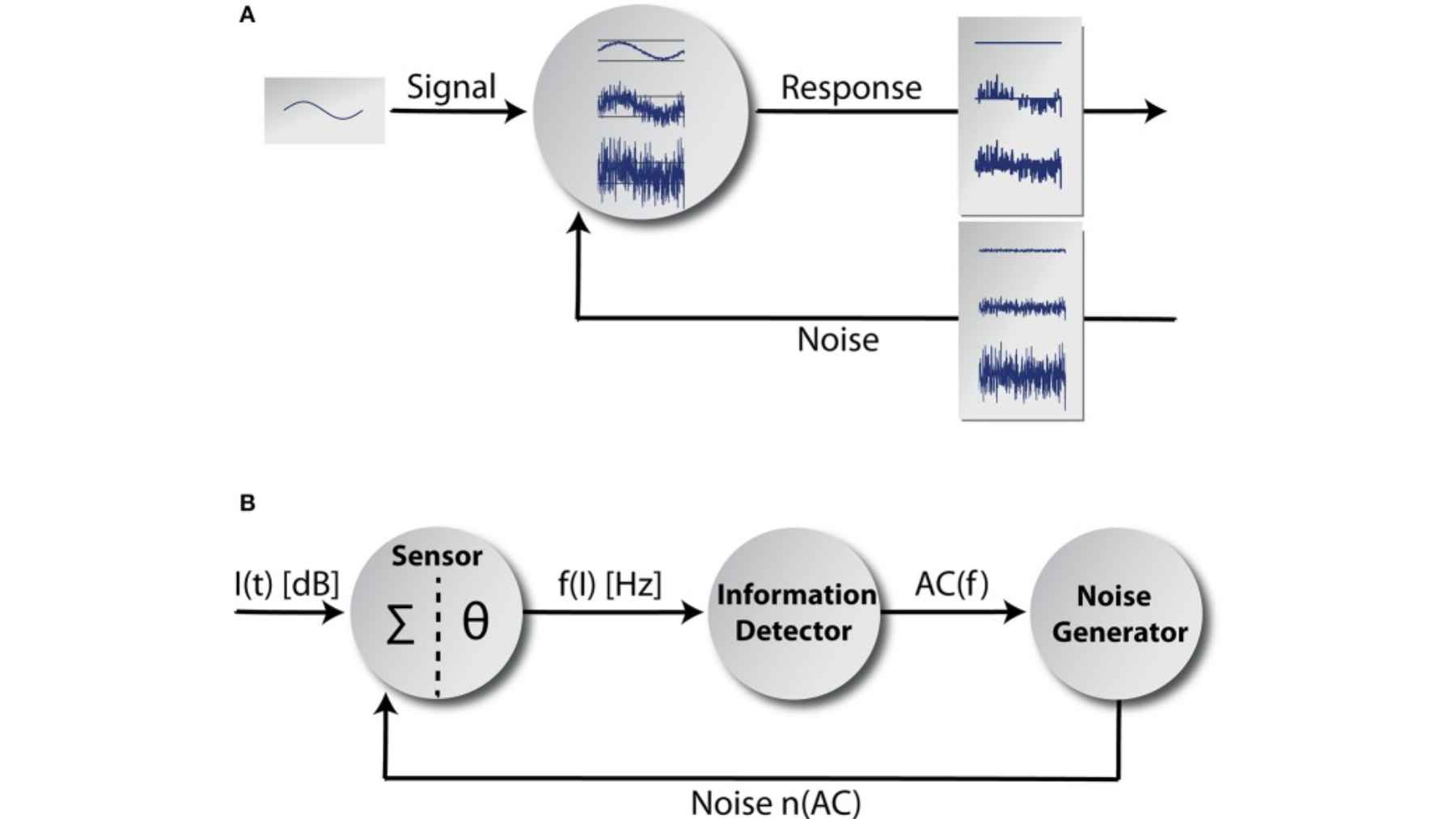
The stochastic resonance model gives a surprising answer. In simple terms, it suggests that the auditory system may add internal neural noise after hearing loss to make weak sound signals easier to detect.
Think of it like trying to hear a faraway radio station. Too much static is a problem, but in certain systems, a little noise can help a faint signal cross the line from “missed” to “noticed.” The 2016 Frontiers in Neuroscience paper that introduced the tinnitus model argued that this added internal noise may partly compensate for hearing loss, while also creating the phantom sound.
A different view of ringing
This is a shift from the older idea that tinnitus-related brain activity is simply bad wiring or runaway amplification. The new review frames the sound as a byproduct of adaptation, not as the original goal of the system.
That does not make tinnitus harmless. Anyone who has tried to fall asleep with a tone in their ear knows better. But it does change the story from “the brain is failing” to “the brain may be trying to solve one problem and accidentally creating another.”
Ten years of clues
The model has not stood still since it was proposed in 2016. Over the past decade, it has grown from a broad hypothesis into a wider theory linking hearing loss, brain noise, signal detection, phantom perception, and even how different senses may interact.
One important clue came from a large Frontiers in Neurology analysis of 37,661 patients with hearing loss, with and without tinnitus. The study found that some tinnitus groups had lower hearing thresholds in certain frequency ranges, a pattern the authors said could fit with stochastic resonance adding neural noise to counteract hearing loss.
When noise may reduce noise
The same idea has also inspired a possible treatment approach. Instead of trying to silence the brain directly, researchers have tested carefully matched external noise near a person’s hearing threshold.
In a 2022 Frontiers in Neuroscience study, 24 patients with tonal tinnitus heard short bursts of filtered noise adjusted to their hearing profile. Twenty-one of them reported reduced tinnitus loudness during stimulation, and six reported complete subjective silencing while the sound was being played.
Not a simple cure
That finding is intriguing, but it is not the same as a proven cure. The review itself stresses that larger controlled trials and objective biological markers are still needed before doctors can know who is most likely to benefit.
It also does not mean random white noise from a phone app will work the same way. In practical terms, the approach depends on matching the sound to the person’s tinnitus and hearing profile. Details matter here.
One model meets others
Tinnitus research already has several major theories. Central gain models compare the brain to a sound system turning up the volume after weak input. Predictive coding models focus on how the brain makes guesses about the world and can mistake internal activity for real sound.
A 2023 Brain article argued that stochastic resonance and predictive coding may work together. In that view, internal noise helps create the bottom-up signal, while the brain’s higher-level expectations help turn that signal into a conscious phantom sound.
What happens next
The big challenge now is proof inside the nervous system. Researchers still need direct evidence that the auditory system actively adjusts internal noise in the way the model predicts.
Still, the review gives tinnitus science a useful compass. Instead of treating phantom sound only as damage, it asks whether the same machinery that helps people hear in difficult conditions can sometimes go too far.
The official review has been published on arXiv.