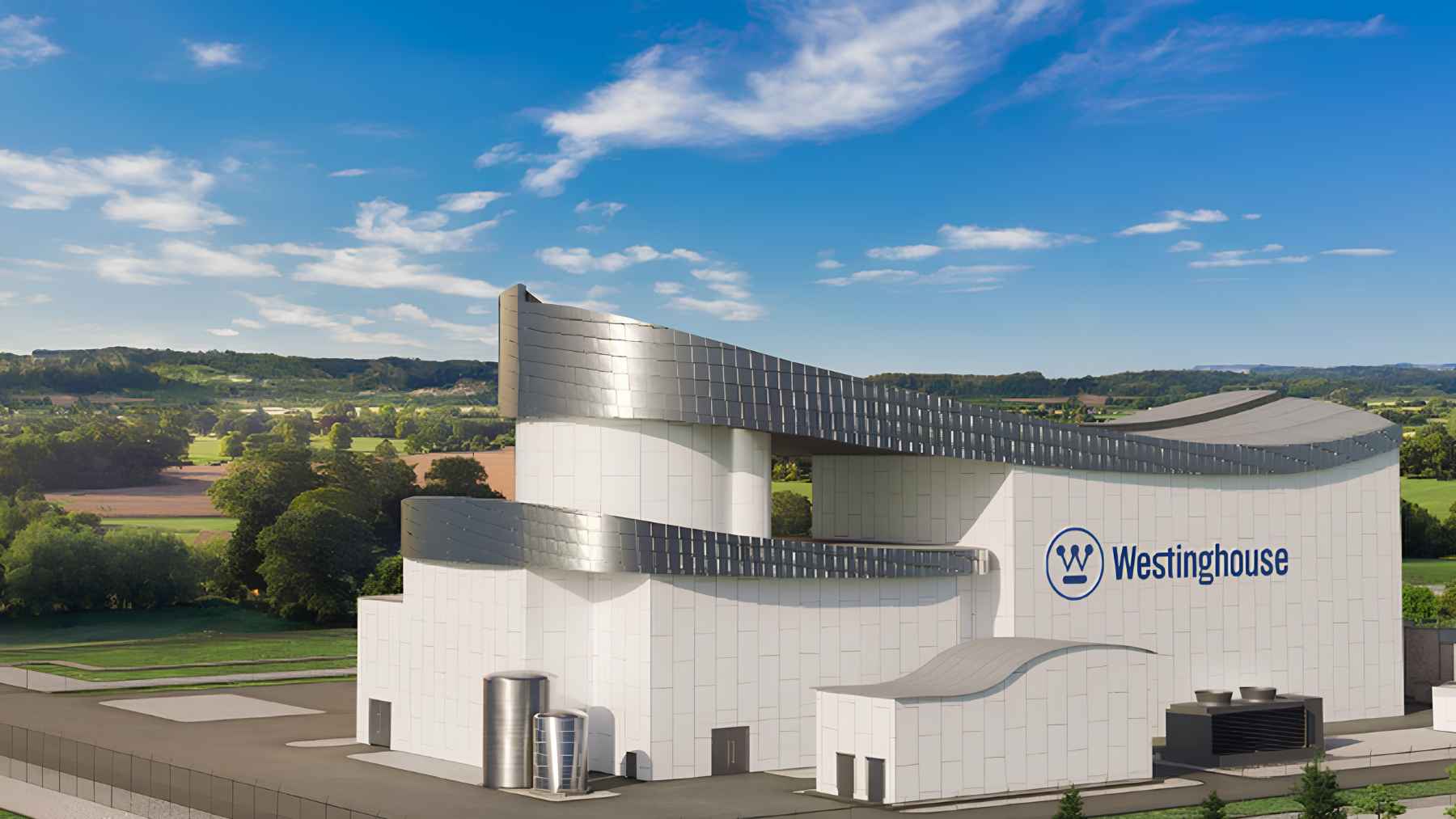
When we talk about the construction of a nuclear power plant most people will immediately think about giant crane lifts, thick concrete walls and steel modules that weigh more than a million pounds. Yet Westinghouse’s latest move suggests we need to look inside the engineering offices, over the specialists tables.
On August 4, Westinghouse announced a partnership with Amentum to support its new technology platform called Advanced Passive X (or APX) in order to help secure the Nuclear Regulatory Commission approval for their small modular reactor called Advanced Passive 300 (AP300). The partnership is strategic: fearing a possible bottleneck of 91 newer reactor units the company had to plan ahead.
The Advanced Passive 300 was designed for approval
Westinghouse took the Advanced Passive 1000 design that was already operating at Plant Vogtle in Georgia and reduced it to one coolant loop and lowered it to 300 megawatts. Which means the AP300 was pitched as a smaller version of an already working rector. They made the new reactor very similar to the old one, so similar in fact that it kept the same fuel levels, kept the same passive safety systems and kept the same control technology.
Since both analysts and regulators were unfamiliar with the new machine the designers of the project reframed it towards a risk reduced approach. Then on May 4, 2023 Westinghouse launched the Advanced Passive 300 project with a timeline attached. If the timeline doesn’t change too much the certification should arrive by 2027, as of now the reactor remains in a pre-application state and no application has been filed yet.
Westinghouse is buying licensing capacity
The agreement with Amentum revolves around the less photogenic work that must be finished on the office tables before the working crews can start pouring concrete: it’s Amentum’s know-how about work-office engineering and regulatory expertise that will be Westinghouse’s new technology platform baseline strength.
Dan Sumner, chief executive at Westinghouse, said he expects the collaboration “to accelerate the licensing of the AP300 with the Nuclear Regulatory Commission”. At the same time Amentum’s chief executive John Heller linked the partnership to “a rising demand for power”. Safe to say that he is talking about electricity destined to AI data centers.
Transparency is important
The NRC’s AP300 docket contains white papers that talk about 11 different subjects. Among those are fuel design, instrumentation and control, risk assessment, emergency planning and seismic categorization.
Through the years the paperwork requires constant reviews, so in February 2024 Westinghouse updated its regulatory engagement plan for the first time. After that on June 11, 2026 they updated it again. This time though, the newer version included a request to withhold the process under the federal trade secret rules. That request could be just a routine but on the other hand it could also mean the full roadmap containing critical information won’t be accessible to the public anymore.
Two other differences are that one planned paper on the licensing has been changed to no longer planned while the formal design certification has been removed.
Amentum’s rival contracts reveal a shortage
Around the 70 countries that Amentum is spread it counts with a workforce of over 50,000 employees. Their flagship being all the gathered experience regarding nuclear regulation. The company claims that since its inception it has supported clients to cover conventional reactors and small modular designs through every United Kingdom Generic Design Assessment.
Rolls-Royce selected Amentum as an SMR delivery partner while EDF awarded the company a ten-year professional service contract. Around the same time an Amentum-led venture received a 14 year owner’s engineer contract for the British SMR program in Wales. All of those rival developers hiring the same specialist is a hard sign to miss. It means that the expertise is already being explored by competitors that are in the nuclear energy market. With no one other options Amentum’s importance grows.
The ninety-one reactors create a paperwork challenge
Cameco, a co-owner of Westinghouse, has outlined the previously mentioned pipeline of up to 91 potential units at different stages. The list of projects spreads over many areas: one is tied to a United States Department of Energy loan program, another is an eventual reactor restart in South Carolina The Poland’s first nuclear plant is also listed. There are also new projects in Bulgaria and Ukraine, 11 units in front end engineering and 51 other projects that are already in early development across several other countries.
Cameco cautioned that projects may still stall or leave the pipeline. They say the expected costs and improvements depend on reaching a “Nth-of-a-kind” rhythm. This rhythm is defined as completing five separate two unit projects and sustaining at least two reactor orders per year, such conditions could lower capital over costs from $20-26 billion down to $14-17 billion overnight.
Vogtle has proved the hardware can be managed
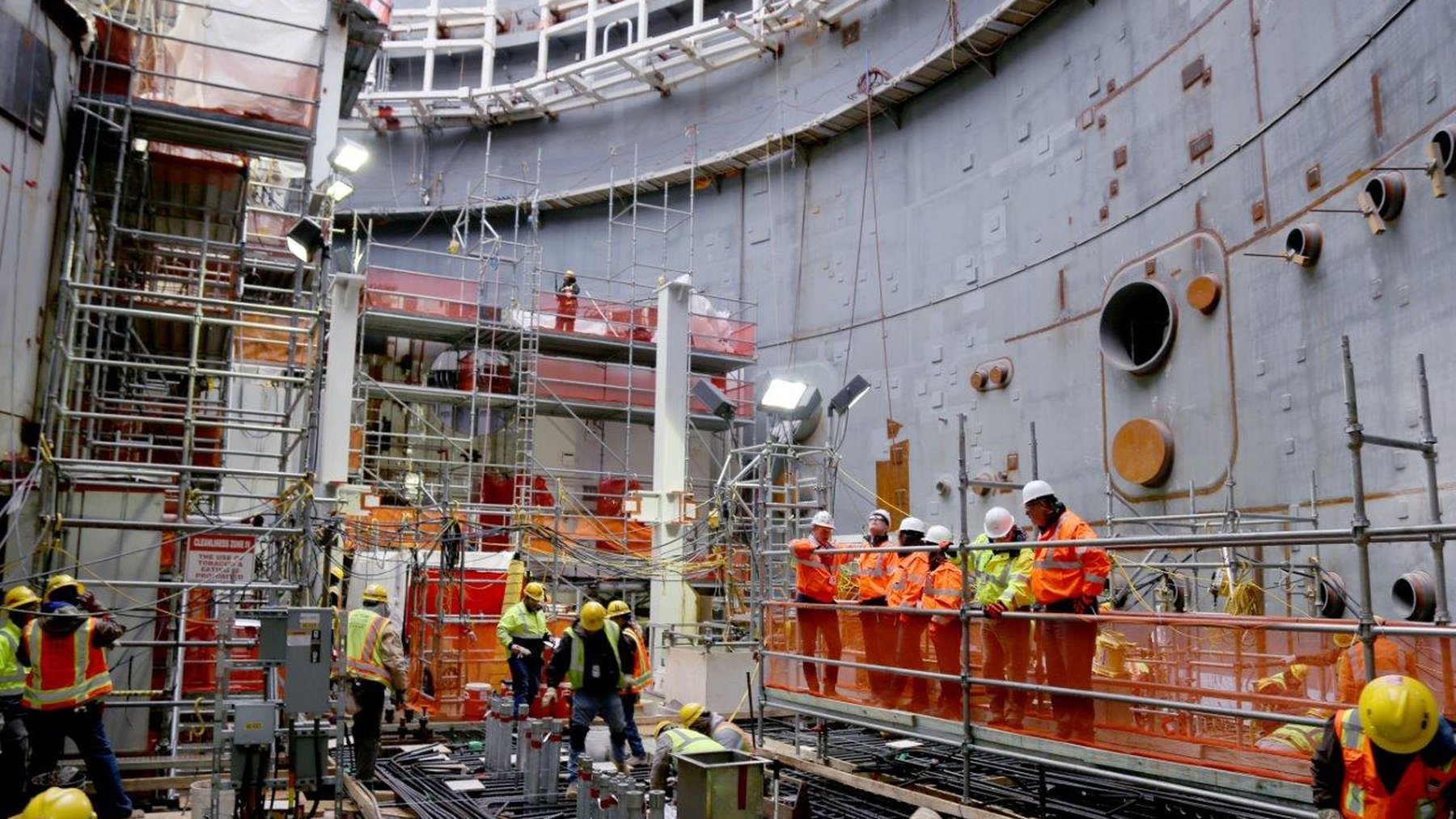
The nuclear construction images that were supplied by Vogtle’s plant look superhuman. In March 2014 a crane placed the CA20 module into Unit 3 in a single lift, moving more than 2.2 million pounds (!) in a structure taller than five stories and measuring about 67 by 47 feet.
The workforce numbers matter: Bechtel says the project reached more than 9,000 craft professionals. It also recorded 70 million work hours without a single time loss incident. And it brought Unit 4 costs to about 30 percent below Unit 3, while also training more than 1,500 Bechtel professionals with hands-on nuclear experience.
The bottleneck begins before concrete is poured
The Vogtle Unit 3 entered commercial operation in July 2023. Unit 4 followed in April 2024, showing how strong the United States is when the subject is the completion of Advanced Passive reactors.
You can’t simply repeat the results across several sites though. Every site has different contexts and needs specific solutions to its demands. From specific engineering to different regulatory data, and of course a different working crew who can manage all the specific nuclear safety documentation in case it’s a different state.
Westinghouse counts with around 11,000 employees worldwide and its technology is used in 57% of the world’s 417 operating reactors.
The official announcement was published on Westinghouse’s website.