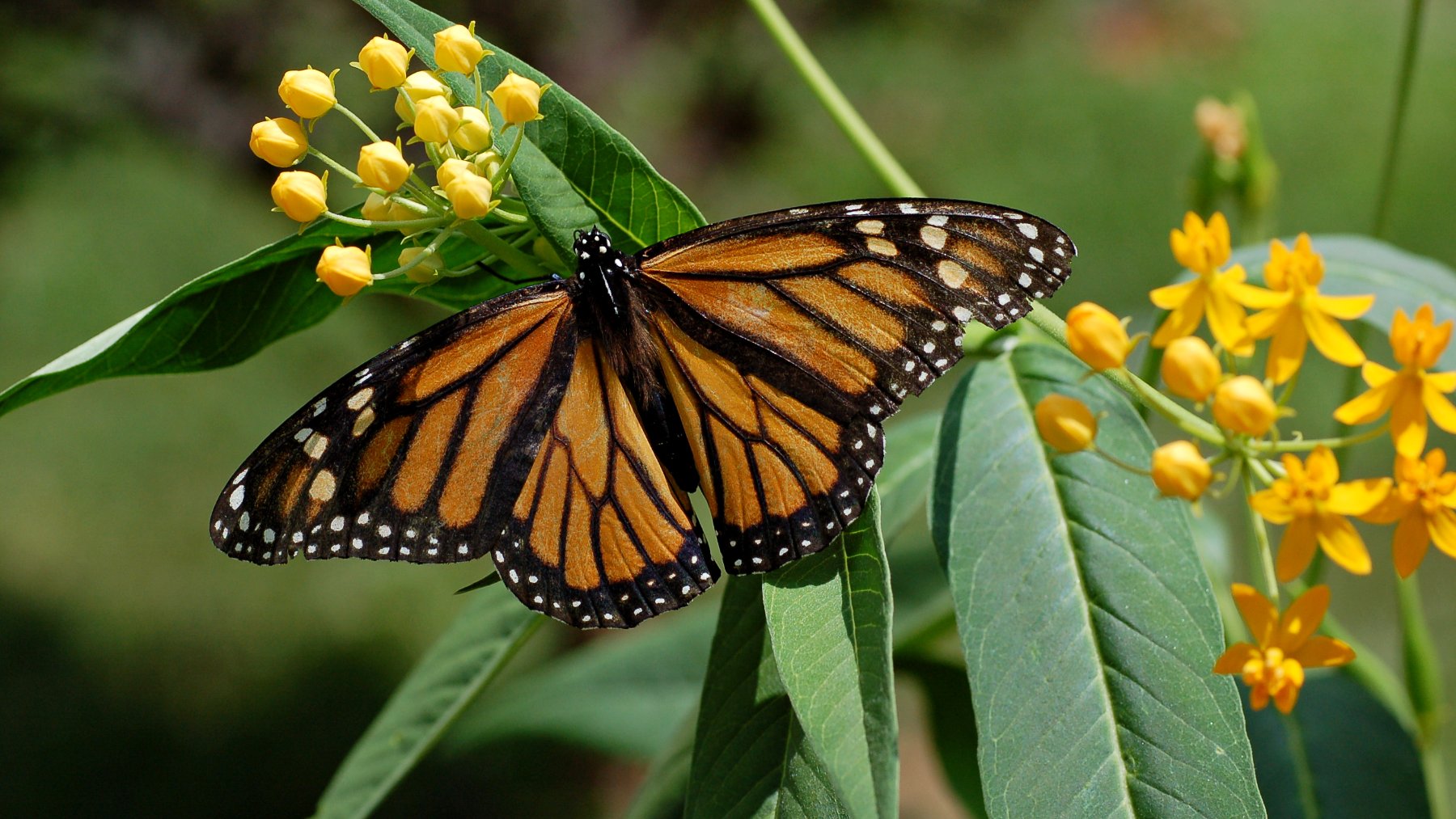
Florida researchers are working toward planting 15,000 native milkweeds along selected North Florida roadsides, giving monarch butterflies more places to feed and reproduce. The effort has been extended through 2029, and monarchs are already using some of the established plants.
From the car window, these patches might look like a simple landscaping upgrade. But the Florida Museum of Natural History and Florida Department of Transportation (FDOT) are asking a bigger question. Can land already maintained for transportation also provide lasting wildlife habitat?
More than a roadside makeover
In 2023, FDOT awarded Jaret Daniels’ laboratory $150,000 to select, grow, plant, and monitor 9,000 milkweeds over three years. The extension adds another 6,000 plants to the target, so the 15,000 figure represents the project’s goal, not a completed planting count.
Daniels, the museum’s curator of butterflies and moths, has reported encouraging early results. “We’ve had good success with plant establishment, and we’ve seen monarchs using the plants already in the field,” he said.
FDOT also joined a nationwide voluntary conservation initiative led by the University of Illinois Chicago in 2024. Its agreement targets conservation measures on 10,200 acres, including planting and mowing practices that support monarch habitat. That is a broader land-management commitment, not 10,200 acres newly covered with milkweed.
Why monarchs need milkweed
Why choose this plant instead of just any colorful roadside flower? Adult monarchs drink nectar from many flowering species, but their caterpillars depend on milkweed leaves for food. Milkweed supplies something a generic wildflower mix may be missing.
Some migrating monarchs can travel more than 100 miles in a day, making places to replenish their energy important. Milkweed patches can therefore serve as both refueling stops and potential nurseries, while other flowering plants help provide a wider supply of nectar.
The right patch in the right place
The researchers are not scattering plants randomly along highway shoulders. An earlier yearlong survey mapped native milkweed populations, helping the team identify suitable habitat where milkweed was scarce or absent.
FDOT’s agreement identifies less-frequently mowed back slopes as suitable monarch habitat. That detail matters because planting is only part of the job, with ongoing maintenance shaping whether flowers remain available during breeding and migration.
Some selected sites sit beside conservation areas, while others are near farms growing blueberries and watermelons that benefit from wild insect pollination. Milkweed flowers also feed bees, moths, and other insects, so the potential benefits reach beyond monarchs and into neighboring landscapes.
Two native plants suited to tough ground
After considering six native milkweed species, Daniels’ team narrowed its focus to pinewoods milkweed (Asclepias humistrata) and butterfly weed (Asclepias tuberosa). Both are suited to sandy upland settings, making them promising candidates for exposed roadside slopes with relatively poor soil. For these species, conditions that challenge many garden plants can be an advantage.
But being well matched to a roadside does not necessarily make a plant easy to grow in a nursery. Pinewoods milkweed develops a deep taproot that requires elongated pots, creating a practical hurdle before planting crews ever pick up a shovel.
Growing a supply, one seed pod at a time
To secure pinewoods milkweed, the team collects seeds from known populations and takes them to the University of Florida’s Native Plant Nursery. Researchers tie small bags around developing seed pods so the wind does not carry the seeds away before collection.
Nursery staff and volunteers raise the plants, while butterfly weed is purchased from Green Isle Gardens in Groveland, Florida. One recent seed batch achieved about 98% germination, Daniels reported. That measures seeds sprouting, not how many plants will survive years of roadside conditions.
Planting takes place during winter, when the milkweeds are dormant. That timing keeps both young plants and the people digging thousands of holes out of Florida’s punishing summer heat.
What success will actually look like
Work is focused on Alachua County and five other North Florida counties, where the team regularly monitors the plantings. Seeing a monarch land on a flower is encouraging, but it does not by itself demonstrate that the project has increased butterfly populations.
The more useful lesson will be which plants establish reliably and which approaches deserve to be repeated elsewhere. Researchers expect the results to help guide expansion into other counties and states, but a final assessment is still several years away.
For now, these roadside patches offer an early example of conservation taking shape on land many drivers barely notice.