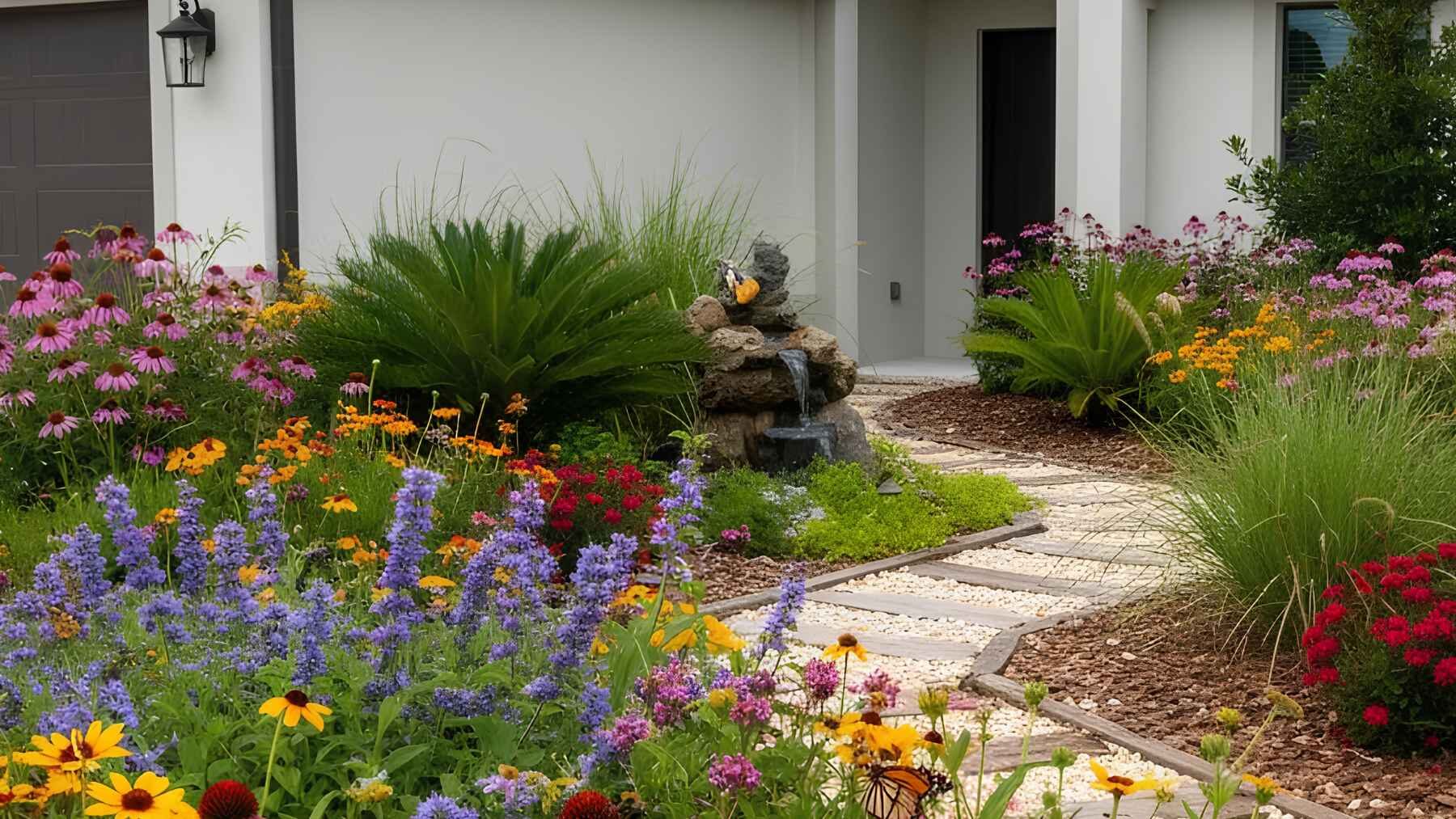
Can a stack of old boxes become the first layer of a living front yard? A Florida homeowner showed that it can, covering a conventional lawn with soaked cardboard before adding organic material, deep mulch, stone paths, and plants selected for pollinators, birds, and people.
The result is more than a clever gardening trick. It is a compact lesson in how to replace conventional turf with a layered landscape, although experts caution that cardboard and the word “native” do not guarantee lower water use.
Cardboard did the first job
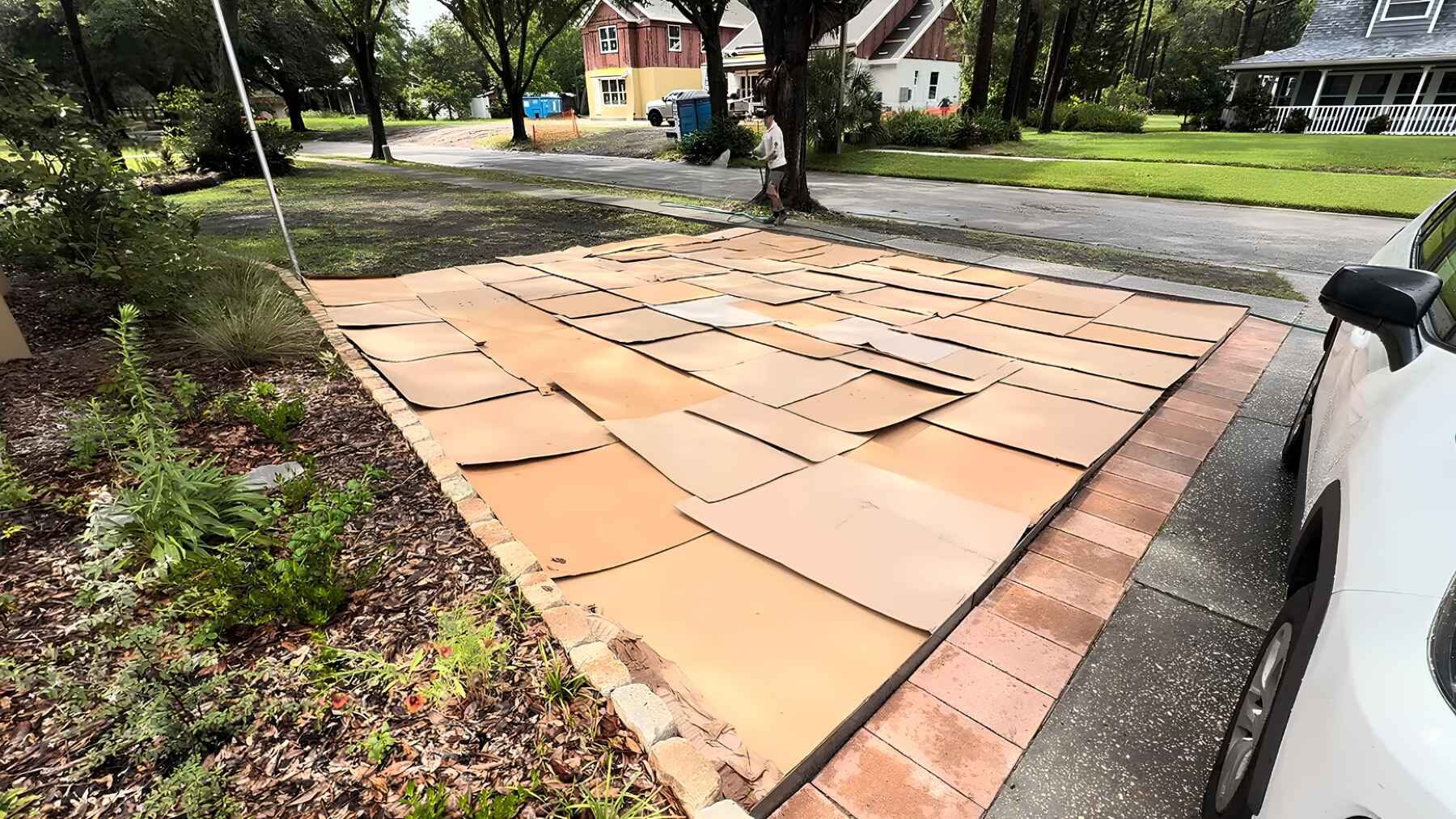
The Food Forest Florida creator began with sheet mulching, sometimes called sheet composting or lasagna gardening. Wet cardboard was laid over the existing grass, followed by organic material and a thick mulch layer, while a perimeter edge helped keep loose material from washing into the street during heavy rain.
The University of Florida says this no-dig method blocks light, suppresses grass and weeds without chemical control, and adds organic matter as the layers decompose. Extension guidance recommends plain, uncoated cardboard with tape and labels removed, plus enough moisture to prevent it from becoming a dry barrier above the soil.
Built like a Florida hammock
The homeowner said the yard was designed to function like a “low-maintenance Florida oak hammock ecosystem.” In Florida, a hardwood hammock is a dense stand of broad-leaved trees growing on slightly raised ground, often creating a sheltered, layered habitat rather than one flat carpet of vegetation.
Curving stone paths and defined planting areas kept the front yard usable, while native and naturalized plants were added for birds and pollinating insects alongside edible species that would provide “food not just for the animals, but for us, too.”
Why the lawn question matters
Outdoor water use is not a small line on the household bill, especially during Florida’s sticky summer heat. The Environmental Protection Agency says the average U.S. single-family home uses about 30% of its water outdoors, with that share rising considerably in some hotter and drier regions.
Florida research shows how landscape design can change that number, but the details matter. In a 29-month study of 27 central Florida homes, yards with less turf, more planted beds, microirrigation, and seasonally adjusted watering used 39% less irrigation water than conventional landscapes, saving an estimated 1,440 to 1,800 gallons per week when watering occurred twice weekly.
Native does not mean automatic savings
Here is the important catch. UF/IFAS researchers say a plant’s native status alone does not determine its irrigation or fertilizer needs because a residential lot may have different soil, drainage, light, and root conditions from the habitat where that species naturally grows.
That is why Florida-Friendly Landscaping centers on “right plant, right place.” Homeowners need to examine sun and shade, soil, moisture, drainage, mature plant size, and existing vegetation before deciding what belongs in each part of the yard, and newly installed plants still need water while their roots become established.
Pollinators need more than pretty flowers
A pollinator garden works best when it offers food across the seasons, not just one bright flush of bloom. The U.S. Forest Service recommends using a variety of plants that flower from early spring through late fall, grouping them in clumps, including regional native species, and adding host plants that feed butterfly caterpillars.
Pesticide use also matters. USDA guidance says diverse pollinator habitat can support native biodiversity and beneficial insects, while continuous flowering and a mix of plant shapes give more species a chance to feed and find shelter in the garden.
Start with one manageable patch
The whole lawn does not have to disappear in a weekend. UF/IFAS notes that sheet mulching can be done at almost any scale and even piecemeal, so a homeowner can begin with a curb strip, one corner, the edge of an existing bed, or another small section.
Low maintenance also does not mean no maintenance. New plants may need establishment watering, open spaces will require occasional weeding, paths and borders need attention, and organic mulch must be renewed as it breaks down, but each successful patch can mean less time behind the mower on a humid weekend.
The real lesson is the design
Cardboard is the opening move, not the finished ecosystem. Its value is that it can suppress turf and begin a no-dig transition with a material many households already have, while the lasting benefits come from careful plant choice, efficient irrigation, layered habitat, and realistic maintenance.
That is what makes this Florida makeover worth noticing. It turns a familiar front yard into a small working landscape for wildlife and people without pretending that one recycled material can do all the work, and the original yard transformation was published on YouTube by Food Forest Florida.