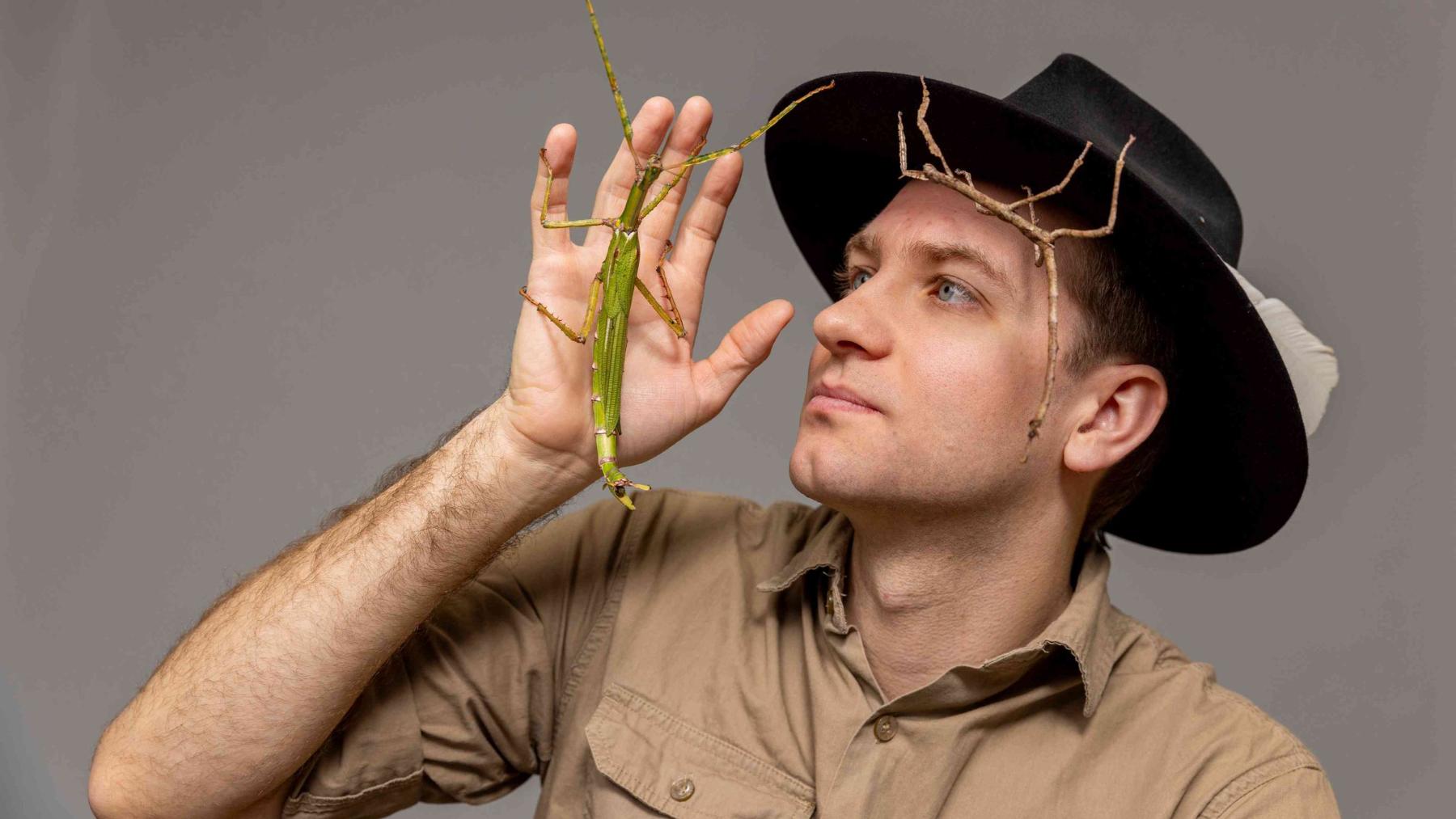
A large Australian stick insect familiar to scientists and insect enthusiasts has finally received its own scientific name. Researchers at the University of Sydney identified Anchiale robusta and a second new species, Anchiale mabiensis, while investigating insects found in gardens and tropical forests. Their findings show how much biodiversity can remain unrecognized even when people regularly photograph the animals involved.
The research recognizes five Australian species in the genus Anchiale after revisiting earlier classifications. It could help researchers understand insects that damage trees during population outbreaks, while drawing attention to the threatened forests that support other members of the group. Knowing exactly which insect is present matters for both tasks.
A familiar insect gets a new identity
How does a large insect escape scientific recognition for decades? In the case of A. robusta, people had already encountered and studied it, but its identity had been confused with another species. The discovery emerged when researchers brought together DNA analysis, museum specimens, field surveys, citizen observations, and captive populations.
“Taxonomy is often a bit like detective work,” said lead author Braxton Jones, a researcher at the university’s Aola Richards Sydney Insect Hub. Taxonomy is the science of identifying, naming, and classifying organisms, and this investigation required checking familiar assumptions against several kinds of evidence.
The study, published on September 21 in Austral Entomology, also restored Anchiale albopunctata as a separate species. Female A. robusta specimens measured approximately 4.8 to 6.4 inches long (122 to 162 millimeters), giving readers a sense of the animals behind the discovery.
An unusual clue in the eggs
The second new species, A. mabiensis, is associated with the Mabi rainforest on Queensland’s Atherton Tablelands. The paper also records it at Babinda and in lowland rainforest along waterways, so its known habitat extends beyond the Mabi forest alone.
Its eggs carry a particularly unusual feature, two or three inner rings on the lid, known as the operculum. The researchers report that these rings had never previously been documented in stick insects or the related insect groups covered by their review. The distinctive structure offers another way to tell this species apart from its relatives.
More than 1,000 sightings still left questions
According to the university, there were already more than 1,000 citizen science observations of these stick insects through platforms including iNaturalist and the Atlas of Living Australia. Even that record, combined with decades of scientific work, had left some identities unresolved. A photograph can document an encounter while leaving questions that require specimens and closer examination.
That makes this discovery especially relatable for anyone who has photographed an unfamiliar insect on a backyard plant. Public observations formed part of the evidence the researchers used alongside museum collections and laboratory work. Taken together, those contributions show how everyday encounters can become useful pieces of a much larger scientific investigation.
Why the names matter for forests and farms
One member of the group, A. briareus, is known for population outbreaks that can strip foliage from trees. The university says sorting out the insects’ identities could improve future management of their effects on forestry and agriculture. Those practical benefits still need to be demonstrated.
There is also a conservation issue. Mabi rainforest is a critically endangered ecological community, and its recovery plan describes how clearing has left fragmented patches vulnerable to weeds and other disturbances. Livestock grazing, trampling, and soil compaction can further degrade surviving forest, according to the Australian government’s information on the habitat.
Those pressures help explain why documenting insects matters alongside protecting trees. A reasonable implication of the discovery is that habitat surveys may overlook biodiversity when several species are treated as one. More accurate identification can give conservation researchers a clearer starting point for asking where each species lives and what threatens it.
Another species may still be waiting
The researchers also flagged a possible additional species from Cape York. More specimens are needed before its identity can be confirmed, so it remains an open question. For now, the revision’s confirmed result is five recognized Australian Anchiale species, including the two newly described ones.
Jones emphasized the importance of protecting threatened ecosystems and documenting their biodiversity before species disappear without ever being recognized. The combination of a familiar large insect and an unusual rainforest egg shows why that work still has surprises to offer. The official announcement was published on the University of Sydney website on September 22, 2026.
Photo: University of Sydney