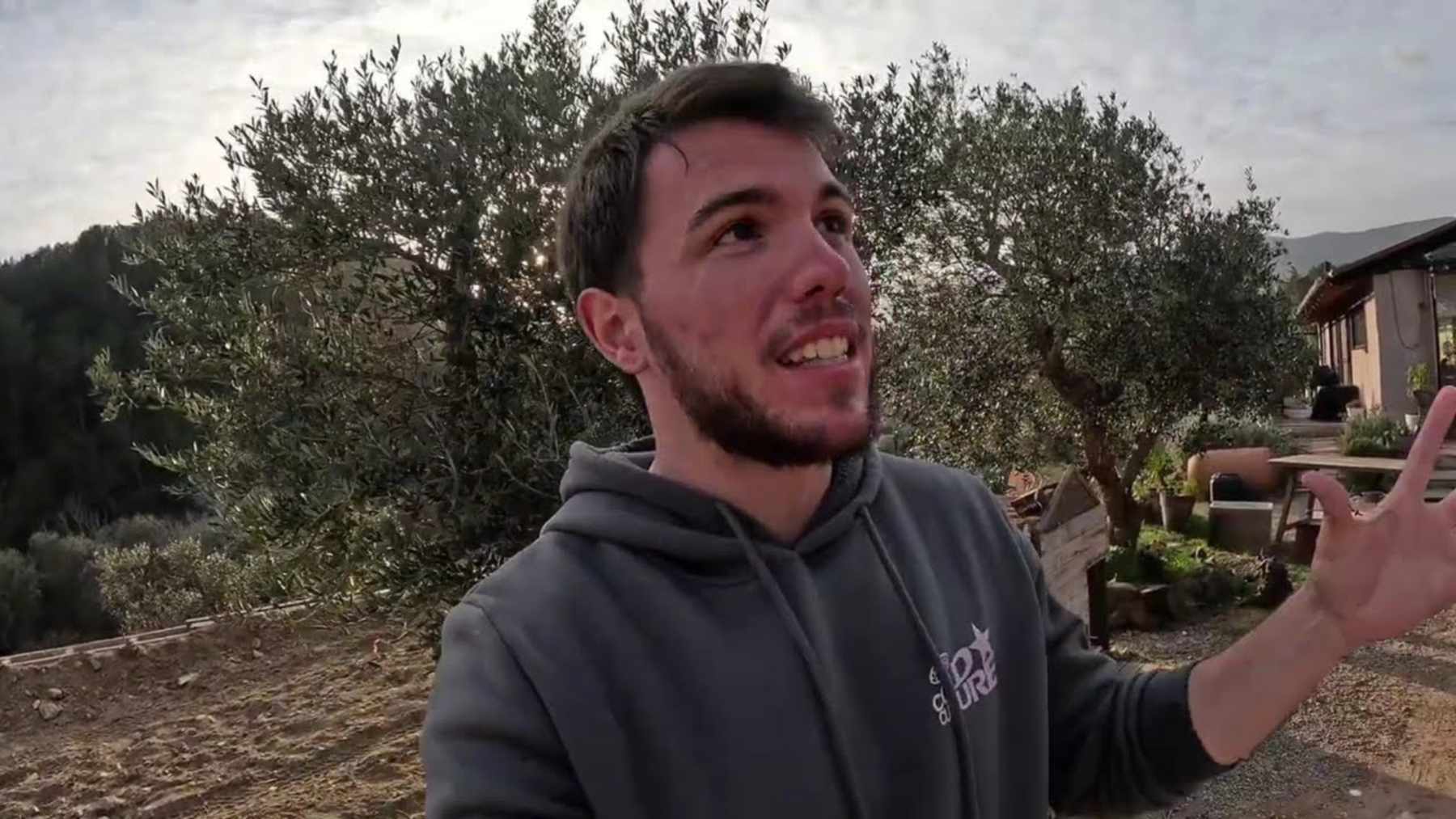
Kelvin Doe grew up in Freetown, Sierra Leone, and as a teenager he dug through the garbage for parts to build his own batteries, a generator and an FM radio transmitter.
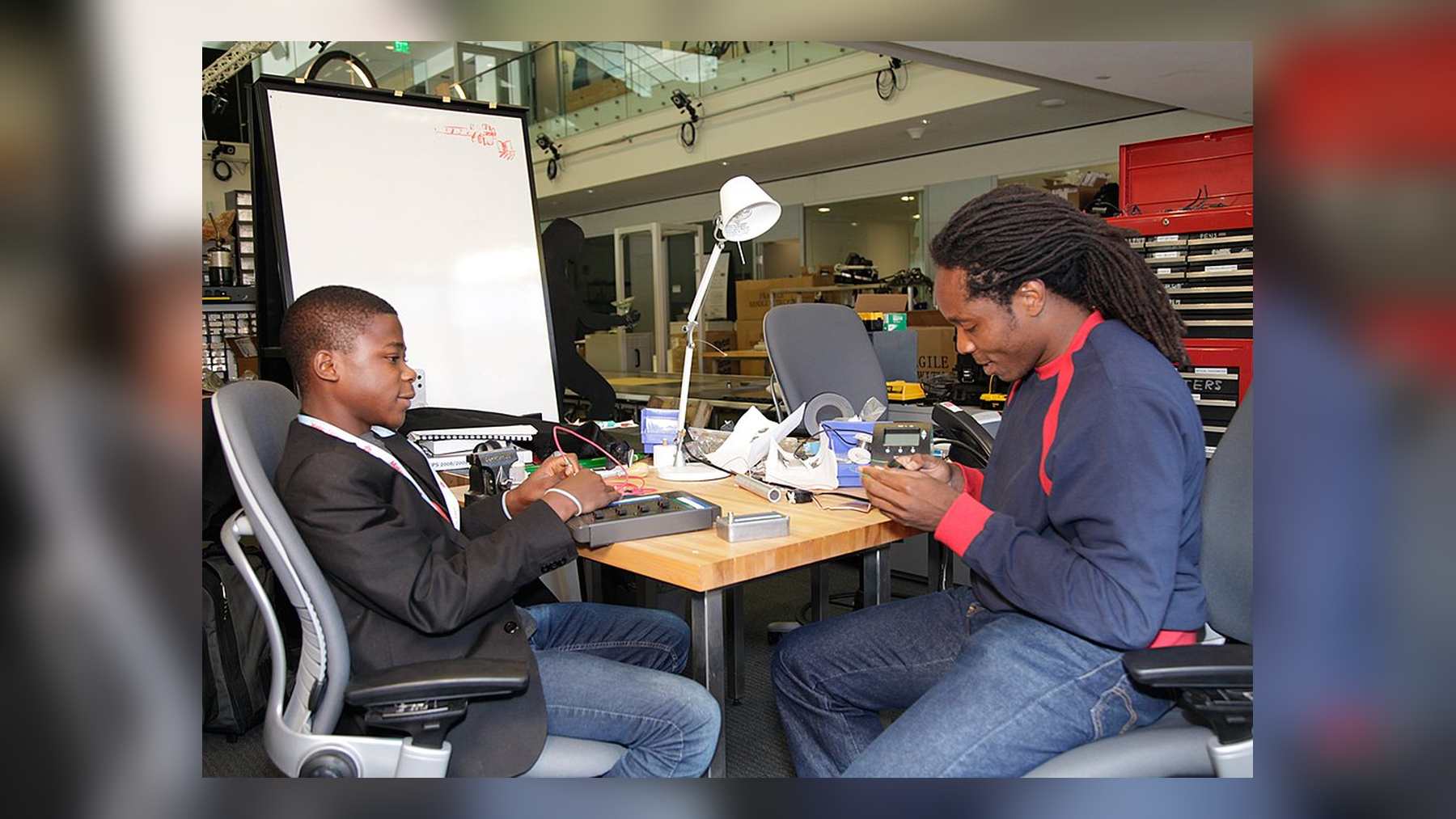
Those inventions took him to the Massachusetts Institute of Technology in October 2012, at age 15, where he spent time as a resident practitioner at the MIT Media Lab. Fourteen years later he lives in Toronto and is building a youth maker education program in the Regent Park neighborhood with a $50,000 fellowship.
A radio station built from the dustbin
Doe, the youngest of five children, started scavenging dump sites for scrap electronics after school at around age 10, according to his TEDxTeen speaker profile. He credits his mother for encouraging his early interests, including his love for music and technology, according to Toronto Metropolitan University.
The first problem he tackled was the high cost of batteries for his radios and flashlights. MIT News reported in December 2012 that he figured out how to make his own from discarded materials, and that the transmitter he built next was put together from salvaged parts.
He also built a generator, an idea that echoes a student generator built from a propeller, a PVC pipe and recycled parts covered here before.
He went on air as DJ Focus, and schoolmates with an average age of 12 helped him gather news for the station, according to MIT.
He has since explained why radio mattered to him. “Growing up in a developing country like Sierra Leone, media is such a powerful medium to stay informed with policy changes or issues,” Doe said in a July 2026 profile published by Toronto Metropolitan University.
The mentor who spotted him
The person who brought Doe to Massachusetts was David Moinina Sengeh, then a doctoral student at the MIT Media Lab and now Sierra Leone’s Chief Minister. In 2012 Sengeh launched Innovate Salone, a competition and mentorship program for high school students that drew 300 students working on 72 projects in its first six weeks, MIT reported.
Doe’s homemade FM transmitter was one of eight finalist projects, and each finalist received $500 to keep developing its idea. “I wanted to empower young people to develop their own solutions,” Sengeh told MIT News at the time.
A first trip abroad at 15
Before that trip, Doe had never traveled more than 10 miles (16 kilometers) from his home, MIT reported. During the visit he was a featured speaker at the World Maker Faire in New York, spent time as a resident practitioner at the MIT Media Lab and met Harvard University President Drew Faust.
His raw material is a growing waste stream
In 2022 the world threw out 62 million metric tons (about 137 billion pounds) of electronics, and just 22.3 percent was documented as properly collected and recycled, according to the International Telecommunication Union. Old gear still holds value, and a metric ton of old mobile phones can hold 100 times more gold than a metric ton of gold ore.
Sengeh’s program was still looking for money. MIT News reported at the time that it was trying to raise funds to create at least two permanent “maker centers” in Sierra Leone, “workshops where young people can work on their projects, with access to tools and equipment, and instruction and guidance.”
The years after the viral video
Doe started the Kelvin Doe Foundation in 2016 as an informal hobby group of young Sierra Leoneans who wanted to learn STEAM in a hands-on way, and that year it hosted the first Mini Maker Faire in Freetown, according to the foundation. He later moved to Toronto, where he is now in his fourth year of Toronto Metropolitan University’s New Media program. “University gave me the tools, networks and confidence to act on what I have always believed since tinkering with electronics as a child in Sierra Leone: that creativity is universal and can be found in places where one does not expect to find it,” he said in the TMU profile.
A makerspace in Regent Park
This year Doe became the first TMU student to receive the Pathy Foundation Fellowship, which gives young changemakers across Canada a $50,000 stipend to spend a year working on a cause they care about. He is putting it into STEAM education, short for science, technology, engineering, arts and math, in Regent Park, where he lives, with a community-guided maker program for middle and high school students.
“Significant barriers prevent many students from accessing quality STEAM learning,” Doe said in the university’s announcement. “While this cannot be quickly solved globally, it can be addressed at least in Regent Park through interactive programming that connects learners with mentors who help build a strong STEAM identity.”
He wants the students to see themselves as people who belong in those fields. “I look forward to helping learners develop a strong identity connection to STEAM fields by connecting them with mentors and role models,” he said.
Other young makers have followed similar paths, including a Massachusetts teenager who turned failed 3D prints and old bottles into new filament. Last year Doe also organized Regent Park’s first Maker Festival, according to TMU.
What the record shows and leaves out
Most of what is known about Doe’s early inventions comes from 2012 profiles and his own accounts. None of those sources describes an independent technical test of the batteries, generator or transmitter, or measures how much waste they kept out of dumps.
Profiles also differ on his age when he started, from about 10 to 13. Salvaging electronics carries its own risk, since e-waste contains “hazardous substances such as mercury, which can damage the human brain and coordination system,” according to the ITU.
MIT’s original account of Doe’s visit and of Innovate Salone was published by MIT News on December 18, 2012.
Looking back this year, Doe said, “Presenting my innovations at the MIT Media Lab to researchers like Nicholas Negroponte showed me what is possible when young people from underserved communities have access to maker tools and skilling platforms.”
Photo: David Moinina Sengeh / MIT News