A toothless dinosaur dug up in July 2011 in the Hell Creek Formation of Garfield County, Montana, has been named Infernogallus jamesi, and a new study in Nature Communications argues that its jaw slid back and forth to mash soft fruit like a parrot’s. The name means roughly “hell chicken,” and one of the study’s anonymous peer reviewers signed off after two rounds of hard questions about the statistics by writing, “Lastly, I just want to say that I really love the name Infernogallus. Hell chicken is such a great name!”
“Thank you! I wish I could take credit for it, but it was a colleague who suggested it,” the authors’ reply began, before owning up that the colleague had been left out of the acknowledgments. “We’ve done that now.” The published paper thanks C. Woodruff for “suggesting the generic name.”
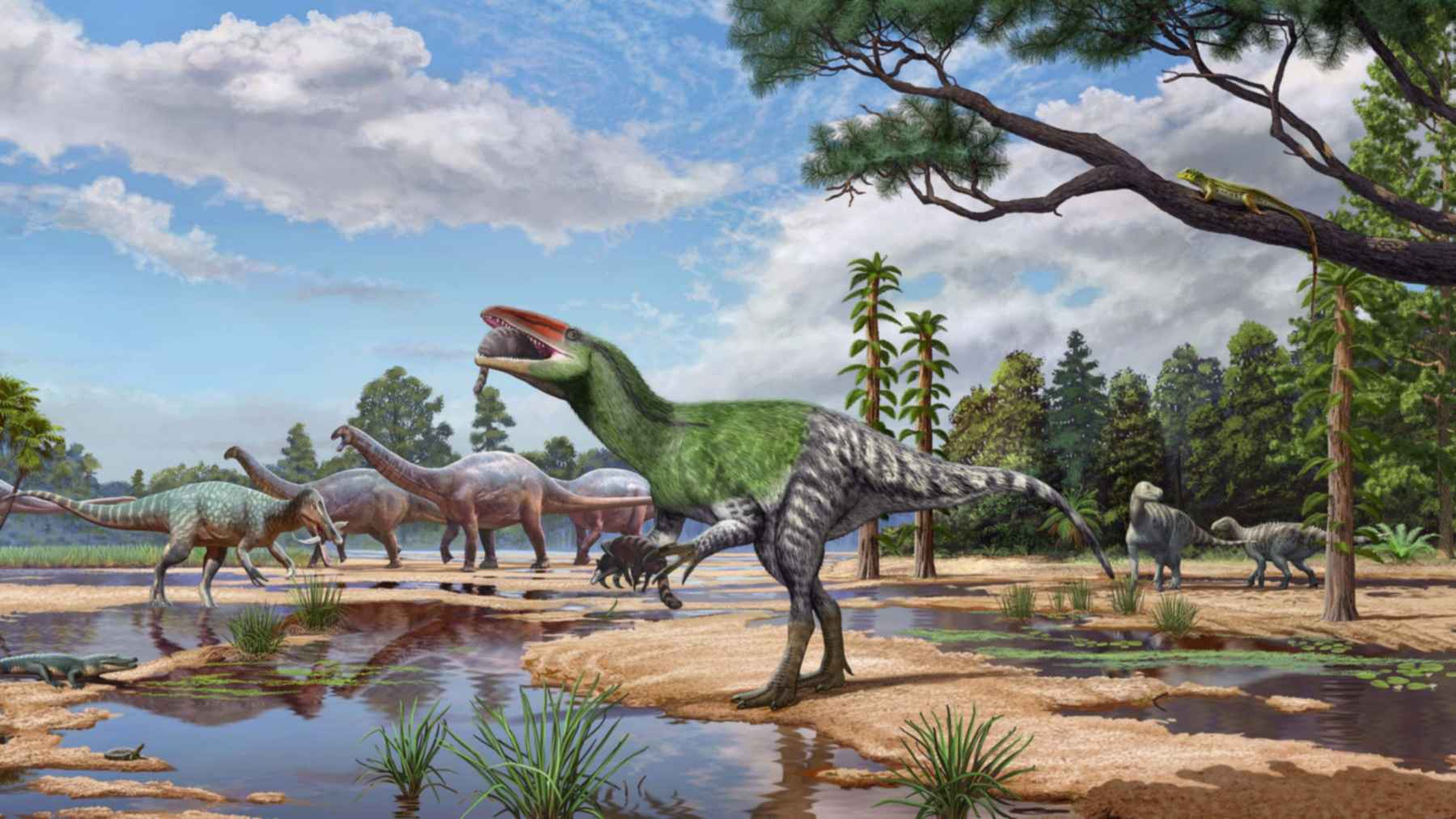
The animal weighed around 26 pounds (12 kilograms, within an estimated range of 9 to 15 kilograms, or about 20 to 33 pounds), and it had a beak instead of teeth.
Gregory F. Funston of Stony Brook University’s Department of Anatomical Sciences led the work, and David C. Evans, Temerty Chair in Vertebrate Palaeontology at the Royal Ontario Museum (ROM) in Toronto, is the other corresponding author.
A group known mostly from scraps
Funston, Kyle Atkins-Weltman and Eric Snively described these animals in a 2024 post on Funston’s blog as “a group of bird-like dinosaurs with feathers, toothless beaks, and hollow bones.” They were writing about Eoneophron infernalis, a bigger caenagnathid from the same rocks.
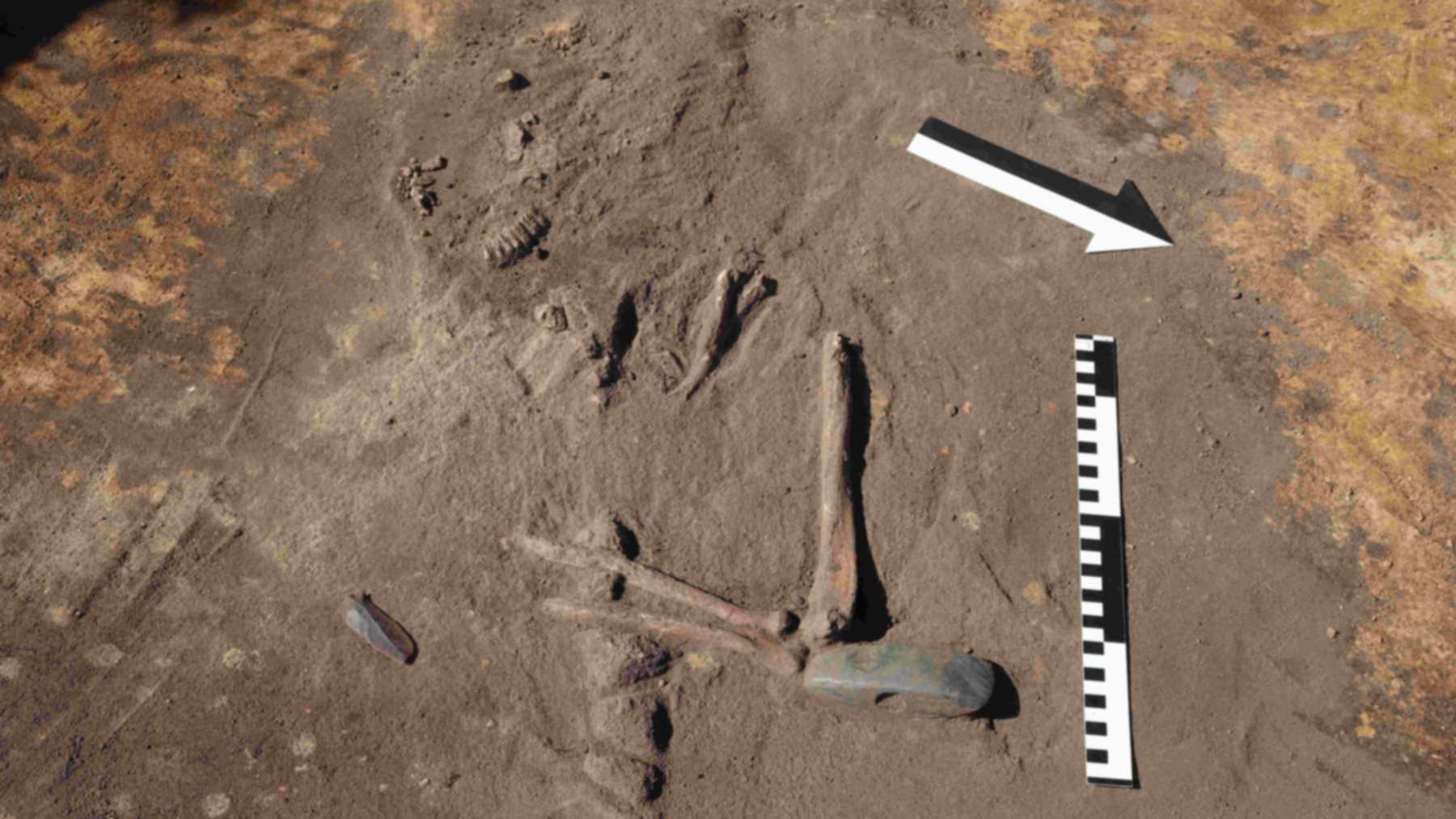
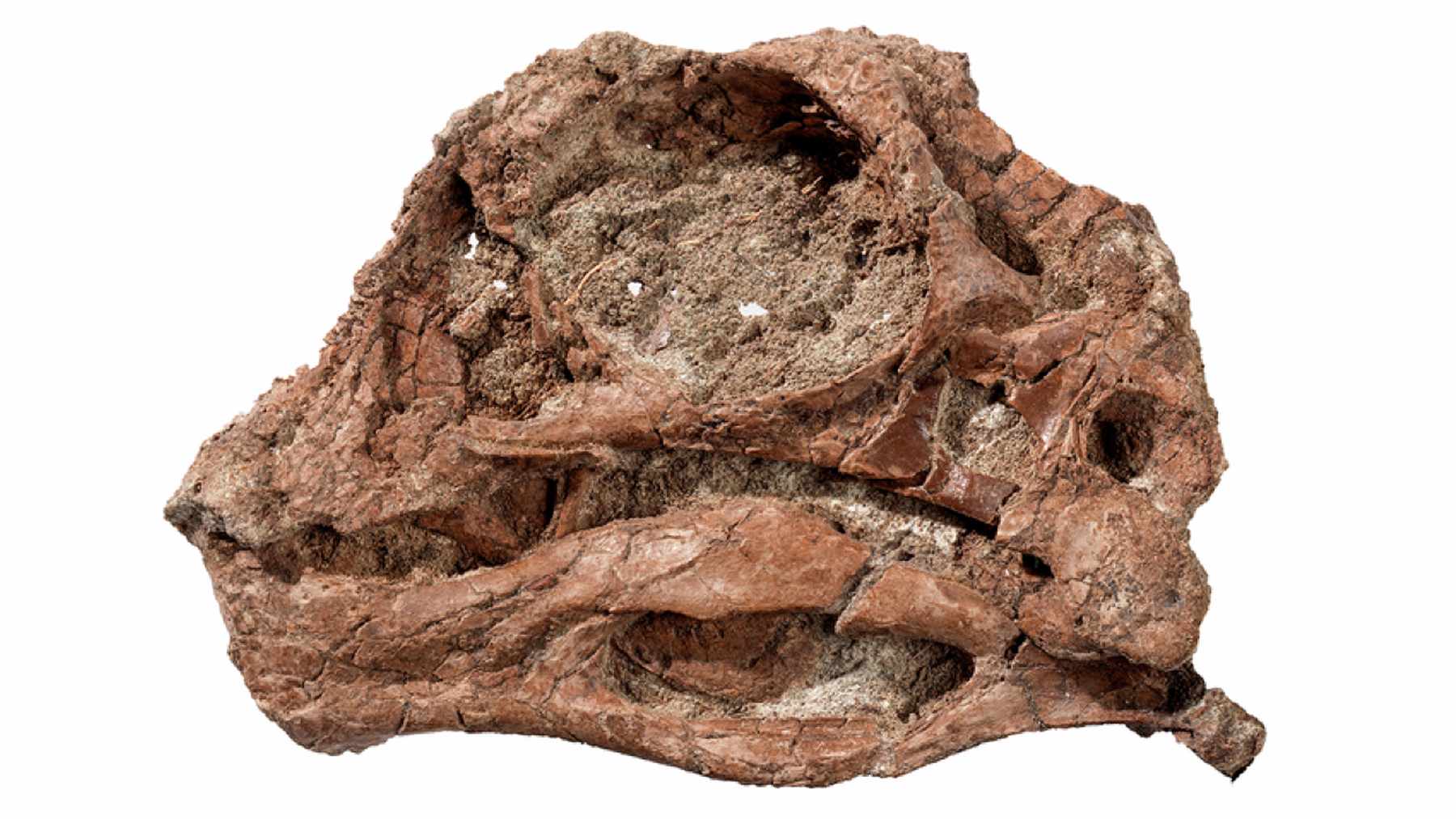
The Infernogallus skull is still attached to the neck, and the paper calls it “the first intact cranium known for the group.”
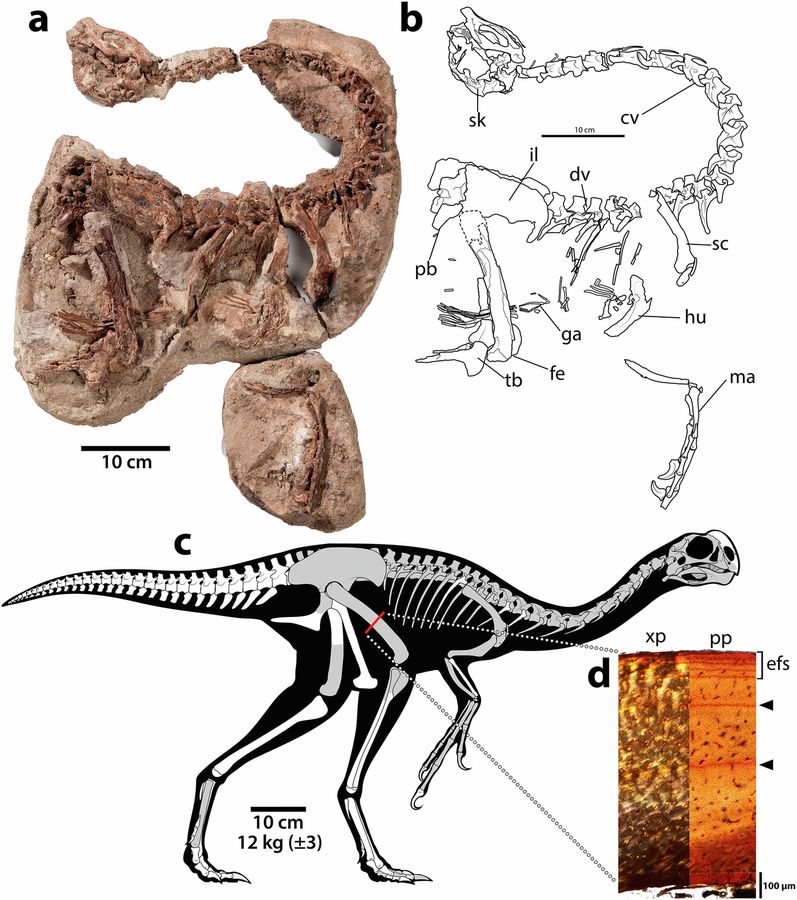
It was no juvenile, either. “As bone grows, it lays down marks each year, like tree rings, so looking at these slides we could see how old this animal was, and how fast it was growing,” the 2024 blog post explains. For Infernogallus, the rings say at least 6 years old, probably 7, and done growing.
Its jaw may have worked like a parrot’s
Working from scans of the crushed skull, the team rebuilt big palate muscles that pulled the lower jaw forward and back, and found a joint that let it slide up to 15 millimeters (about 0.6 inch). Ridges and grooves on the palate and the lower jaw met as it moved.
That would have worked “for shearing, mashing, or crushing soft foods, similar to a mortar and pestle,” the authors write. They found no stomach stones, which plant-eaters often swallow to grind tough leaves, even though the belly ribs were all there.
The best living match was the Pesquet’s parrot of New Guinea, which, in the paper’s words, “processes fruit by consuming the pulp and discarding the seed.” So the team proposes that Infernogallus “could have been specialised for processing soft fleshy fruit, although it is likely that other soft plant materials also formed a significant component of its diet.”
The reviewers asked for statistics
Nature Communications posted the whole peer review next to the paper. One anonymous reviewer liked it right away. “I am not an expert on these particular dinosaur group but the description and conclusions drawn from the morphology sound plausible and coherent to me.”
Another anonymous reviewer pushed back. “While I have no problems with the functional morphological interpretations and muscle reconstructions per se, the ecological conclusions presented here largely are qualitative in nature and not supported by any statistical analyses.”
“This is something that we grappled with back and forth during our analysis,” the authors answered. Birds and dinosaurs sit in very different parts of their charts, they said. “Although this is clear to an observer who is able to see the context of the plots, because of the separate spaces occupied by the birds and dinosaurs, it is difficult to apply statistics to this trend.”
They ran the tests anyway. In one, every dinosaur came out as an omnivore at more than 85 percent probability, except Infernogallus at 75 percent omnivore and 25 percent soft food.
“To be clear, we believe that with a larger and more detailed extant dataset (far beyond what we can accomplish here), it is possible a clearer signal could emerge, but we feel the stats are not robust enough for conclusion, even though they seem to support our qualitative claim,” they wrote. Then came an apology for the graphs. “I’m sorry they are basic but I thought they were still illustrative.”
That reviewer accepted it in the second round. “Maybe the lackluster performance of the pFDA was because of the small sample size – it should work in theory given a big enough sample size. It appears sample size is a bigger issue than statistical non-independence owing to phylogeny in this instance, so I concede that qualitative interpretation is the sensible approach here.” The tests ended up in the supplementary material.
Fruit, flowers and the asteroid
The team’s family tree places the first caenagnathids soon after flowering plants started making fruit. In their second reply, the authors pointed to newer work “showing that fruits appropriate for caenagnathids were both more common and larger in the Late Cretaceous than previously recognized.”
Fruit flesh comes and goes with the seasons, though. The paper says Infernogallus may have lived largely on “sporadic or seasonal foods (fruit flesh) rather than persistent materials (the seeds within),” just before the dinosaur-killing asteroid knocked out the plants at the bottom of the food web. Some birds made it through, and a 66-million-year-old feather found in Montana may help explain why.
In that 2024 post about Eoneophron, Funston, Atkins-Weltman and Snively had already argued that these animals were not fading out. “It seems that caenagnathids like Anzu and Eoneophron were doing quite well for themselves before the asteroid ruined everything,” they wrote. “An unintended analogy for extinction, Hemingway quipped about going broke: slowly, then all at once. Was this the fate of the dinosaurs?”
What the fossil cannot show yet
No fruit, seeds or stomach contents were found with this skeleton. The diet comes from bones and muscle maps, and the authors say it could be tested with “additional fossil evidence (e.g., stomach contents) or more complex biomechanical modelling.”
The 15 millimeters of slide is a limit set by bone, and a reviewer warned that soft tissue probably cut it down in life. “We agree that this is likely an overestimate of actual motion,” the authors replied. The version online now is an early “Article in Press” and may still be edited.
The full study was published in Nature Communications.
Even giants are hard to find whole, judging by the short list of well-preserved adult T. rex in museums.
Image: Funston et al. / Nature Communications, CC BY 4.0, cropped