A study of cameras on two turbines at Thanet Offshore Wind Farm, about 7.5 miles (12 kilometers) off England’s Kent coast, reviewed 606,554 videos and counted 6 seabird collisions, while 96.8 percent of the recorded seabirds flew between the turbine rows.
Vattenfall, which owns Thanet, brought those six collisions up again on Sept. 29, 2026, when it described a newer camera trial off the Netherlands, though the 247-page report dates from April 2018. The first strike came on Nov. 1, 2014, when an adult black-legged kittiwake, hovering in front of turbine F03 as it tried to adjust its flight path, was hit about 164 feet (50 meters) above the water.
A study built on two turbines
The Offshore Renewables Joint Industry Programme, or ORJIP, ran the project, with the Carbon Trust as manager and 11 offshore wind developers paying alongside the UK government. Henrik Skov and Stefan Heinänen of the Danish consultancy DHI wrote the report with colleagues from NIRAS Consulting.
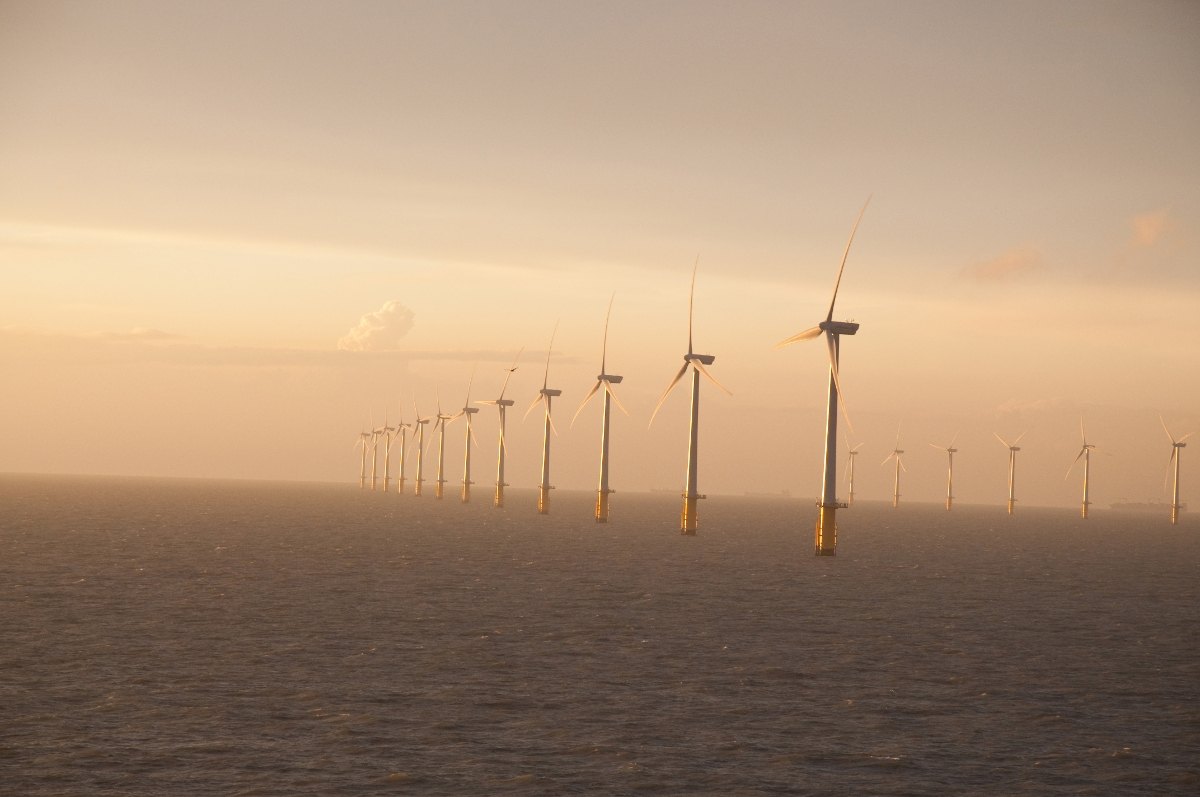
Thanet’s 100 turbines, 3 megawatts each, cover 13.5 square miles (35 square kilometers) of sea, rise as high as 377 feet (115 meters) and were finished in September 2010, according to Vattenfall.
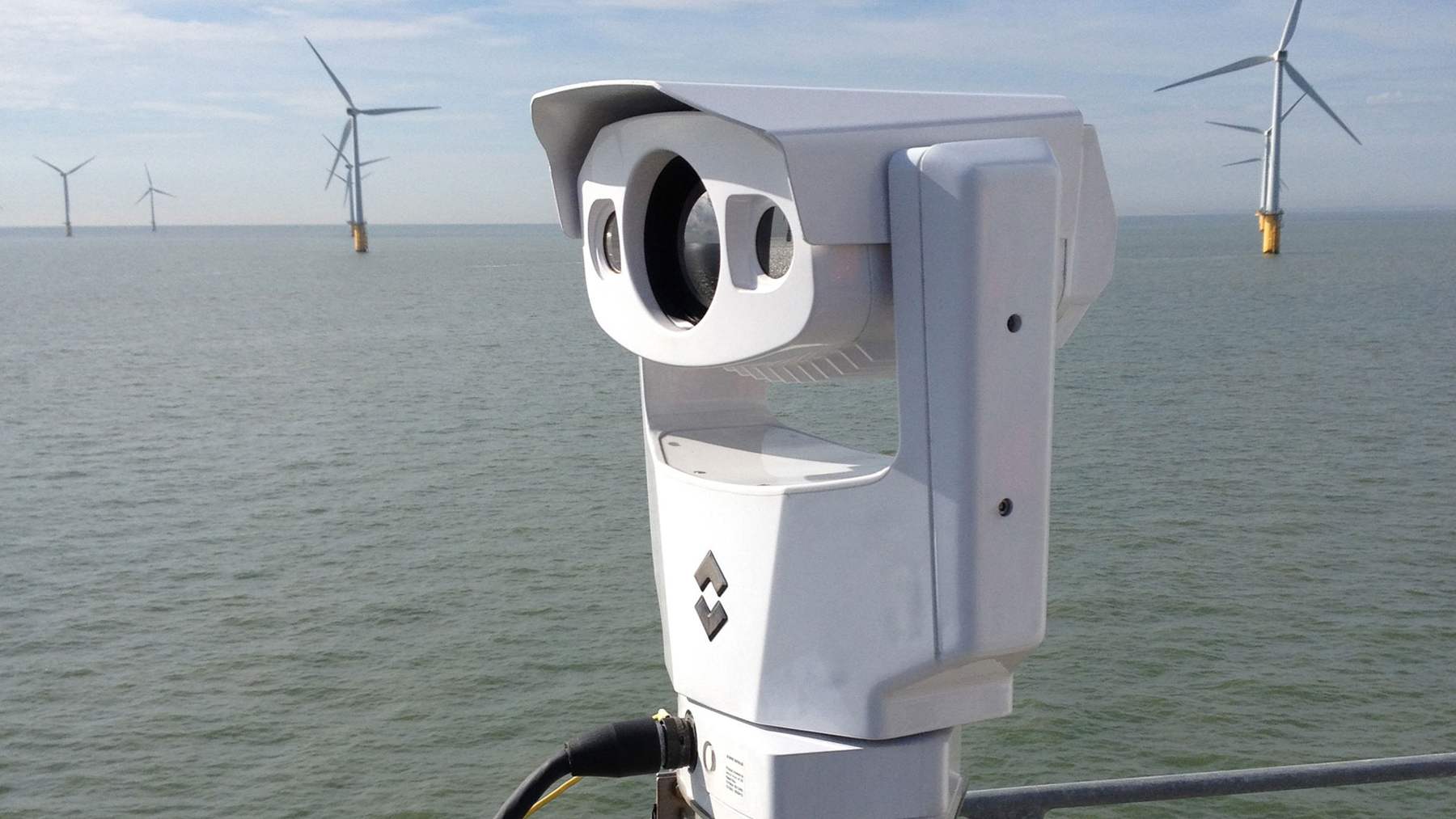
On turbines F04 and D05, inside the farm, the team bolted a radar to a thermal camera that followed each target and saved a 20-second clip. On land, a similar idea now runs on software, with AI cameras watching for eagles at a Wyoming wind farm.
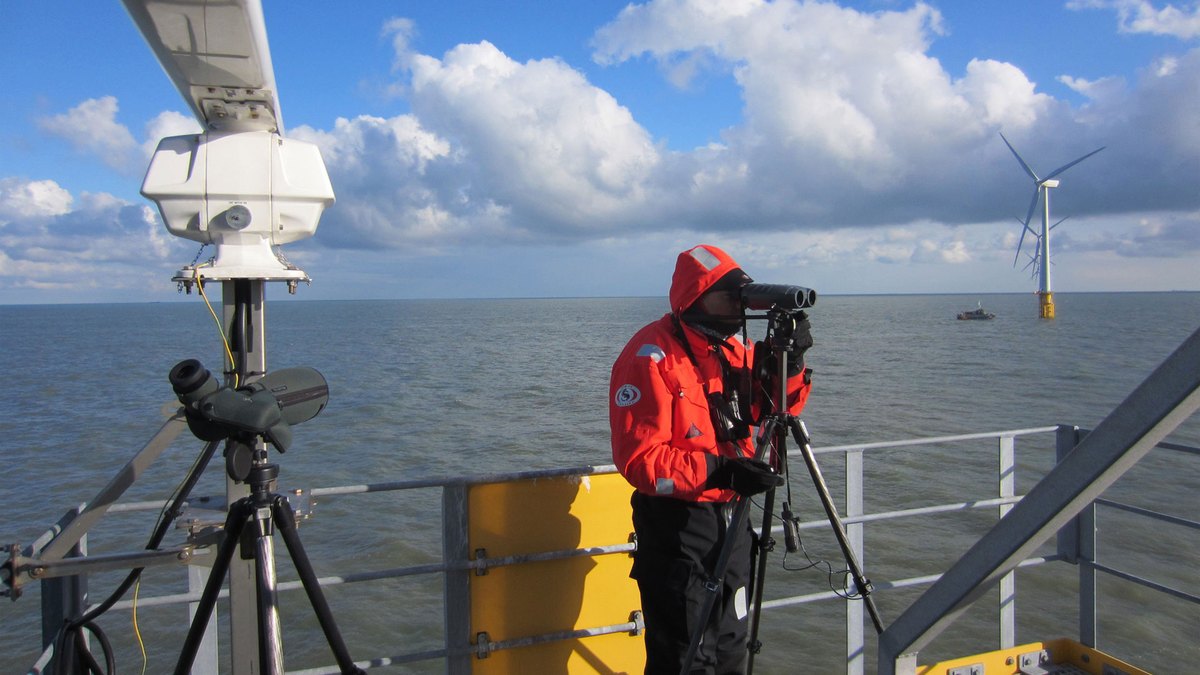
According to the Carbon Trust, one unit could watch four turbines around the clock. Observers on two turbines at the edge of the farm also tracked birds with radar and laser rangefinders on 230 days between July 2014 and April 2016.
The work focused on five priority species for North Sea wind projects: the northern gannet, the black-legged kittiwake, the herring gull and the lesser and great black-backed gulls.
Most birds flew between the rows
The team measured avoidance at three scales: steering around the whole farm, dodging single turbines inside it and the last-second move away from the blades, known as micro avoidance.
According to the authors, 96.8 percent of recorded seabirds avoided the turbines by flying between the rows. Most gannets kept out of the farm altogether, many gathering within 0.9 mile (1.5 kilometers) of its edge.
Only 299 videos showed birds inside the area swept by the blades or within 33 feet (10 meters) of it, and most of those birds adjusted course, often flying parallel to the rotor. The estimated micro avoidance rate for all seabirds was 0.950, or about 95 percent. Whether birds can see the blades well is another question, which other teams have tested with one black blade on a Norwegian island and red stripes on turbines in Hopefield, South Africa.
Six strikes, all in daylight
After the kittiwake, a lesser or great black-backed gull was hit on Nov. 24, 2014, after moving back and forth between two rotors. Unidentified gulls struck blades on Nov. 28, 2014, Aug. 21, 2015, Dec. 12, 2015 and Feb. 10, 2016.
Every collision happened in view of the cameras, at heights from 98 to 394 feet (30 to 120 meters), in winds of about 11 to 18 miles per hour. Three clips show the bird dropping to the sea.
The six collisions represent 0.05 percent of the birds the cameras recorded. Yet only 15 seabirds were seen crossing perpendicularly to a spinning rotor, which the authors say “indicates a high risk of collision” for birds that do.
How the industry read the results
Before a wind farm is approved, developers estimate bird deaths with collision risk models. The most common in the UK, the Band model, assumes birds take no evasive action and then applies an avoidance rate, the share of birds expected to get out of the way.
In its April 19, 2018 announcement, the Carbon Trust said the “collision risk of seabirds was less than half of what would be expected based on current understanding.” Helen Jameson, then a senior project manager at Vattenfall, said in a June 2018 company statement that the results showed “our approach as an industry has been very cautious.”
Others were more careful. Aly McCluskie, a senior conservation scientist at the Royal Society for the Protection of Birds, said there is much uncertainty about how birds behave near turbines, and Natural England’s Tim Frayling asked for similar studies elsewhere, including closer to seabird colonies.
A government review added a catch
In December 2018, the Joint Nature Conservation Committee, which advises the UK government on nature, published a review of the Thanet data written by K. Bowgen and A. Cook.
The reviewers found that the number of birds crossing the rotor-swept area and colliding appeared higher than the Band model predicts, though the data were limited. Counting six collisions among the 15 birds that crossed the rotor, they put the chance of collision near 0.4, against the model’s 0.07 to 0.12. The ORJIP report’s own collision table, however, lists only one of the six strikes as a perpendicular approach.
Overall, though, the models still predicted more deaths than the cameras saw. For kittiwakes, they forecast one to four collisions per winter, against the single kittiwake recorded. The review recommended avoidance rates of 0.995 for gannets and large gulls and 0.990 for kittiwakes in one version of the Band model.
What the cameras could not show
After dark the cameras saved 459,164 videos. The team checked 48,000 of them, from winter dates when more birds were expected, found flying birds in about 0.2 percent and saw no seabird inside a rotor.
The sampled nights had calm conditions and good visibility, so the authors call the night numbers anecdotal. The system could also track only one target at a time, and fishing trawlers, which pull gulls toward them, went unmonitored. Two cameras watched a corner of one farm, so six strikes is a count of what they saw rather than a death toll for Thanet.
“At sea, it is extremely difficult to determine the number of fatal collisions,” said Jesper Kyed Larsen, a bioscience expert at Vattenfall. He was describing a nine-month trial with 16 thermal cameras on one turbine at Hollandse Kust Zuid, off the Netherlands, which Vattenfall reported on Sept. 29, 2026. Two collisions were confirmed there, plus one rated high confidence.
The full study was published by the Carbon Trust in April 2018, and its data are public on The Crown Estate’s Marine Data Exchange.
Photo: Vattenfall